Someone slipped a handwritten note under my front door.
I had just put my sons to bed. It had been an entirely ordinary evening – dinner, pajamas, the negotiations familiar to every parent. When I walked back into the living room, I saw a folded piece of paper on the floor. The note said awful, homophobic things about my family. It told us to shut our blinds. To not let anyone see us.
I took that note outside, stood in the middle of the street and burned it.
Then I looked around at the dark and said out loud: “I am not scared.”
It was the only way I knew how to protect my family in that moment. But what happened next surprised me. My husband came home, heard what happened, and the first thing he did was order the biggest gay pride flag he could find. We put it in front of our door. It was summer. People walked by in droves. Neighbors came out of their houses. A woman told me her granddaughter was gay. A man said his cousin was. What had been designed to isolate us became, somehow, an introduction to a community we didn’t know was there.
I have thought about that flag often in the years since. About what it means to respond to fear with visibility. About what it costs, and what it builds.
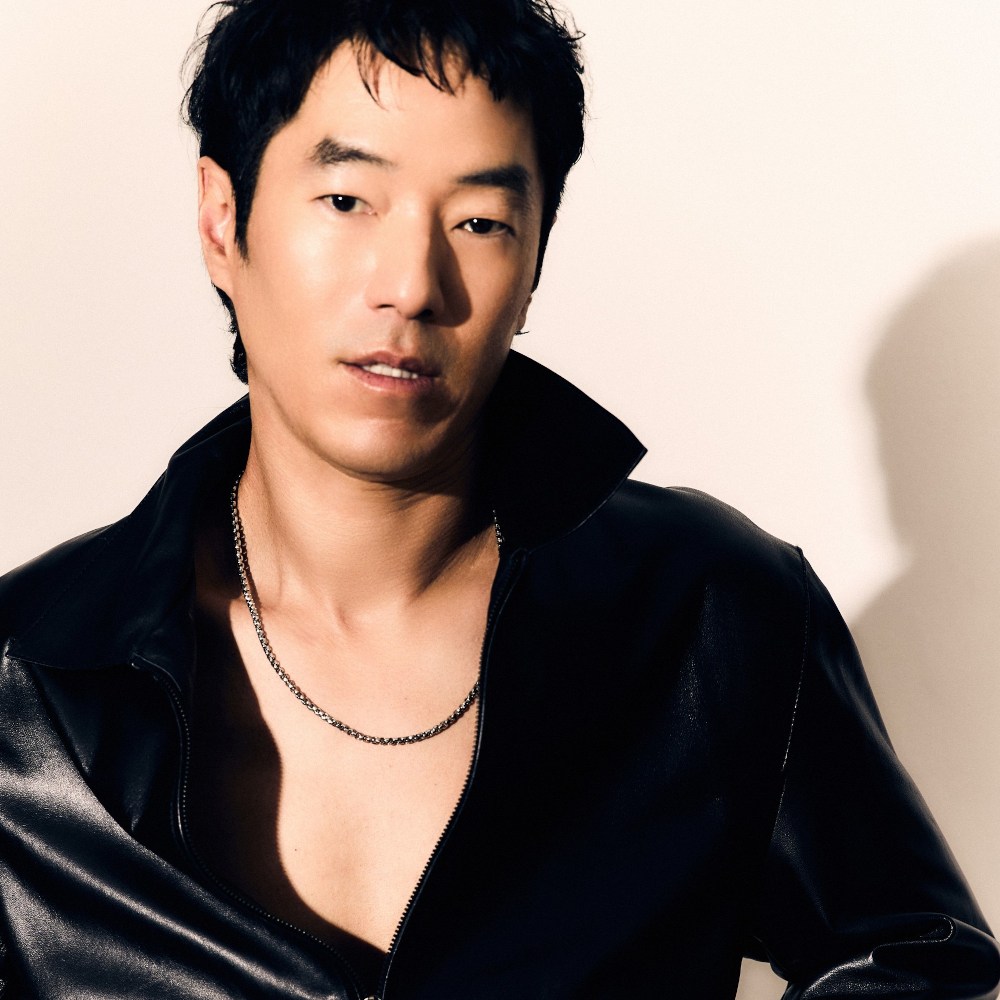
I am an actor. I have spent more than 20 years inhabiting other people’s lives, from Westworld to The Fast and the Furious to a Disney villain I am currently very much enjoying playing. I was born in Argentina to Korean immigrant parents. My family moved to Sydney, Australia, when I was six. At 19, I left for New York with $200 in my pocket and a phone number for a friend’s boyfriend, betting on myself in a country that hadn’t asked for me yet.
I slept in Central Park my first nights there. I trained. I auditioned. I failed and kept going, the way you do when you’ve already given up the backup plan. Eventually, it began to work. I spent the next two decades learning what every working actor eventually learns: the most fully realized human beings almost never fit the category assigned to them. The outsider is carrying a story no one stopped to ask about. The person who reads as a symbol is, up close, just a person trying to get through the evening.
That lesson would become the most important thing I know.
When my husband and I decided to start a family through surrogacy in Mexico, we researched, we planned, and we chose the state of Tabasco, which had permitted surrogacy since 1997 and had a governor who had himself become a parent through the process. It seemed like stable ground.
Then the governorship changed. The month our surrogates were pregnant, new restrictions swept in and rewrote the rules retroactively. Families who had contracted under the old law were suddenly told their birth certificates wouldn’t be issued. A New York Times piece reported that one father had his newborn taken by officials and didn’t see his son again for six weeks. My husband, wisely, didn’t show me that article until we were already safely out of Mexico.
What followed was weeks of legal uncertainty, moving between cities with newborns, trying to get documentation that would let us bring our sons home. I remember standing outside the Mexico City embassy holding one of my boys, my mother beside me, speaking Spanish in her unmistakable Argentinian accent, watching officials try to reconcile how she sounded with who they assumed she was.
At the airport, Mexican TSA pulled us aside. They wanted adoption papers. I tried to explain that there were no adoption papers. These were our biological children, conceived through surrogacy. There is no document for that. They told me to open my laptop anyway, to pull out my files. I got down on my hands and knees on the airport floor, newborn strapped to my chest, surrounded by police, searching through folders on a computer while my son’s weight pressed against me.
That is when she appeared.
A woman in her fifties, well dressed, who had been watching the entire exchange, walked over and handed me a card. She was a senator from Guadalajara and the president of a human rights commission. She told us we were the thirteenth or fourteenth family this had happened to. She called a lawyer she knew. The police grabbed our files, shoved them in our bag, and told us we were going to miss our flight. We ran.
We flew to Tijuana. We walked our sons across the border into the United States.
I have never been so relieved to see an American immigration officer in my life.
What I carried home from that experience was not bitterness about the bureaucracy, though the bureaucracy deserved bitterness. What I carried home was something simpler and harder to articulate.
I had seen what it looks like when a government decides that certain families don’t count. I had felt, in real time, what it means to have the legitimacy of your family treated as a policy question. And I had also seen, repeatedly, in the middle of that fear, what happens when an individual human being decides to see you clearly anyway.
A senator who didn’t have to stop, chose to stop. A lawyer made a call. The police handed back the files. We got home.
That is not a story about systems working. It is a story about people, inside broken systems, choosing empathy over the path of least resistance.
We are living through a moment when the definition of family has become a political instrument. Legislatures debate which configurations deserve protection. Courts are asked to weigh in on what makes a parent real. People slip notes under doors.
I understand that these debates feel abstract to people for whom family has never been a question. But I want to be precise about what is actually being discussed.
The families in these debates are not hypothetical. They are families where someone is, right now, reading a bedtime story for the third time, because a four-year-old has discovered that requests technically cannot be refused. They are families with drawings on the refrigerator and laundry waiting to be folded. They are families where two people are doing their best.
They are also, in many cases, the most deliberately constructed families I know. When you cannot take family for granted, when biology doesn’t hand it to you, when the law doesn’t automatically protect it, when a neighbor might leave a note in the night, you build it with a different quality of intention. My husband grew up in foster care. He knew from childhood that family is not something you simply inherit. It is something you decide to make. That understanding is, I think, one of the most American things I have encountered. The willingness to build something real in the absence of a guarantee.
I launched a production company, Good On Ya Productions, because I want to tell stories about people who live in that space, between cultures, between categories, between the family they were born into and the one they chose. Not as a niche interest. As the majority experience.
After I burned that note, after my husband raised the flag, something shifted in the neighborhood. It didn’t happen because we argued our case or proved our worth to anyone. It happened because we became visible. Because we stayed.
Belonging is not a status that gets conferred. It is a practice. It is built through the daily decision to show up, to stay visible, to extend to others the recognition you needed someone to extend to you.
That is what the senator in the airport did. That is what my husband did with a flag. That is what every person does who decides that a family, any family, held together by love and commitment and the stubborn refusal to disappear, deserves to come home.
I know what my family is. I have walked it across a border. I have raised a flag for it in the middle of a street. I have watched it become, over time, a reason the neighbors came out of their houses.
No note changes that.
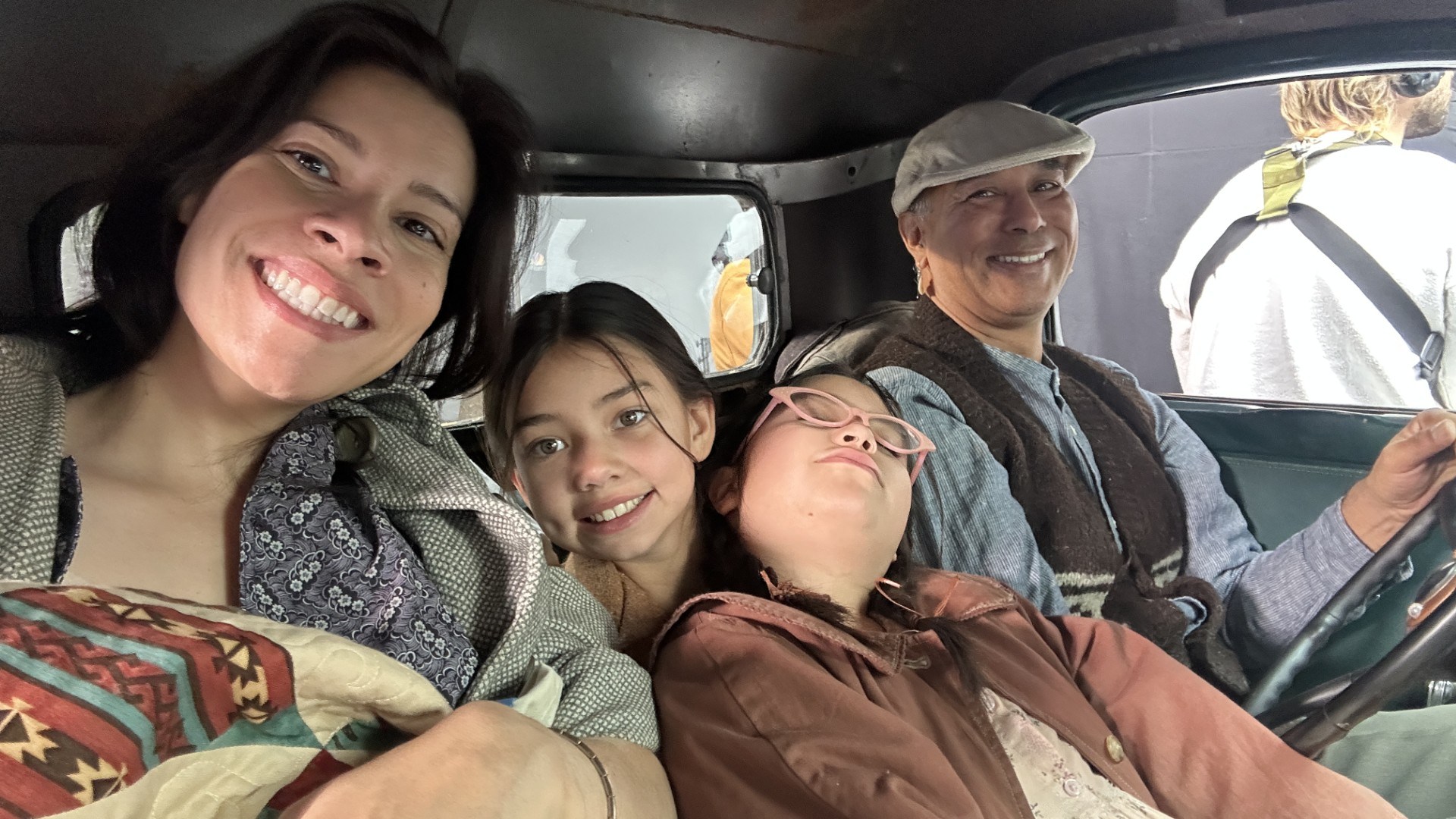
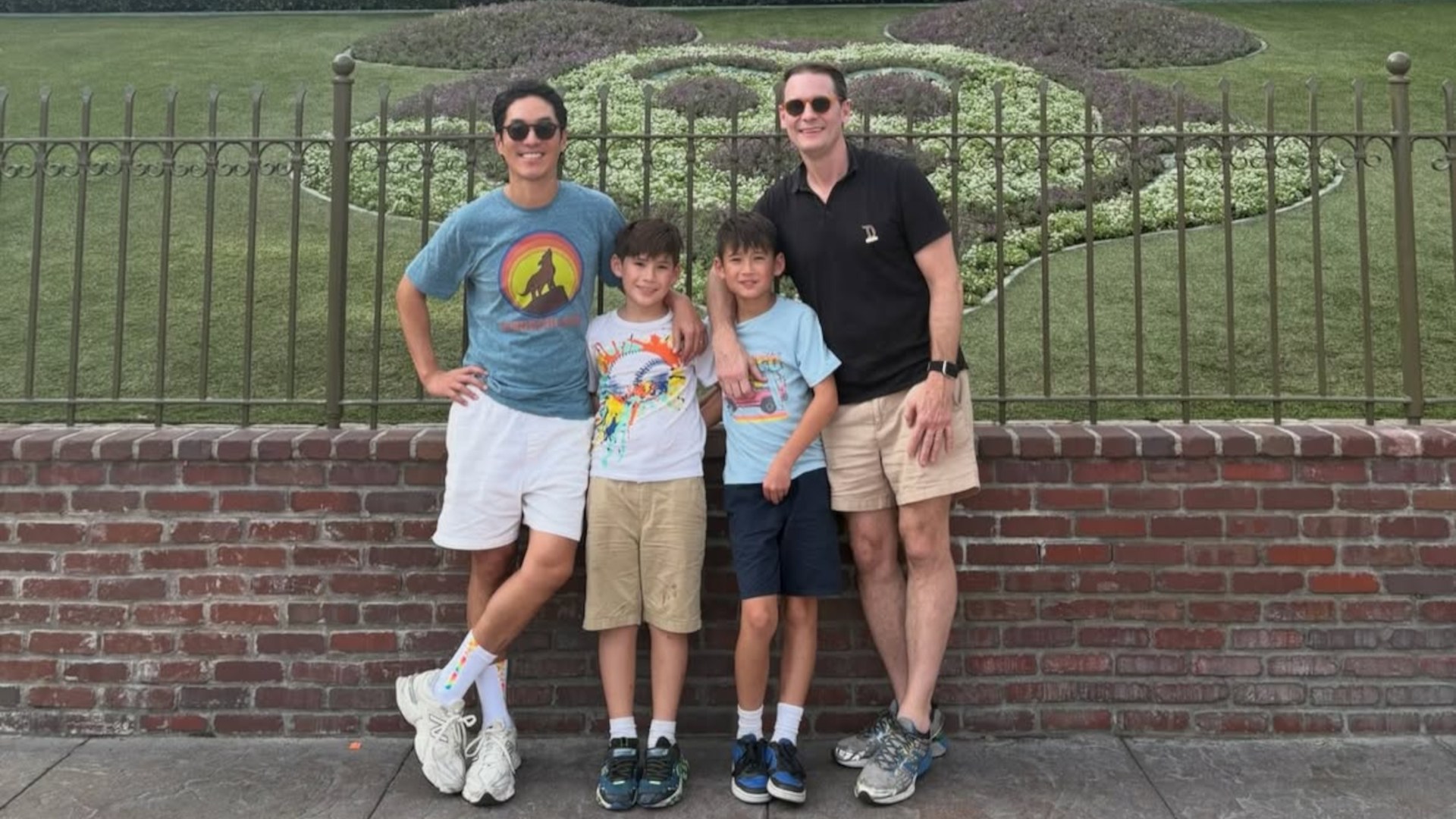
Featured image, showing Leonardo Nam and his family at Disneyland, is via Instagram.