
It’s not every day that a stranger knocks on your door asking if you’d consider having a TV show film in your home. So when it does happen, people are often caught off guard, and they respond in unpredictable ways. Some are overly excited, others overtly suspicious (probably the appropriate reaction). But without fail, people are always curious how and why one becomes a location scout.
Having been one for many years, I found that the job forced me into numerous daily encounters that were functionally transactional but oddly intimate: a compelling contradiction!
You often find yourself in one-sided interactions; your unexpected presence in people’s homes, whether disruptive or serendipitous, is often used by people as a way to unlock personal grievances, frustrations and sometimes suppressed desires. It is, by definition, the job of an observer and documenter. But what does taking on that role do to our sense of self, to always be observing and extracting without a fully formed presence? And in doing so, how does that compound the ever-growing transactional nature of our creative processes?
As I reflect on these questions, and the one I always used to get – how and why did I become a location scout? – I figured I had to start from the beginning. When I moved to New York in the winter of 2016 without ever having visited, all I had was the money I made from selling my car in Florida and a somewhat useless film degree. Luckily, a mere few days into living here, my roommate – who at the time was a P.A. on the second season of a TV show – told me that the unit P.A. had quit and asked if I wanted the job. I didn’t question what “unit” P.A. meant; I knew from film school what a unit production manager was, and I assumed that just meant it was a Production Assistant that worked for the … unit. I said yes without hesitation. That night, I got a text from the Assistant Location Manager asking me to come in the next morning, and to meet at “holding.” I don’t know what holding is, I remember thinking. But I’ll figure it out.
The next day, I arrived on set and looked for my new boss at “holding.” We exchanged pleasantries, signed some paperwork, and was given the keys to a heavily dented sprinter van that had no rear-view mirror or backup camera. For the 12-ish weeks that followed, I worked more than 16 hours a day, five days a week, for a flat rate of $800 per week. It was the most money I had ever made, and I didn’t dare question how a flat rate without overtime pay or an eight-hour turnaround was legal. I would leave my apartment in the dark, and I would return to my apartment in the dark – I only saw the light of day on set when taking the mounds of leaky trash bags out to the street after each catered lunch. Certain pieces of clothing were so exposed to trash juice that even after washing them on heavy soil, they still stank. Every morning, I’d factor in about 30 minutes to shovel the van out from the snow. I later learned that the winter of 2016 earned the city’s largest blizzard on record.
On a daily basis, I set up hundreds of chairs and dozens of folding tables and changing flats three times my size, taped up hundreds of “TO SET” or “TO HOLDING” signs around the perimeter of our permitted shoot, scraped black ice from the sidewalks surrounding the set, and listened carefully on walkie for the all-too-familiar call for help on channel 1: “Hey… uh…locations. Go to 2, please.” If there was ever construction (hint: there’s never not construction in New York fucking City), I would be summoned to intervene and shut it down at any cost necessary. I was given “chit” money – cash on hand to pay off inconveniences that would interfere with filming. A couple times a week, I’d be sent to deal with a pissed-off resident or business owner – always someone who, rightly so, was upset that our production was interfering with their operations. Occasionally, it would be a parent who was desperately trying to put their baby to sleep, and the noise from the trucks and campers’ generators was disturbing their routine. Other times, it would be a resident whose car was towed the night before to clear the parking, and they were looking for answers.
So naturally, toward the end of the production, when my location manager approached me asking if I’d be interested in shadowing their current location scout, I said yes, without hesitation. I didn’t even know there was someone else in our department, going about the city and finding the very places we were filming in, despite seeing his name on the call sheets every day.
And as soon as that job ended, the next one began. But spring was around the corner, and I was offered a slightly higher flat rate. More importantly, the production rented me a car. No more sprinter van without a rearview mirror. No more shoveling snow. No more three a.m. call times. Things were looking up.
I met up with the scout, who showed me the ropes, and made me fall in love with the city that had been so crushing and grueling to me upon our initial meeting. Every day of this new job felt fresh; I went to every borough multiple times a week and learned the city inside out. Depending on the project, I sometimes even commuted as far as to and from Montauk every day. The job demanded a different type of focus – and lots and lots of driving. But I didn’t care; I was loving it. It was a million times nicer than what I had experienced as a unit P.A. I felt like the coolest person in the world. I learned so much about New York and met many wonderful people – who at times could see the excitement in my eyes and would offer me many free things. Whenever I’d scout bakeries, I would often walk away with free pastries; if I scouted event venues, managers would often slip me a free ticket or two. Bartenders would make me free drinks, salons would give me free products and once I even got a free facial out of scout appointment!
Toward the end of 2017, having had more than a year of scouting full-time under my belt, the locations department unionized under the Teamsters. I joined local 817 and got healthcare, really amazing healthcare. I was fortunate enough that the two location managers I worked for were getting consistent work, and the TV boom felt bigger than ever. I scouted for shows like Younger, Russian Doll, Search Party, Mrs. Fletcher, High Maintenance, and even got to do a little scouting on the last season of Broad City.
To maintain my union eligibility, I had to hit a certain number of work hours every few months – so I was always working. I negotiated a deal with myself (to my parents’ disappointment) and put any disposable income from my new and lucrative earnings into my and my friends’ passion projects. On the weekends, and in between gigs, we produced about a dozen short films between 2016 and the pandemic. Thus, 5th Floor Pictures was born – an informal collective of friends and collaborators, named after the mouse-infested former piano factory apartment we first lived in, where I got that first job as a unit P.A. This hustle worked well … for a while. But the grind took its toll, and each year we were making fewer and fewer films.
After a while, I started to worry that scouting, while keeping me afloat financially, was distancing me from the film industry at large. While I got to work on amazing projects, I never really got to be around the Important People, or even the fun crew. I spent most of my working days alone, or with strangers – normal, mostly sane folks who had nothing to do with the film industry, convincing them that having a movie shoot would be worth their while and not destructive at all. My job started feeling more like that of a broker, or a real estate agent – customer service for the production. I held off opting for direct deposit of my weekly pay, just to have an excuse to go into the office each week to see my colleagues and pick up my physical paycheck. And on the rare occasions that I did get to see the creative team, it was often under pretty stressful circumstances, like a crunch-time tech scout or a tense photo review after a major location had fallen through. I was starved for connection; I wasn’t getting free stuff at bakeries anymore – maybe I was jaded and bitter. And while I started to become aware of this fact, it took a really long time for it to really sink in.
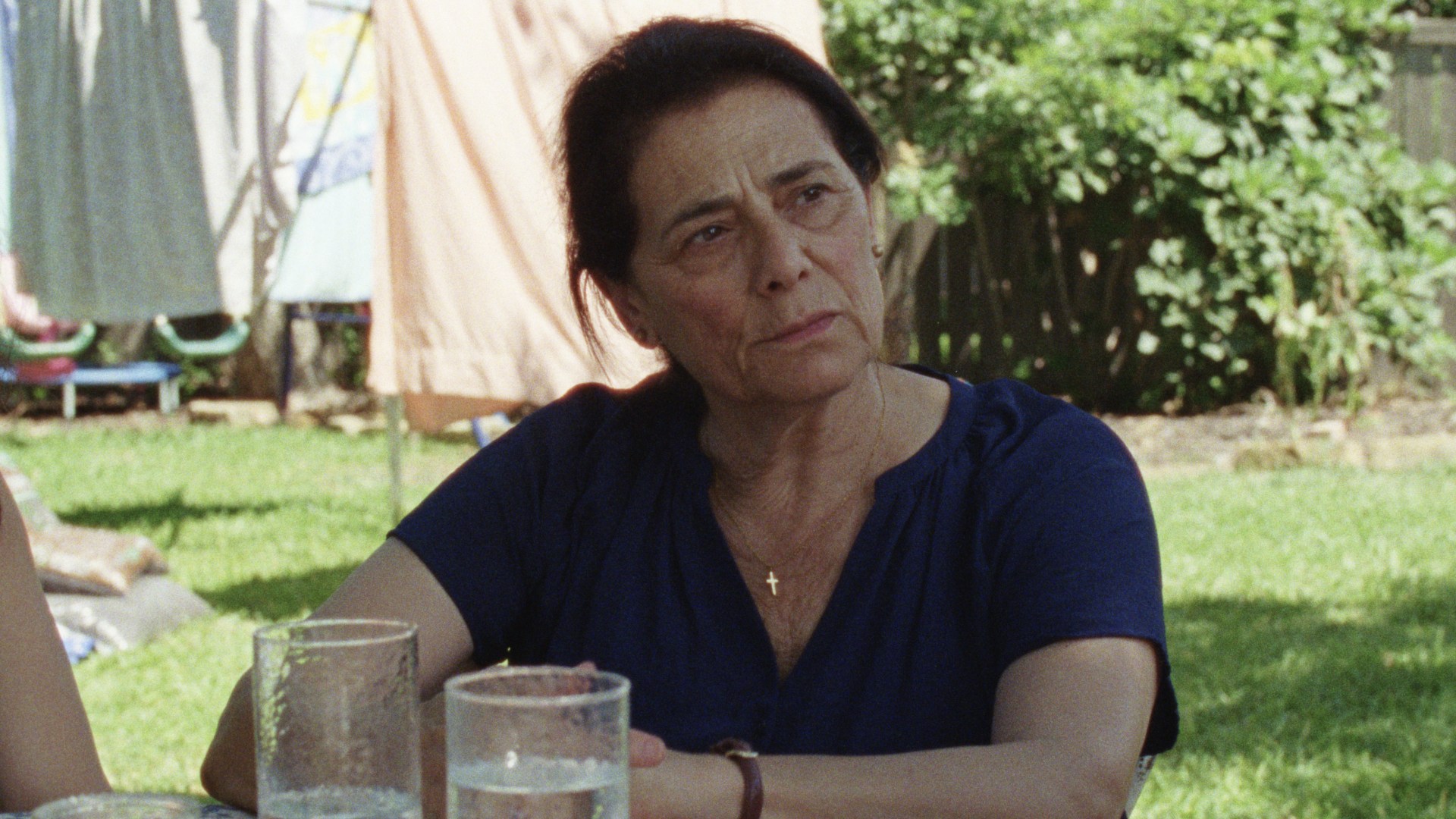
With The Scout, I was interested in exploring the fast-paced nature of being a location scout paradoxically through the language of a slower, more methodical cinema, to try and capture that very feeling. Scouting is a whole lotta hurry up and wait. And the idea of scouting for my own movie about location scouting just felt … necessary. Little did I know I was also desperately seeking to heal something about that time in my life, a time when I felt very disconnected from myself, my passions and my friends.
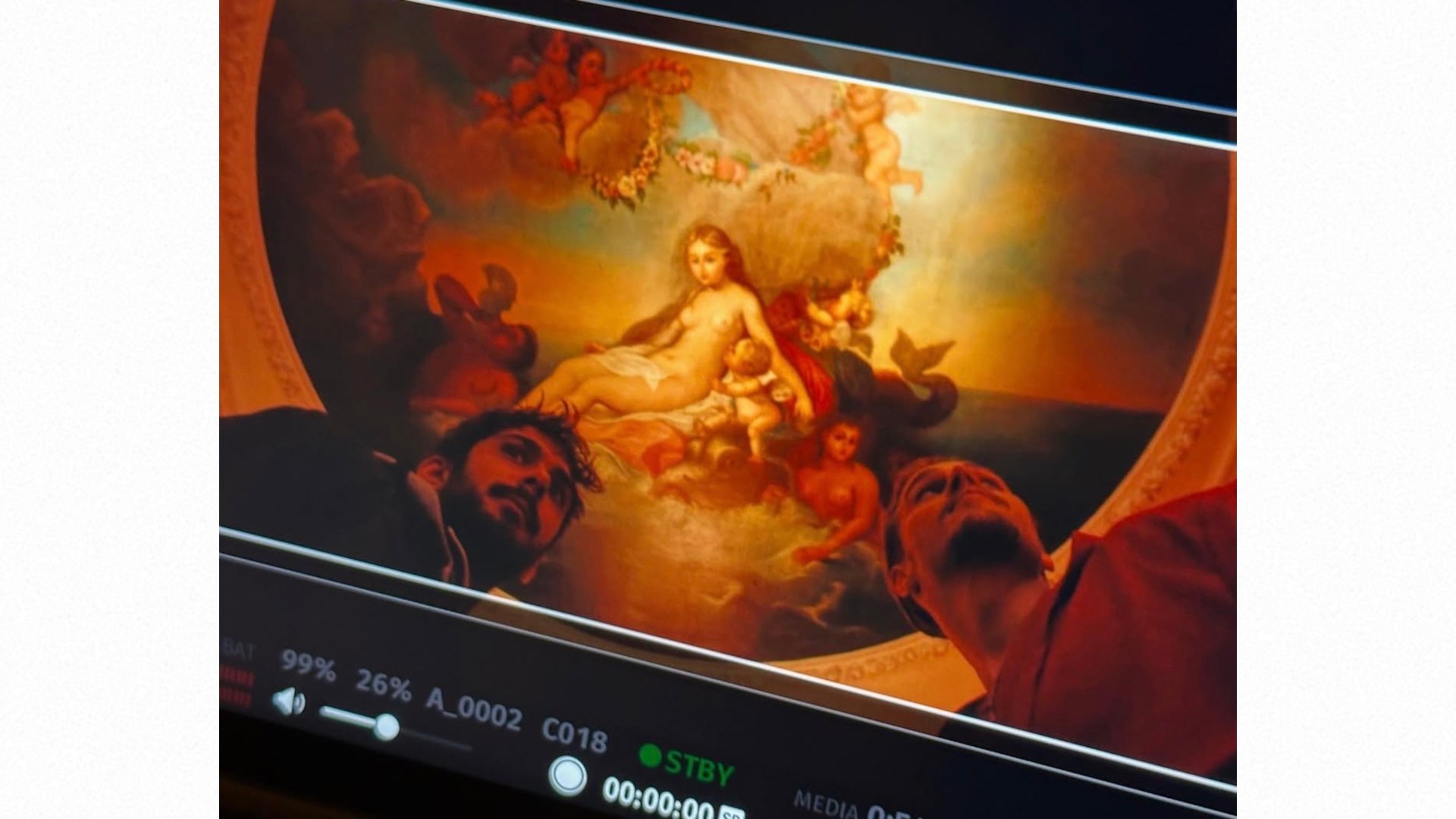
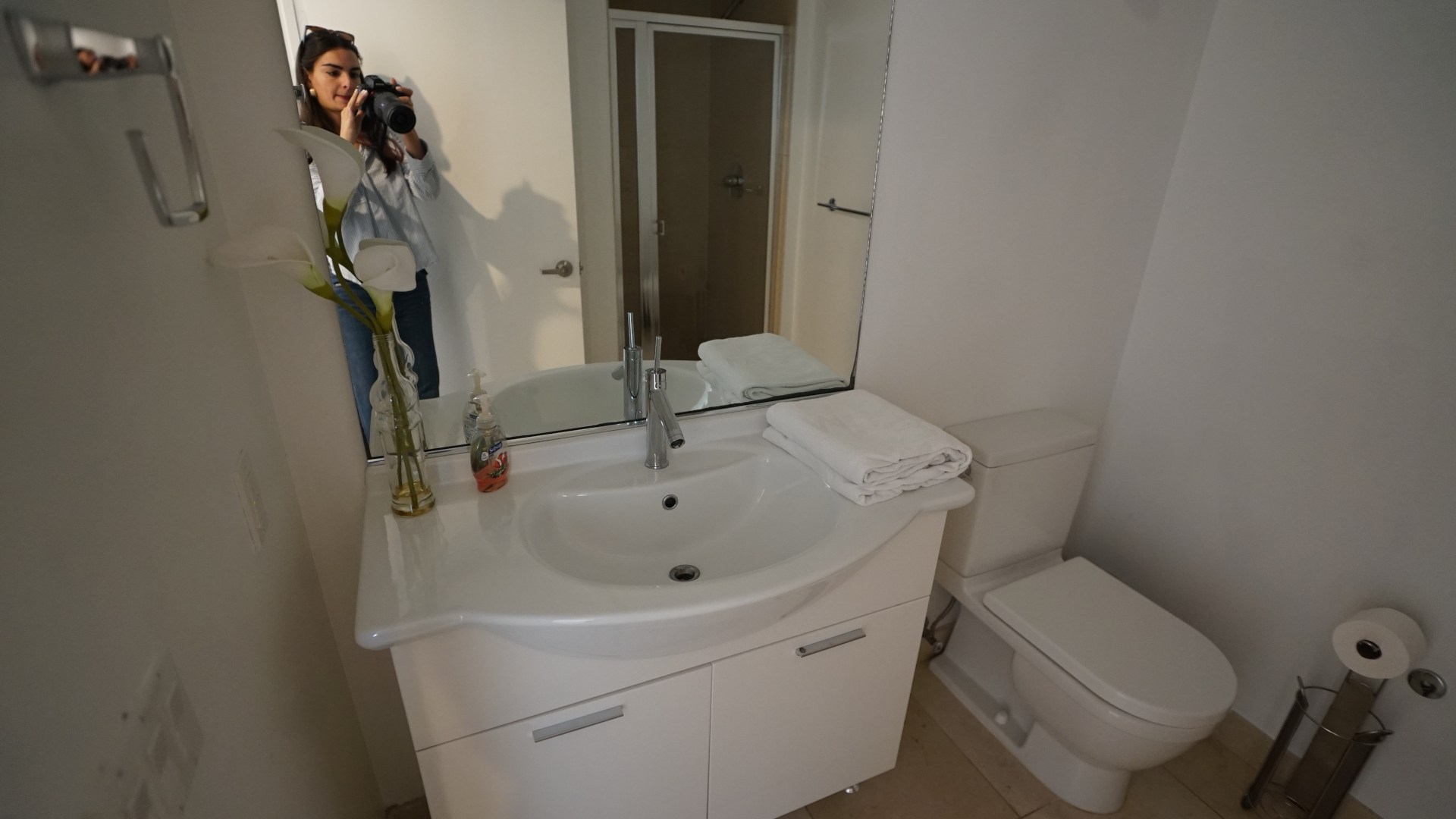
Featured image shows Paula González-Nasser scouting a bathroom; all images courtesy Paula González-Nasser.