

Being fired is a universal experience.
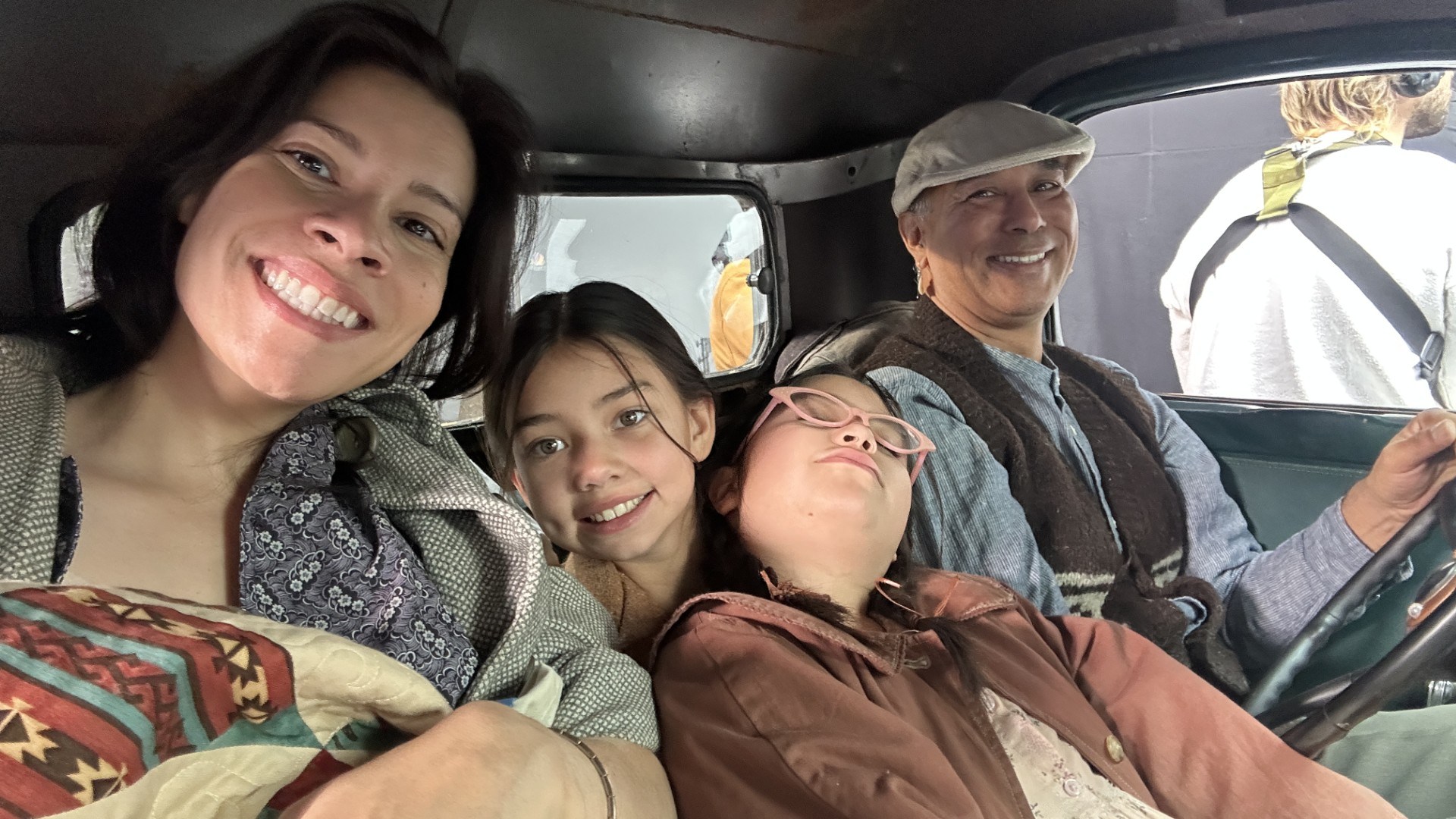
A few weeks ago, I was on the set of an indie film called Cabbage, working with T.R. Knight and a young actor named Matthew Eby. We were a few days away from the final day of filming, and Matthew made a wisecrack about being fired (knowing at this stage of the film, none of us could be), followed by a comment indicating what a crazy thing that would be, to be fired off a movie. T.R. Knight and I looked at each other and both said, “Well, we’ve been fired.”
This conversation (and young Matthew’s astonished response to it) reminded me that every time I’ve touched on this topic with anyone, of any age, who doesn’t work in the entertainment business, there’s a sense of surprise. But you’re an actor! It’s glamorous and thrilling and exalted. How could you be fired?
I’ve actually been fired twice – both from network TV pilots. (For those who don’t know, a pilot is the first episode of a proposed new series. Most of the time, a network show starts with a pilot; sometimes, the network commits to a number of episodes off the bat. A pilot is filmed as a sort of test; if the Powers That Be determine they want to go forward with it, you get a series order. If they don’t, that’s usually the end of that.)
One of these pilots, 20 years ago, never saw the light of day. I was fired after the first table read, after reading with all the contenders for the supporting roles and falling in love with my title character and the concept (it reminded me of Ally McBeal, except the lead is a therapist who has more issues than her client). I remember going out of my way to procure Nanette Lepore earrings, brightly colored and delightfully oversized, as her signature piece. The producers said, unironically, “Are you serious with these?” I should have known.
I was so disappointed, but I understood that the way I saw the role and the way the creatives did were simply different. I also received a bouquet of flowers from the president of the network, saying he was sorry that it didn’t work out and thanking me for my dedication to the role and the project. Anyway, the role was re-cast, with another experienced and talented actor. The pilot was filmed and discarded.
But let me take you back a bit further. 25 years ago. To 2001.
It had been a year, already.
A promising initial reading with Sam Raimi for Spider-Man, followed by his kind quote to a reporter on a red carpet that he was “seriously considering” me to play Mary Jane, had ballooned into headlines in all the trades and chat rooms that I was all but cast. Which I wasn’t.
Before my final reading with Tobey Maguire (at which even I could tell I wasn’t the right fit to play a high schooler opposite him), I had been offered a comedy at Miramax.
Oh, but the offer for that movie (View from the Top) was contingent upon me passing on the potentially life-changing final test for Spider-Man. It was stipulated that if I didn’t turn it down, I would then have to read with Gwyneth Paltrow for the role. My attorney told me when he called with the offer that it was the strangest he’d ever seen. I realize (in retrospect) I was very fortunate that my torture at the hands of Harvey Weinstein was limited to mind games. Obviously, once I had the audacity to take the screen test, I needn’t have “auditioned” for the Miramax film. (I did, anyway.)
Adding to the heartbreak was the insane rumor which followed that I had turned down the role of MJ.
There was also the Broadway actor who was sleeping with a 15-year-old while we were (supposedly) dating … and the film director I’d ended things with before that, right after he mentioned he wanted to offer me a screen test for his next big movie. It was awful all the way around.
Oh, but I digress!
It was March and there was a pilot called The Court, for ABC. It focused on a Supreme Court clerk – arguably the most highly coveted position for a law school graduate, one where you’d have a sort of apprenticeship directly under a Justice, providing research and precedent for rulings they had coming up. It was a real-life field I’d known nothing about, and it was well written and had phenomenal roles. I was delighted to be cast as the lead, with Sally Field as the Justice my character was working with. Adam Scott and Billy Burke played two of my fellow clerks, with Brian Cox as another of the Justices. I especially loved working with (and practicing my palm reading on) him.
We filmed partially in Washington, D.C., for some glorious exteriors – I remember drinking Red Bull Vodkas with Billy way into the night after our last day of filming, probably only returning to my hotel room around 4 a.m., before catching the flight home a few hours later. The rest was filmed in Los Angeles.
Going by all we heard from the network, it had turned out really well.
Then came the exciting news that it had been picked up to go to series! This was the first pilot I’d considered since my four years on Cybill, which had been cancelled in 1999. I’d held both a deep gratitude for my time on that show, as well as a sense that my true love was making movies, where I’d started at age seven on David Lynch’s Dune – relevant in hindsight, perhaps. But I was unequivocally thrilled to be headlining this one.
In May, there are “upfronts,” an annual event in New York City where all the networks (and streamers, now) present to the press what their upcoming slate for the season is going to look like. The leads of the new series are (almost) always flown in to be there for the big announcement.
As the upfront approached, I remember the mild feeling of panic I felt at the network not having solidified my travel plans. The week was approaching, and my agents heard that Sally Field was definitely going, but they were “deciding” whether to bring me. That seemed off. Even though Sally Field is a legend and no comparison to me in terms of name recognition, the way the pilot was originally structured, my character was the lead.
And in the entertainment business, it is known: when you make a pilot, there is a chance the show will go forward, but you will not. Just a peril of the trade. It happens all the time.
I was filming a very low-budget indie film in Canyon Country, California, with Jena Malone and the late Brad Renfro, as I awaited news. It was unusually hot for that time of year – the temperature climbed to 102 degrees on multiple days. As we did take after take in the blazing sun, I stuffed paper towels under my arms and in the seams of my bra in an attempt to mop up the sweat that was working its way through my top. On the day in question, I’d had to lie down at one point, and multiple crew members fainted.
Driving back home in the eternal rush hour that was (is?) the 405 freeway, it was around 6:30 p.m. when the phone rang in my car. I saw it was my TV agent, ringing from his mobile phone.
“Hiiiiiii Aliiiiiicia.”
His voice was weasely and apologetic. And I knew. I remember the feeling of my heart both stopping and pounding simultaneously.
“Just tell me,” I demanded, instantly angry at him, in my 25-year-old indignance, for something he hadn’t done.
“The network’s decided to go a different way.”
I asked him who they were replacing me with, and he said they didn’t know; they hadn’t yet cast the role, but they were letting me go.
I can’t remember much more that he said. I didn’t let him get much more out. I hung up the phone and dashed it against the passenger seat floor.
As darkness descended upon me, I was alone in my misery, and I’m sorry to say it was the darkest night of my life. I grappled with questions of “Why am I here?” and I truly credit my young dog, Jake, and my cat Jessie with keeping me from making a horrible decision I couldn’t come back from.
Oh.
And also: Did I mention I had decided to quit taking Zoloft two days before this incident? No …
It was the only period in my life I briefly took antidepressants; after the occurrences I mentioned earlier, I felt I needed help to cope. I had cycled through several of them, and the little pink pill had seemed to be helping more than the others.
What a series of unfortunate events.
I can remember picking up my flip phone and looking through the 20 or so friends who it crossed my mind to call, and realizing that not a single one of them would be able to change anything. I heard their voices in my head as I looked at their contact card and I absorbed the sentences I knew each of them would say. Not one of which made a bit of difference in that moment. Empty words, I thought.
That night I believed this stupid decision was some sort of judgment: proof that I could not succeed in this industry and had no business even trying. The news of my casting had already been splashed across every trade magazine and so had the news of the show being picked up to series. I couldn’t understand how I’d gone from headlining one of the success stories of pilot season to being unceremoniously dumped.
I felt shamed and heartbroken.
When the sun came up, it felt like a miracle.
And with it came the realization that a TV show that had entered and exited my life within the space of two months was not going to define me. It was irrelevant compared to the gift of everything I had. I drove back to work on the tiny, sweaty indie film and felt grateful for the morning rush hour of the 405.
The role I played was recast (out of respect, I won’t share with whom). She was fired after the first table read.
Then, the entire cast minus Sally Field was let go.
Then, they decided to fire the writing staff.
The director was next.
Then, the decision was made to scrap the entire script and start over from scratch – the show was still set in the Supreme Court, but instead of focusing on the clerks, it would center around Sally Field’s Justice.
When the show did finally make it to air in March 2002, it lasted for three episodes and was scrapped – never to be seen or heard of again.
I was later told that an ABC executive was heard exclaiming at a meeting, “Why the hell did they get rid of Alicia Witt?”
I know now that firing the lead off a pilot is the most common “fix” when a network senses something needs improvement. Most likely, it wasn’t something I did wrong. It just went that way. It would be a blip in my life.
In fact, right after this lowest of lows, so many significant things happened. Within two months, I met a lovely man who I would spend more than five years with. I also was cast as the third lead in Warner Bros’ holiday release Two Weeks Notice. September 11th came and put all trivialities into brutal perspective.
This experience also taught me a key lesson in how I would treat others. Now that I find myself in a position of – ahem – seniority (??), I am constantly aware how much weight my words – or lack thereof – can carry.
I can remember thinking, even then: If someone is let go on a project I’m working on in the future, I will reach out to them.
That didn’t happen here. In retrospect, I do think that’s what hurt the most. But my goodness, I learned a lot from that, too.
I’m truly grateful for the entire experience.
A song lyric comes to mind:
“You were a chapter I could not skip through
So what else can I do but thank you”
Featured image of Alicia Witt is by David McClister.