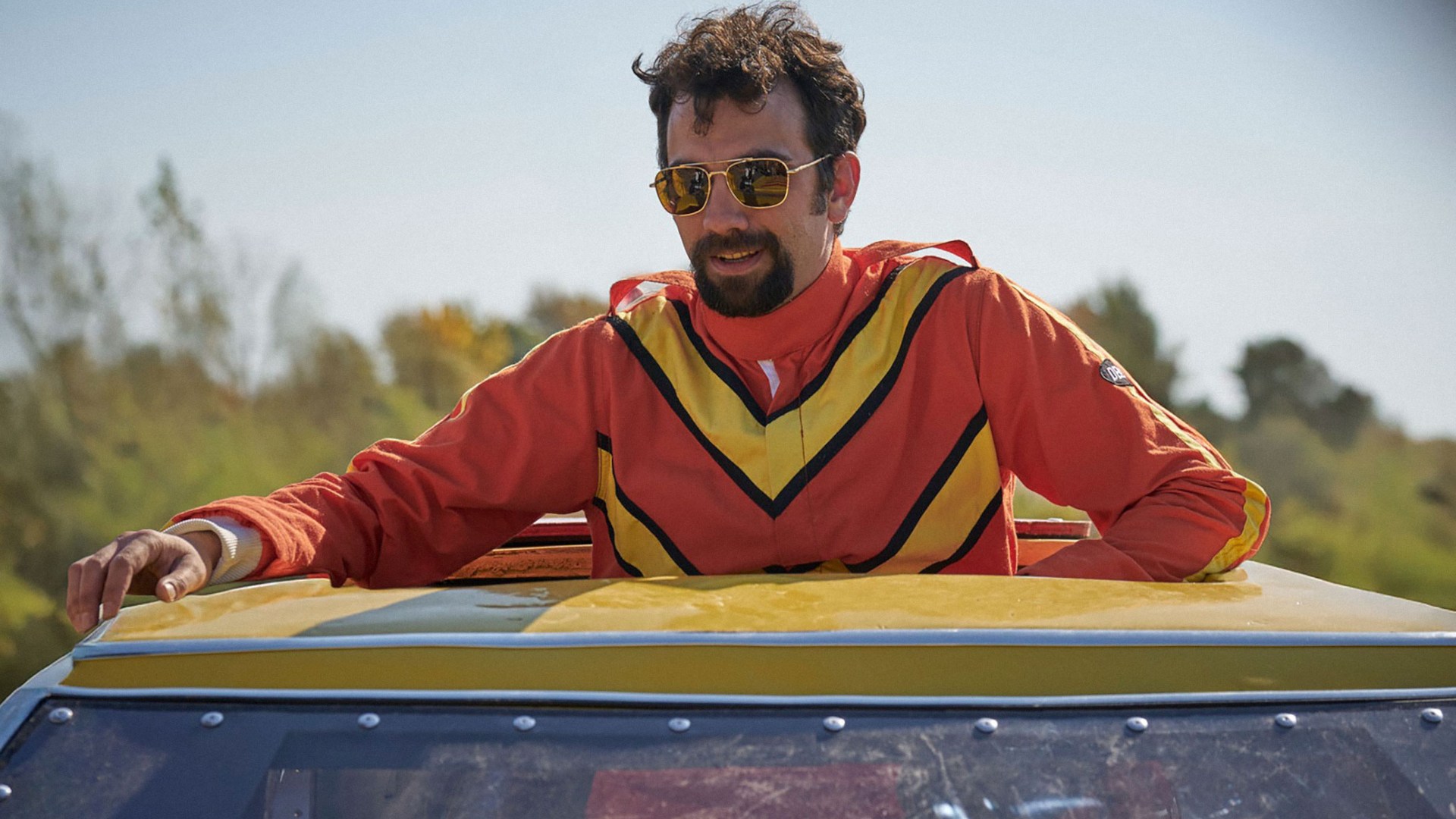
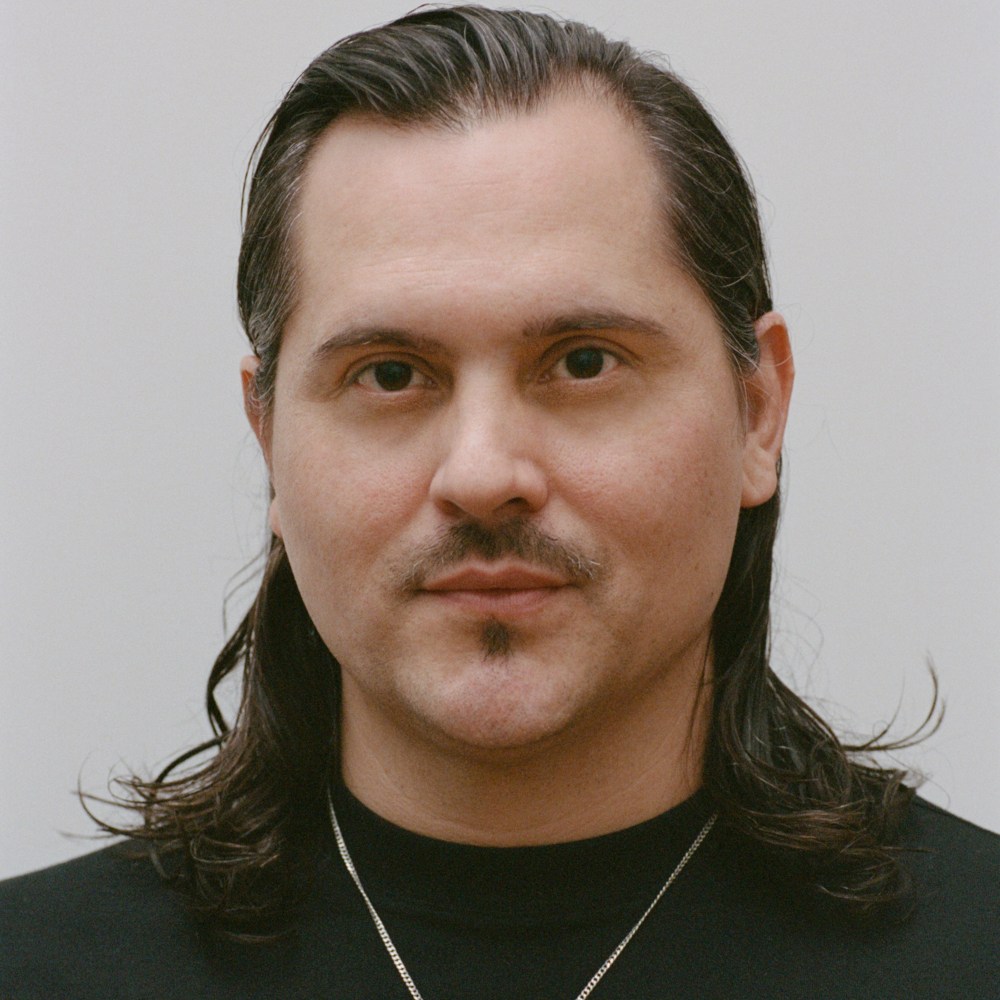
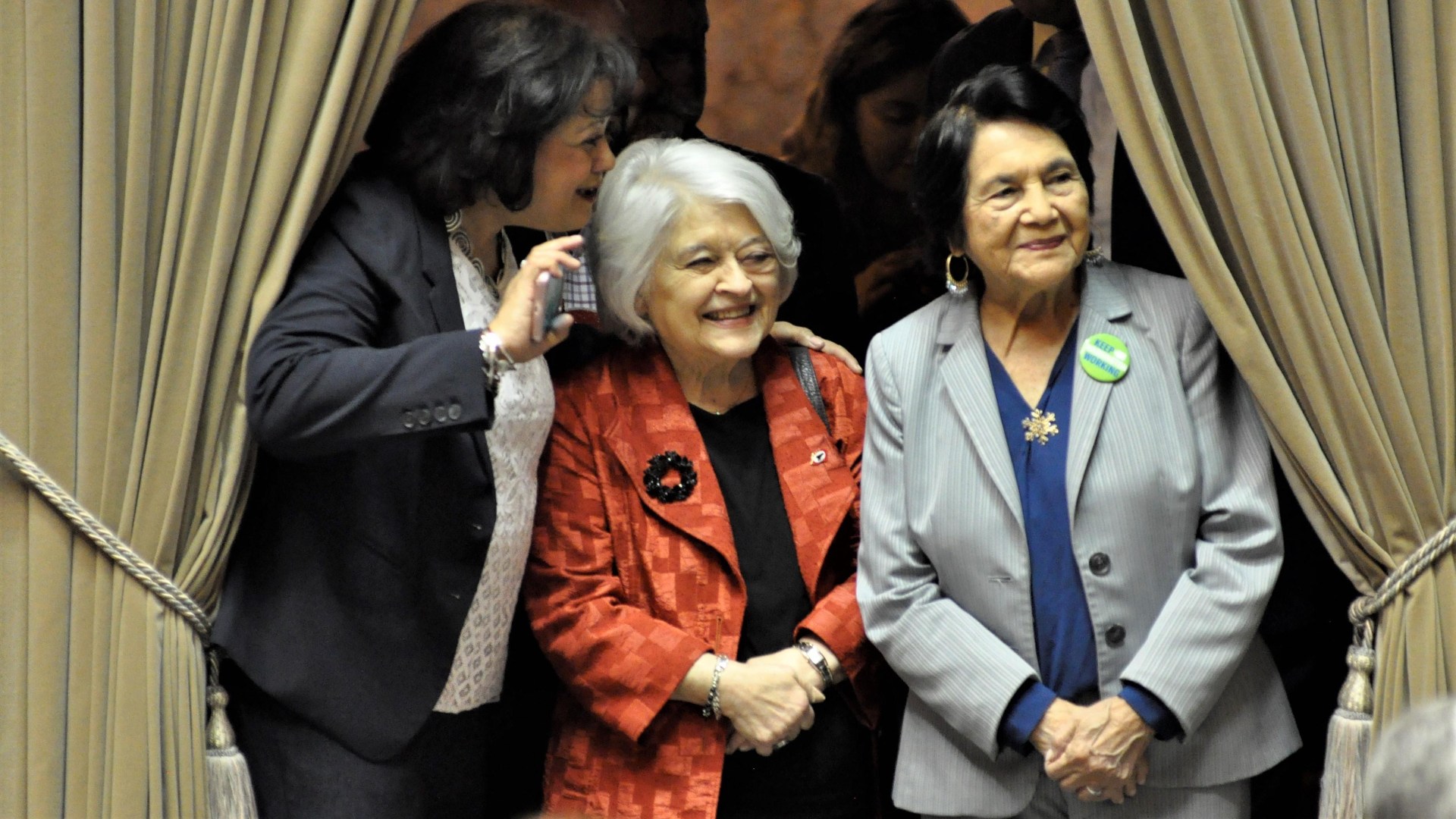
When I was 20 years old, I was really into drugs. I lived with my grandmother, Phyllis Gutiérrez Kenney. She was a state legislator and was one of a small handful of Chicano representatives, a 4 foot 11 powerhouse.
I remember she used to have me run errands, help with the house and occasionally drive her to event in exchange for room and board.
In my room downstairs, I did a long line and was finishing up a cocktail of substances when she hollered from upstairs, “Travy, I need a ride.” Once we were in the car, I started going 15 miles per hour as she finished preparing herself in the passenger mirror. She started yelling, “Hurry up! What are you doing?” I was getting small, subtle light tracers as I drove her through my oblivion to her event. I had been up too long, and as I started to speed up, I felt like I was going 65 miles per hour. I remember her walking out of the car disgruntled, slamming the door. People rushed out to greet her.
After growing up in a rural desert town on the east side of Washington state, living with her was like moving in with a celebrity. I stayed in the room where Cesar Chavez used to sleep when he visited – images of UFW, Cesar, Dolores and my abuela were hung through the house.
I attended the University of Washington and wrote and directed ambitious avant-garde plays. One was about a baseball player whose career-ending injury leads to a downward spiral of jealousy as his dancer girlfriend’s career takes off – full of dance numbers, sex, stylized lighting, baseball flashbacks, a digital backdrop of video games and ultimately a shooting in an airport. The play was called Sensitize.
Everyone in my family was shocked – perhaps that was the point. But my abuela would still have coffee with me and ask, “What’s next?”, looking at me with eyes that were curious, but supportive. Vamos—this is what I'm doing. What are you doing?
She had been a farmworker, who got into organizing and activism for Latinos in her community through the church. (She co-founded Washington State Migrant Child Care Centers.) She had eight children, left the church and her husband and relocated to Seattle, where she married Larry Kenney, who became the president of the AFL-CIO in Washington State, and begin to build her own political profile.
She grew up in San Juan de los Lagos in Jalisco, Mexico. Her mother grew up rich and her father poor, so he went to the seminary to get an education; after he and my great-grandmother fell in love, they eloped and ended up picking in the fields of the Yakima Valley. Her father became a migrant leader and an alcoholic who died unceremoniously.
I would watch her sit and discuss Mexico, local state politics, la raza, la gente and see how through collective action change could be made. (It took my head more than 10 years of sobriety for these conversations to come back to me with clarity and understanding.) They were whispers, low voices in Spanish. Men with thick mustaches and burgundy suits would walk out and get into armored vehicles. My abuela would take her notes and get on the phone, working to execute the plan they’d conceived. She sponsored a law that gave undocumented immigrant students access to scholarships and grants; this was before DACA existed.
In my room when I was (or wasn’t) getting high, I would watch Fellini, Buñuel, Kubrick – this was the time of Amores Perros, Y Tú Mama Tambien, the emergence of Gael, Diego and Mexican filmmakers on the world stage. I would sit in her office and stare at her with Presidente Fox and Bill Clinton; coming from a family where no one had gone to college, this all seemed very strange, surreal and exciting. Here was this Chicana with all these famous people. But it also made sense. She was a star. In her energy, her eyes, her smile, you could see she had somehow connected a life force that gave her a galvanic quality usually reserved for movie stars and only the rarest of politicians and priests. Like them, she was an incredible orator and I’d watch her speak at my university. When she arrived, all the Latinos, BIPOC students and allies would stir. The room changed when she entered it. This is my favorite kind of person, the reason I do the work I do is to touch that energy and to share whatever shades or shards of that are in myself. Perhaps it is in all of us, we just need to find a way to unlock it. She would move the crowd sharing her story from the fields of the Yakima Valley to the House of Representatives.
Perhaps like a lot of people who had overachieved, she was more excited about her own success than anyone – and she should have been. Somehow she had climbed to heights Chicanas rarely can. If I showed her pictures of my travels abroad, she would quickly go and grab her own photos from trips with diplomats from places much further than I had been. It expanded my sense of what was possible for me, for Chicanos.
When word came that a short film of mine had won an award, she would congratulate me and then swiftly bring out a big plaque and tell me all about an award she had won. Perhaps it could be seen as her upstaging or needing validation, but to me, it just felt like we were vibing. She was my light.
By the time I got sober, some of my friends had died and others had gone to prison. I made amends to her and eventually left to New York to pursue my dream of making independent films. When I got married, she was the officiant of my wedding and we stayed close.
When Trump was first elected, I started to have a racial awakening. It was in part provoked by his rhetoric, but also by the climate in Hollywood. I had been packaging a film and felt the roles for Latinos had to go to new talents just emerging in the U.S., but it was early. I could not see my vision for the film in the actors being suggested, I could not see myself making my film in the system.
So I started to work on a documentary about ASCO, a story of stars. A collective from East Los Angeles whose work in muralism, photography, performance and film fused political activism and art making, the group defied boundaries and expectations and helped redefine what a Latino artist could be. These artists reimagined Hollywood and the art world in their likeness. Their work had a profound effect on me.
In their pieces, I could see myself – shades of my mother, my tíos and tías. They had perhaps found the key to unlock the star inside all of us – their defiance and self love was radical coming from brown youth in the 20th century, and in truth, is still radical today. But it was also infectious.
When I pitched the film to ASCO members, I spoke of my abuela. When I pitched to Gael García Bernal and Diego Luna, I spoke of my abuela. They came on as executive producers. The project had come from seeing her and other Mexicans mobilize, and now we were telling the story of a group of artists who did the same. And we were going to mobilize to tell that story. This all came from her. Collectivity runs deep within our culture.
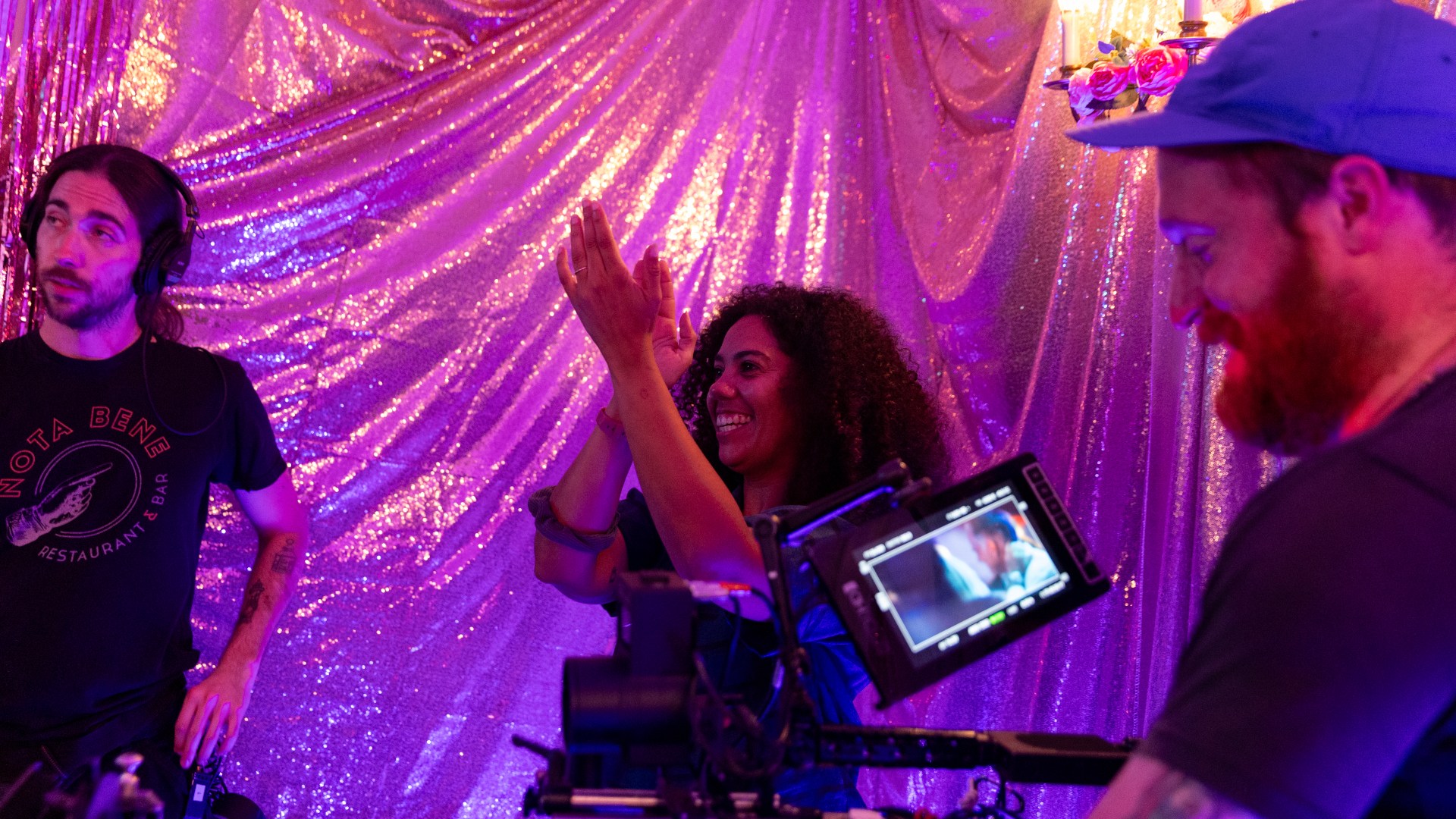
I sought her advice, counsel and guidance and tried to explain that we were making a film about this avant-garde art group, that we would have actors, artists doing interviews and also three short films and an exhibition. She was always encouraging and slightly unsure, but she always took the time when we ate to ask me about my projects. She saw me as a filmmaker. Gronk, from the ASCO group, once told me, “We looked at each other as artists.” This line confused me or seemed obvious to me, until recently. When someone sees you as the thing you want to be, this is the thing you will become. It is vital. When I meet young filmmakers, I see them as filmmakers, artists, actors – this is one way we empower each other.
She started to show up at the hospital nightly, complaining of symptoms the doctors couldn’t find any explanation for. She stopped eating, began withering away, complaining of loneliness. All the events, the speeches, the applause, the dinners, were gone. (There is more to the story. There is more to every story. So my tíos tell me.)
ASCO: Without Permission got into SXSW and my entire team, including Gael, was coming. She planned to come, too, though she was too ill to travel. The film was then selected as the opening night film of the Los Angeles Latino International Film Festival at the TCL Chinese Theatre. It was so special seeing ASCO and my team get their flowers. There was a red carpet, a thousand people in the audience – but someone was missing.
These are the things they don’t warn you about, when you dream of making movies and sharing them with the world. That sometimes things don’t line up conveniently with life. People you love, perhaps the ones who incite the very thing you made, can be dying at those very moments and even at the Chinese Theatre, you can whisper to yourself, as if she could hear you, “Look at this, look what we did.”
One of the last times I spoke to her, she was quite sick. She was lonely and I felt guilty and confused. It was right before the L.A. premiere and I said, “You’ve got to get better so you can come to see the film. Edward James Olmos is speaking – do you know him?” “I know him well,” she said, with that old charisma and light brightening. “I’m coming.” I knew she would not make it, perhaps she knew too, so I told her I had dedicated the film to her and my mother. She started to cry with excitement, “Oh mijo …”
Abuelita.
She died shortly after that. I went to her funeral and visited the house I lived in that rests on Lake Washington, which had become overgrown with trees and shrubbery… I stared up at the house and felt a total emptiness and realized she had enveloped everything there for me. She was the city – the lights, the energy, the sense of possibility.
The only way to reach her now would be spiritual. Ofrendas, the cosmos, our Lady of San Juan de los Lagos. Anything to bring her out from the depth of eternity. This essay, my memory, her extraordinary light.
A movie is not just a movie, it is a journey. We know that. We know that.
Featured image shows Phyllis Gutiérrez Kenney and Dolores Huerta at an event; all images courtesy Travis Gutiérrez Senger.