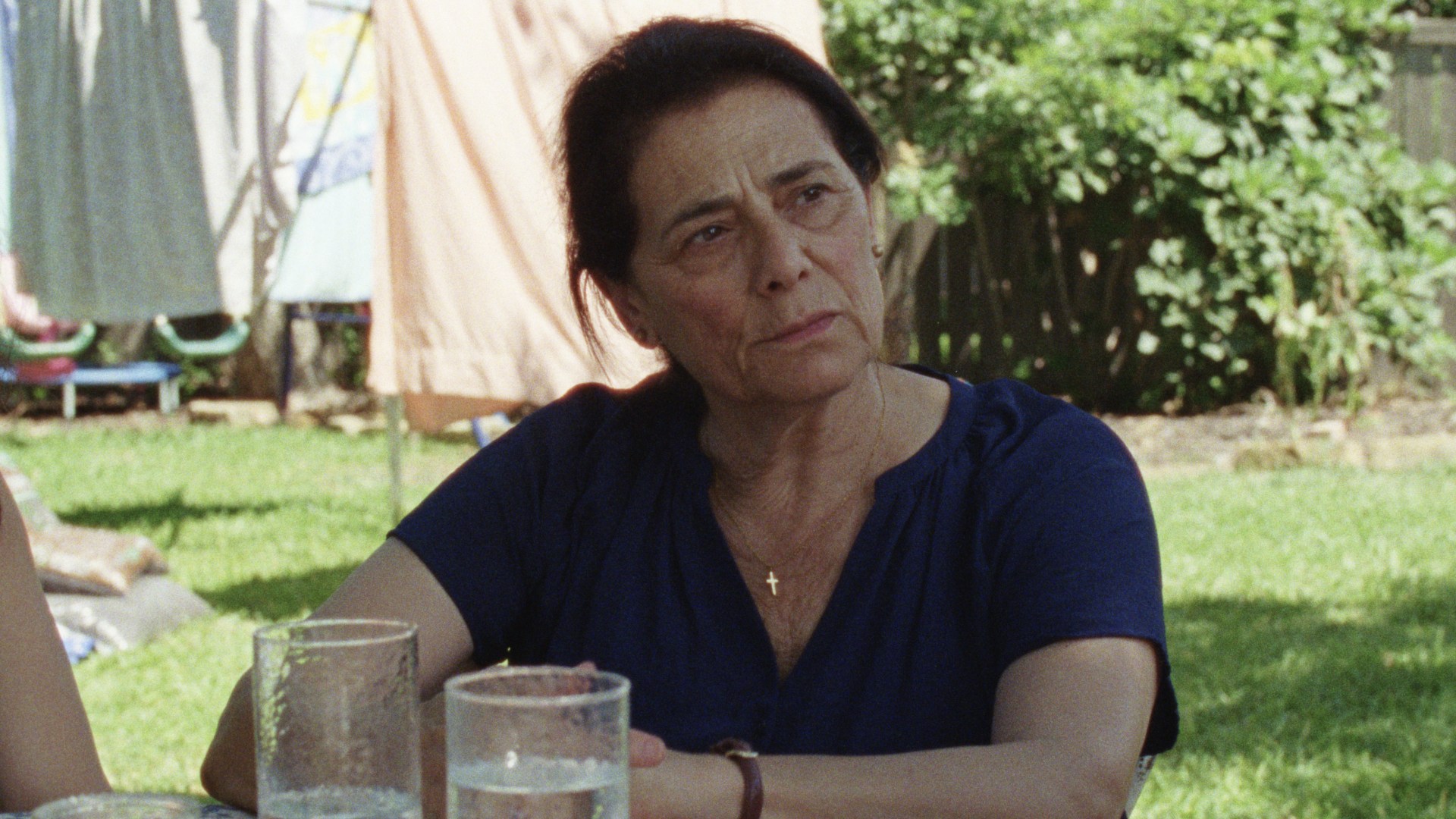
When I embarked on my second feature film, Magnetosphere, which is about a neurodivergent teen who discovers she has synesthesia, I wasn’t attempting to make an “issue film,” and I certainly didn’t intend it as autobiographical. In fact, none of it was true, unless you counted my run-ins with bad productions of Gilbert & Sullivan operettas. As far as I knew, it was all a complete work of fiction.
The operative words being “as far as I knew.”
The story is pretty straightforward: 13-year-old Maggie, shy and awkward, moves to a new town. She gets bullied, falls in love, struggles with herself. She suspects, rightly, that she experiences the world differently from others, in a more heightened way – by turns pleasurable, troublesome, and sometimes even ugly. A cautious kid by nature, she tries to keep her sensory differences a secret. But they’re there all the same, and she doesn’t know why.
Of course she doesn’t; like most of us, she doesn’t have a word for synesthesia. Simply put, synesthesia is a neurodivergence where two or more of your senses are combined. A person with synesthesia might hear color, see sounds, smell music, or experience any number of other sensory fusions. Synesthesia had intrigued me for ages, but never in the context of my own life (needless to say: hold that thought).
I heard the word for the first time when I was an inquisitive, obnoxious teenager myself. I was sitting in the car with my mom, which could only mean one thing: she was a captive audience, and I was subjecting her to my latest magnum opus. After suffering quietly through six or seven chapters, she politely suggested we listen to the radio. (This was a wise move on her part, to nip it in the bud when she did. Otherwise, she would probably still be listening to it now).
Anyway, the radio won out. It was NPR, doing a story on synesthesia – talking to synesthetes who could taste shapes, experience sound as physical texture, and more. It stuck in the back of my head ever after; there was just something about it. Maybe it was the name. It sounded like a disease that might have felled people in Little House on the Prairie (as in, “Laura and Ma kept close watch over Pa that long winter, for fear he would catch synesthesia.”) Eventually, I forgot the exact word: syn-something. But I never forgot its meaning.
Years later, after I had made one feature film (Goodbye, Petrushka) and was looking to make another, I saw a beautiful film called Confetti, by Ann Hu. It was the story of a dyslexic girl, based on Ann’s own daughter. Several things about this film stood out to me. First, you don’t often see neurodivergent girls and women depicted in the media; when you do see neurodivergence represented, it’s often in males (no doubt because women are still expected, implicitly, to be perfect — if you want my opinion). Second, Confetti contained POV shots showing exactly what Meimei, the main character, was seeing. We got to go inside her mind, her neurology. It certainly wasn’t the first film to do that, but it really impressed me. I spoke briefly to the director after the screening; she had already inspired me to do something. I just didn’t quite know what.
Synesthesia didn’t take long to come to mind. It seemed tailor-made for film or TV. I wrote a script that would allow me to depict it onscreen in an interesting, even immersive way, without a massive budget (side note: I am actually not opposed to having massive budgets; please feel free to send one my way). I got my hands on all the synesthesia literature I could find. Yet there was still so much I didn’t know. That’s when I went to the primary sources – Facebook groups for synesthetes. I asked them to tell me their experiences.
I don’t know what I expected, but I got deluged. I must have heard from 70 synesthetes. I tried to talk to them all. Of course, there was no way I could ever mine all their experiences, good and bad, visual, tactile, olfactory, etc. In the end, I limited Maggie’s synesthesia to visual and auditory experiences — mainly emotionally triggered ones. While it doesn’t convey anything like the full spectrum of synesthesia, it was probably the clearest way to convey it to an audience, some of whom will have never heard of it before.
I just wished I could have used more of the material I received. Some people told me incredible stories I could never use in a “family” film – I am thinking here in particular of the woman who experienced purple orgasms. Maybe for another movie, another day.
But perhaps my most significant conversation was with a synesthete composer named Michael Torke. He had written a suite for the New York City Ballet, inspired by his sound-to-color synesthesia. Over lunch, he told me about the different movements of his piece and their colors. He told me how one movement became more blue for him when he added a certain instrument.
And the instant he said that, a fuse went off in my brain. It was something about those words together: instruments, and colors. Suddenly, I was transported back to being five years old, at bedtime, listening in the dark to an audiocassette. I called it the Composer Tape, because on its label, my father had written the names of the composers whose work was on it: Bach, Mozart, etc. One of the pieces was the Florida Suite by Frederick Delius. It was a favorite of mine – I always waited for it to play. But now, suddenly, I remembered how it had played for me: in blue, orange and green stripes, like monkey bars or a jungle gym, pieces of a playground, dancing around. I had had synesthesia all along. Magnetosphere was true to life after all — my own life, that is.
I don’t mean to suggest that every story needs to be true to the life of its author. Far from it – and yet … I was so surprised, and pleased, to realize I had this personal connection to my film. And I don’t know if I ever would have realized had I not had that conversation with Michael that day. Because these sensory phenomena, these odd little perceptual medleys in our heads, aren’t things we go around questioning. They’re just part of our mental landscape. We take them for granted.
It wasn’t as if Magnetosphere now suddenly became legitimate — it already had been. I was using real synesthetes’ real stories, with their permission. The difference was that now, I knew more of why I had felt such a strong pull to make the film in the first place. And I felt ownership over the project of an entirely new kind.
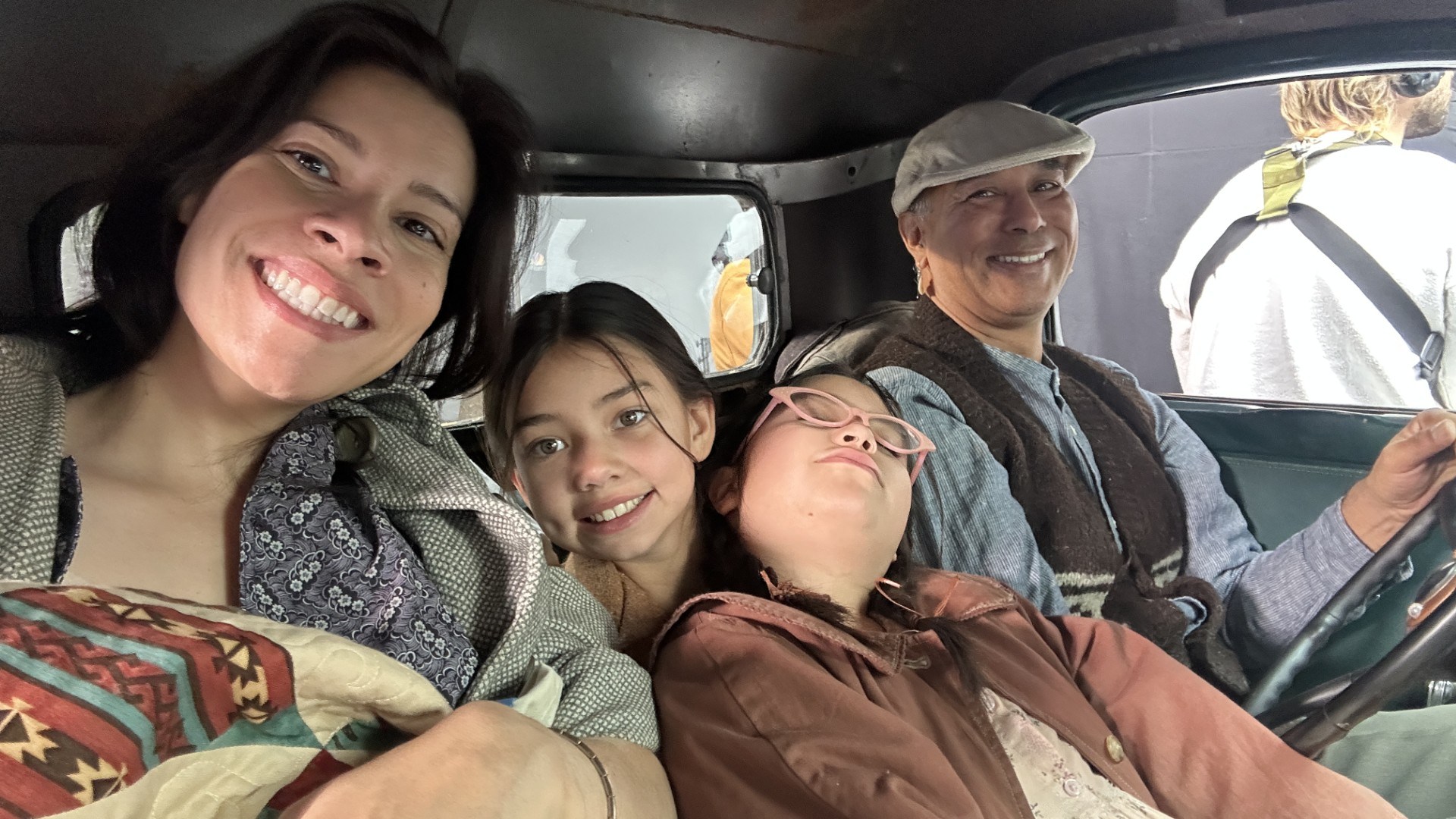
Magnetosphere’s connections to neurodivergence (synesthesia and otherwise) ultimately went even further. It turned out a number of the cast were neurodivergent. Shayelin Martin and Patrick McKenna both have ADHD, which I am certain influenced their performances. Tara Strong told me about her own emotionally projected synesthesia — about “experiencing” purple from the sense of touch.
I learned a great deal about people with synesthesia through making Magnetosphere. Some don’t like to define themselves by their synesthesia. Others identify with it very closely — and become neurodiversity influencers, for instance. And I suspect huge numbers of us go around unaware we have it, because – unless it is actively disrupting our lives – why would we think about it? Why would I have ever remembered the Delius piece playing in all its different colors – something that doesn’t strike you as particularly odd when you’re five – except for that one random happenstance of one conversation, with one synesthete, one day?
I don’t consider myself an expert on these topics; I focused on them only insofar as they concerned Magnetosphere. I had neurodiversity consultants working with me on the movie; they were and are the real experts. But if there’s one thing I’ve learned about synesthesia, it’s this: no two people experience it the same way. Therefore, you can’t be “accurate” in how you portray it. You can only be authentic or inauthentic. And my job, by talking to all these synesthetes, was to make it as authentic as possible.
Of course, whatever choices you make, they’ll never resonate with everyone. For example, there’s a scene in the movie where Maggie gets overstimulated in art class by a bunch of images that produce ugly swirls and sounds for her, eventually making her throw up. That scene didn’t make sense to some synesthetes, while others singled it out as exactly like things they’d experienced.
In other words, when it comes to something that’s so personal for each individual who experiences it, you’ll never get it right – because there is no right. All you can do is give it your best shot, take it off into the world, and see where it leads you. And perhaps – if you’re lucky – somewhere along your path, you’ll run into your five-year-old self, listening to an audiocassette late at night, hearing the music come out in blue, green and orange.
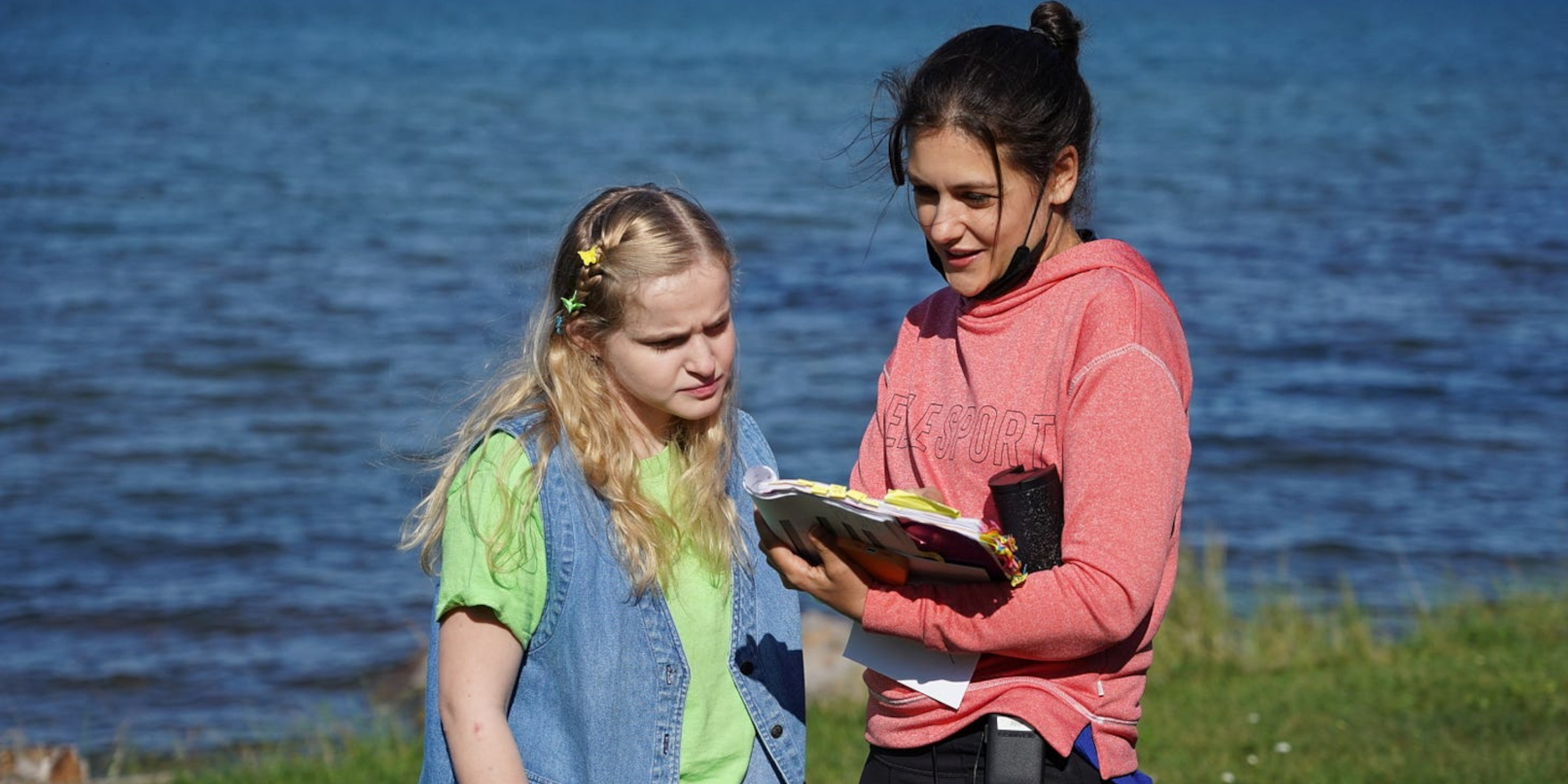
Featured image shows Nicola Rose directing Shayelin Martin on the set of Magnetosphere in Sault Ste. Marie, Canada. (Photo by Zack Trunzo; all images courtesy Nicola Rose.)