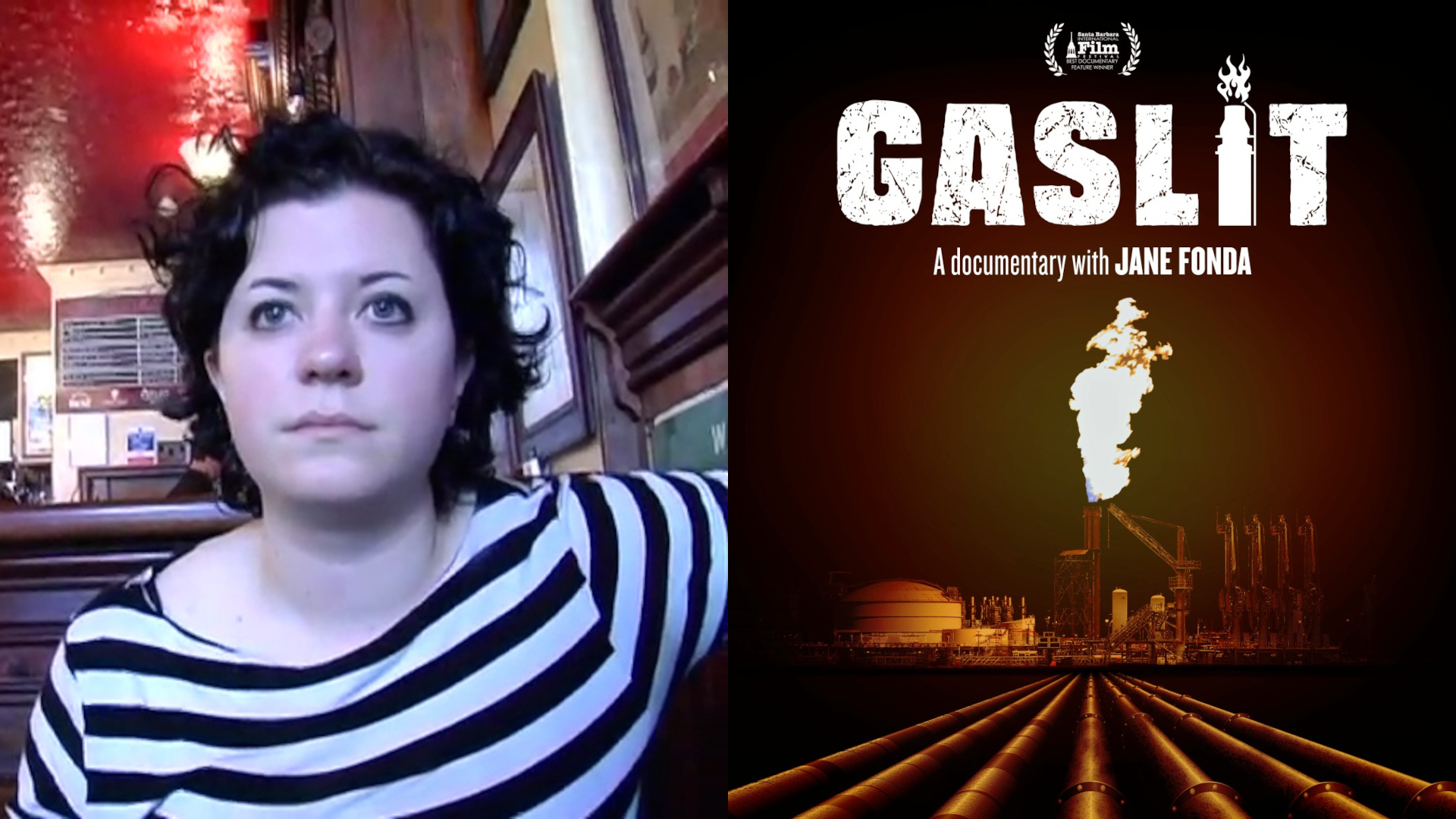
I’m getting ready to fly to London where my feature directorial debut, Gaslit, is playing at the Raindance Film Festival.
But while Gaslit is my first completed feature film, it’s actually my second attempt at making one. I tried directing a feature documentary once before: 20 years ago in London, when I took a big creative swing … and missed.
It was 2004 when I got the idea to direct a documentary. I was living the broke artist’s dream in New York City’s East Village. I covered my cheap rent by editing videos, taking the odd production assistant gig, and doing overnight shifts at a 24-hour record shop on Avenue A. It was only a year since I’d graduated from Notre Dame with a Film & Television degree, but I was already wanting more.
Timing is everything, and my timing has historically been terrible. I’d been a massive fan of punk and grunge music growing up, so when bands like the Strokes, Yeah Yeah Yeahs, Interpol and the Walkmen appeared on the scene when I was in college, I fell hard. But by the time I arrived in New York in 2003, it felt like the special time when these bands were coming up together was already over. The Strokes’ famous Mercury Lounge residency felt as distant as the Ramones at CBGBs. I’d missed it.
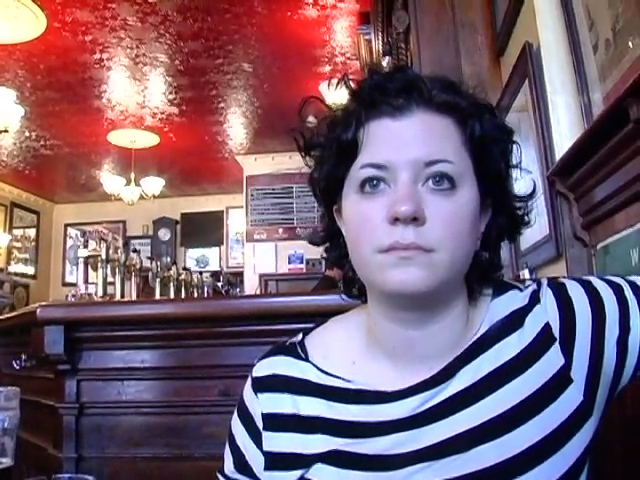
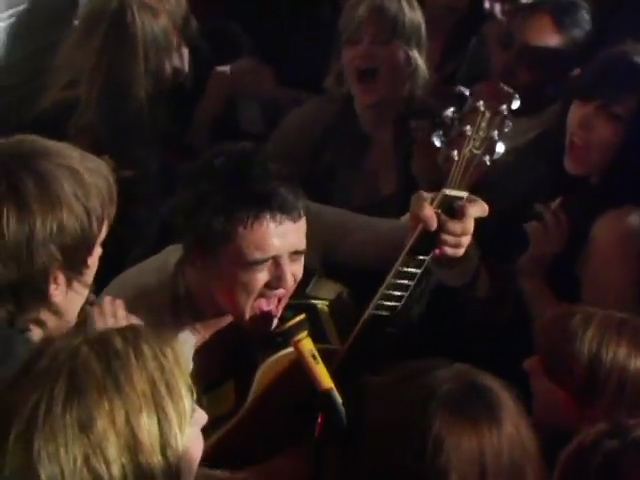
But then I bought the debut album of a British band called the Libertines. It was messy garage rock, full of poetic allusions to people like Queen Boadicea and a highly-romanticized view of England’s past. But it was about more than just The Libertines. There appeared to be a true community that included all kinds of bands – both experienced pros and brand new ones still learning chords. I devoured issues of the UK magazine NME that told tales of impromptu guerrilla gigs, message boards where fans and musicians communicated directly, and free music downloads that flew in the face of the usual concerns about record labels, copyrights or profits. The punk DIY ethos seemed alive and well in London, and I was jealous. Fans were putting on their own sold-out club nights and booking cross-country tours for bands while letting them crash on their couches. And these were bands with songs on mainstream radio, whose music videos were being played on MTV, and who were fawned over by the biggest music critics.
Though this scene was largely ignored by the U.S. music industry, I was so excited about what was happening in London that one day I exclaimed, “Somebody should just make a documentary about it.” And immediately I thought, “Wait, I know how to make documentaries …”
I posted my idea on the biggest message board: I wanted to come with an outsider’s eye and interview not just the bands, but the fans, promoters, DJs, writers, everyone. As I had no funding, I asked if people would give me places to crash. Within 24 hours, more than a hundred people had replied, encouraging me to come, offering their couches and suggesting lesser-known bands to include in my film. I was elated.
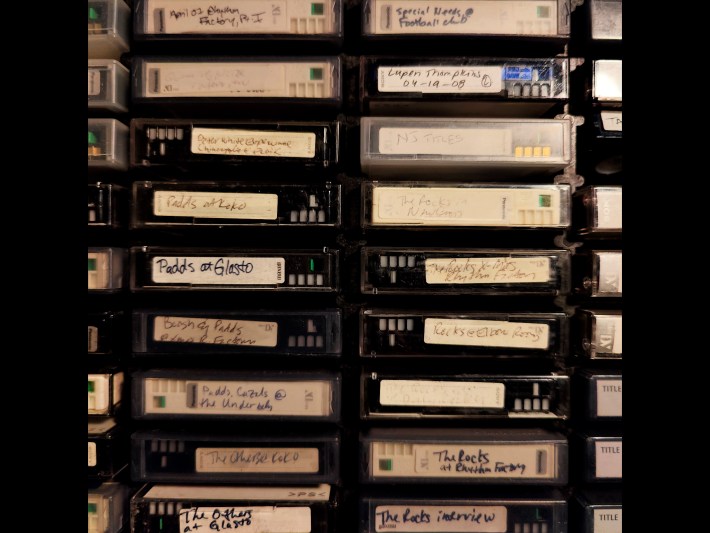
To make sure I didn’t back out, I picked a date in early 2005 and booked my flight to London, with a return six months later. I went to B&H to buy the Panasonic DVX100A and put it on a credit card. I also put the tripod and mics on a credit card. If maxing out credit cards was good enough for the likes of Robert Rodriguez and Kevin Smith, then it was good enough for me.
One of the many things I didn’t understand at this time was that there was a reason that you don’t hear about documentarians using credit cards for their first films. Docs take longer to make, and they don’t typically make a profit. What I was actually doing was setting myself up for years of high-interest debt.
In film school, I was praised for my producing, writing, directing, editing and shot composition, but not for my technical expertise. Knowing this, I tried to find another film person to come with me, but it turns out that most people don’t jump at the chance to take an unpaid gig in another country with no guarantee of food or shelter. It was just going to be me, alone.
My departure date came quickly, and I packed up my life, said goodbye to my friends, and flew to London, where I knew absolutely no one.
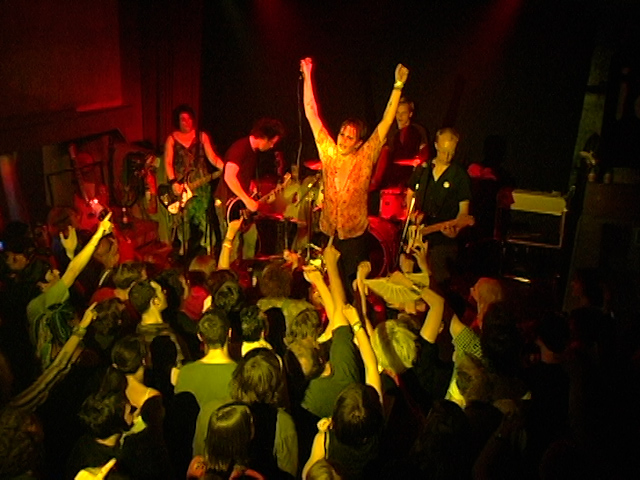
The first night I had my own small, dingy hotel room, before I began months of crashing on couches. Though I started filming gigs immediately, I quickly learned that recording live music is much more technically challenging than anything I’d done before. Small venues often had poor lighting, which caused noise and was a white balance nightmare. And after reviewing footage, I also learned how bad the camera audio handled loud music. It sounded awful, so I bought an external audio recorder and started plugging it into the sound board at each gig. And then another to also record the ambiance. I didn’t know how I was going to mix it all in post, but at least the individual elements were sounding good.
At the same time, everything non-technical was going great. At this time bands were running their own MySpace pages, so I could message many of them directly to set up interviews and get press passes. People seem tickled that a Yank was interested in the scene, and I was given the moniker “Katie Documentary” to distinguish me from the many other Katies.
As the weeks and months began to speed by, the line between being a documentarian and being part of the community blurred. I was meeting amazing people who would become lifelong friends, but I was also becoming disillusioned with the scene I’d admired from afar.
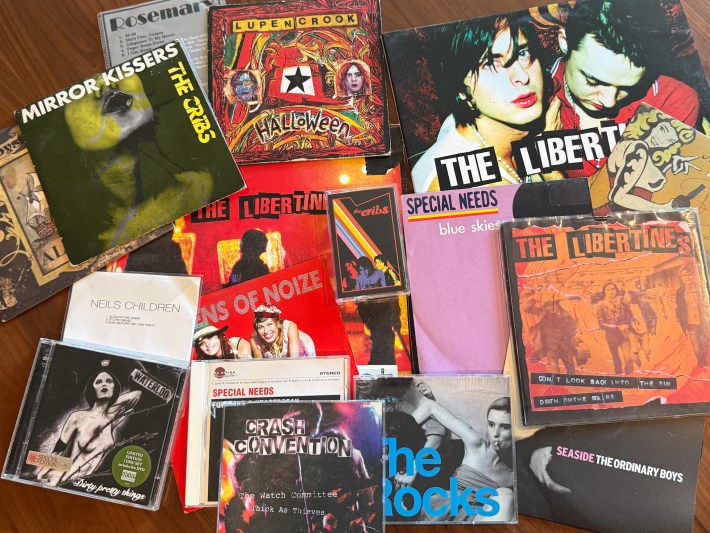
Yes, there were incredible band and fan interactions, but at times that also led to abuse, and I was shocked by how young many of the fans were. Hard drugs brought out a nastiness in some, and the misogyny of this particular libertine dream became impossible to ignore.
As the bands grew in popularity, record labels began signing them, which caused much of the DIY ethos to fade away. I suspected that for many it had always been a marketing angle to get to the big leagues, rather than a worthy goal in and of itself.
That summer I managed to get a press pass to the legendary Glastonbury music festival in Somerset. I was filming my favorite bands at one of the best festivals in the world, but I was also trudging through knee-high mud while desperately trying to keep my not-yet-paid-for camera safe. One morning, I fainted as Canadian band Hot Hot Heat played their hit song “Damages.”
My friends later told me that I didn’t faint just once, but many times in a row. Each time I went down, I immediately began apologizing and trying to get up before falling unconscious again. What an apt metaphor this would be for my attempts to finish this film.
As my friends walked me back to our tent for water, scene photographer Andrew Kendall snapped a photo of me, disoriented and covered in mud, which made it into the NME. This wasn’t how I wanted to get into the magazine that had so inspired me. This was a sign it was time to go home.
My six month tourist visa was coming to end, so I returned to New York, jobless and in debt, and when I looked at my footage, I didn’t see a film there. Undeterred, I saved up and flew back to London to keep filming, certain I’d find my ending if I just kept filming. I went back and forth many times over the next couple years.
Then one day, a bag I’d left at a friend’s house while I was traveling went missing. The bag had my audio equipment and all of the separate audio recordings from live shows. Without those audio recordings, I had only camera audio for all the live shows, and most of it was unusable. I also had the interviews, of course, but how could I make a feature music doc without music? After all, no band would ever approve poor quality audio recordings.
I sat on a stoop in the East Village and wept. There was no way to finish the film. I’d spent three years of my life on a dead-end project, with nothing to show for it. But deep down, there was another feeling: relief, because I didn’t know how to finish the film anyway.
The frustration and shame of not finishing this documentary stuck with me for a very long time. I threw myself fully into other people’s projects, but I was terrified of starting anything of my own again.
Funnily enough, those years in London did end up leading to a video career, just not the one I was aiming for. In early 2008, as the financial crash was looming, I was hired to produce a branded web series called Rehearsal Space for Apple’s Logic Studio. They were having trouble booking music guests and had heard about how I’d shown up in London with no contacts, and yet was able to film dozens of bands.
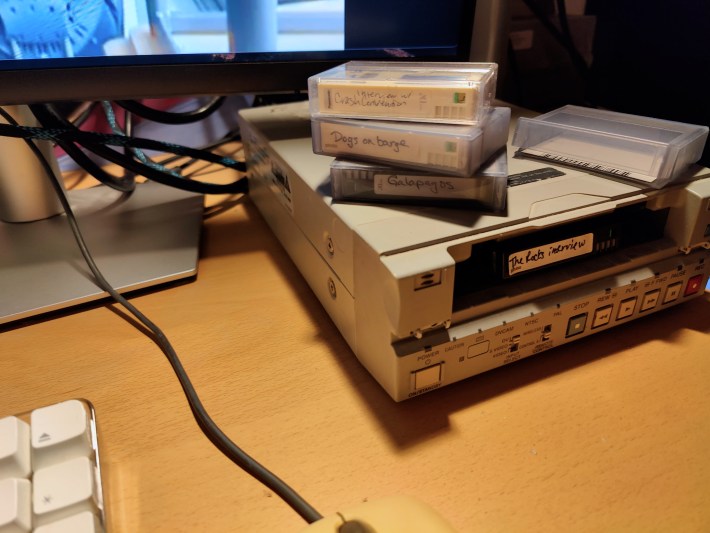
I enjoyed this job, but I still kept an eye on what was happening in the London indie music scene. Record sales were tanking due to Spotify and other streaming platforms. Most of the bands I’d filmed who’d been signed got dropped. “Maybe that’s the ending of the film: capitalism ultimately destroys everything,” I thought to myself.
I continued down a path of steady, salaried video jobs where I grew my production and post-production skills. I was able to pay off my debt, and, perhaps most importantly, I began to form strong creative relationships. I no longer tried to do everything on my own.
In 2016, I joined Greenpeace USA as a video producer, which led me to working with legendary actor and activist Jane Fonda. I was happy to be traveling again, on land and on sea, making short content about people and places impacted by the climate crisis.
Then in 2023, Jane Fonda and I were collaborating on a web series of vignettes when I realized that the story was too big, connected and nuanced to be a series of shorts. “I think this story needs to be a feature documentary,” I heard myself say to her.
We pitched it to Greenpeace USA, who had never made a feature film before. I was able to overcome my past fears because this time, I knew exactly what to do. I could envision the final film from the beginning, and I was able to build a creative team of trusted people. There were still huge challenges and setbacks of course, but more than three years later, Gaslit is done and out in the world. It even premiered at the Santa Barbara Film Festival, where it won Best Documentary Feature.
Turns out I am Katie Documentary, after all.
I see now that it took me truly letting go of my first film to make my second one a reality. As for my time in London during the “indie sleaze” scene (as it’s now branded), I no longer focus on the technical mistakes in that footage. Instead, I see the value of documenting something before everyone could film with their phones.
I don’t think I’ll ever be able to turn off the part of my brain that is still seeking an appropriate ending to my first film. In fact, I have a new take that involves going back to film the same people 20 years later, now with all of my experience, honed skills, and creative partnerships. I’ll still incorporate the old, messy footage, but instead of being embarrassed by its quality, I’ll contextualize it as emblematic of the DIY spirit I was drawn to in the first place.
Perhaps my timing is finally right.