When I introduce audiences to my new documentary State of Firsts, about Sarah McBride’s historic run to become the first transgender member of Congress, I begin by saying, “It has never felt more important to be telling trans stories from a trans lens.” This is not a banal or hopeful statement about identity politics nor the potential or assumed solidarities between trans people, but rather, a comment on authorial control. As a trans person living in and through this cultural moment, it has never felt riskier to make work explicitly about being trans, and perhaps more importantly, about the sociopolitical forces at work in the U.S. to expunge and eliminate transness as a way of being.
As a filmmaker, I am indebted to early queer and activist video makers who understood cinema as a necessary and critical tool of social change. While those artists were making and circulating films about the AIDS crisis in the 1980s, I began my career decades later making films in response to an enduring cultural climate that represents trans and gender non-conforming people as pathological. Throughout all of my work, I think about transness not just as an identity category, but as a method of approach to complex questions. I experiment with form as a way to question the power dynamics at stake in nonfiction storytelling, and their impact on marginalized people. I wonder how nonfiction filmmaking might change when we set new terms for both participation and collaboration. What if rather than setting subjects within predetermined frames, we made documentary an invitation to explore representation itself?
Twelve years after Time Magazine declared the supposed “Transgender Tipping Point,” wherein culture makers and markets capitalized on what we now know was a fleeting and opportunistic interest in the power and possibility of representation, we are left to consider all that has been sacrificed and left in its wake: namely the increased vulnerability, administrative backslide and targeted scapegoating of trans people for political gain.
At this moment, there are many efforts to define the category of “trans cinema.” Some rightly assume it to be an effort to lens the lives, possibilities, experiences and stories of trans, nonbinary and gender non-conforming people. Others, like myself, understand it to be a genre designed to think across, within and through genre as a way to interrogate the limits and possibilities of gender. And so it was a surprise to many in my life when I said yes to a vérité project that would land me in the halls of Congress, in proximity to people whose politics I do not agree with, and whose belief in the potential of politics is very distant from my own. However I did so to consider what was possible through pointed proximity. The result is not a flattening or rousing endorsement of a single person or process, but rather, a commitment to a trans lens that has further bolstered a set of my beliefs:
- A trans lens on a trans subject understands transness not just as an identity, but as a threshold of unfolding critical potential.
- A trans lens is sensitive to the edges of the frame, and all that must exceed any moment of attempted capture.
- A trans lens recognizes the ways trans people have long been forced to narrate certain stories-of-self for survival, and uses the language cinema to unsettle those scripts.
- A trans lens acknowledges that many trans adults were also trans kids, and thus proves something inarguable about the embodied attunements of self-understanding and coming-of-age.
- A trans lens extends legacies of queer and AIDS activism by those who understood that control of media impacts influence and circulation.
- A trans lens is a context-building experiment.
- A trans lens is participatory.
- A trans lens rejects transness as a pathologized or replicable state of being.
- A trans lens refuses the interview as the primary mechanism through which a trans subject is framed.
- A trans lens proves that we will never disappear.
After our Tribeca premiere, a close friend described the experience of watching State of Firsts akin to taking a Rorschach Test. If you want to read the project for the hope and possibility of family support, civil service and local governance, you will. If you want to read the film as a close encounter with cracks in a crumbling system hellbent on fantasies of a recuperable nation state, or a portal through which to question the role of identity politics in current organizing and alienation, you can do that, too. Taken together, the film asks you, as an audience member, to critically engage with a time-bound capsule of the political present, and to take leadership from trans people who – while often positioned at the edges or outside of the dominant frame – offer us key strategies for survival and collective liberation.
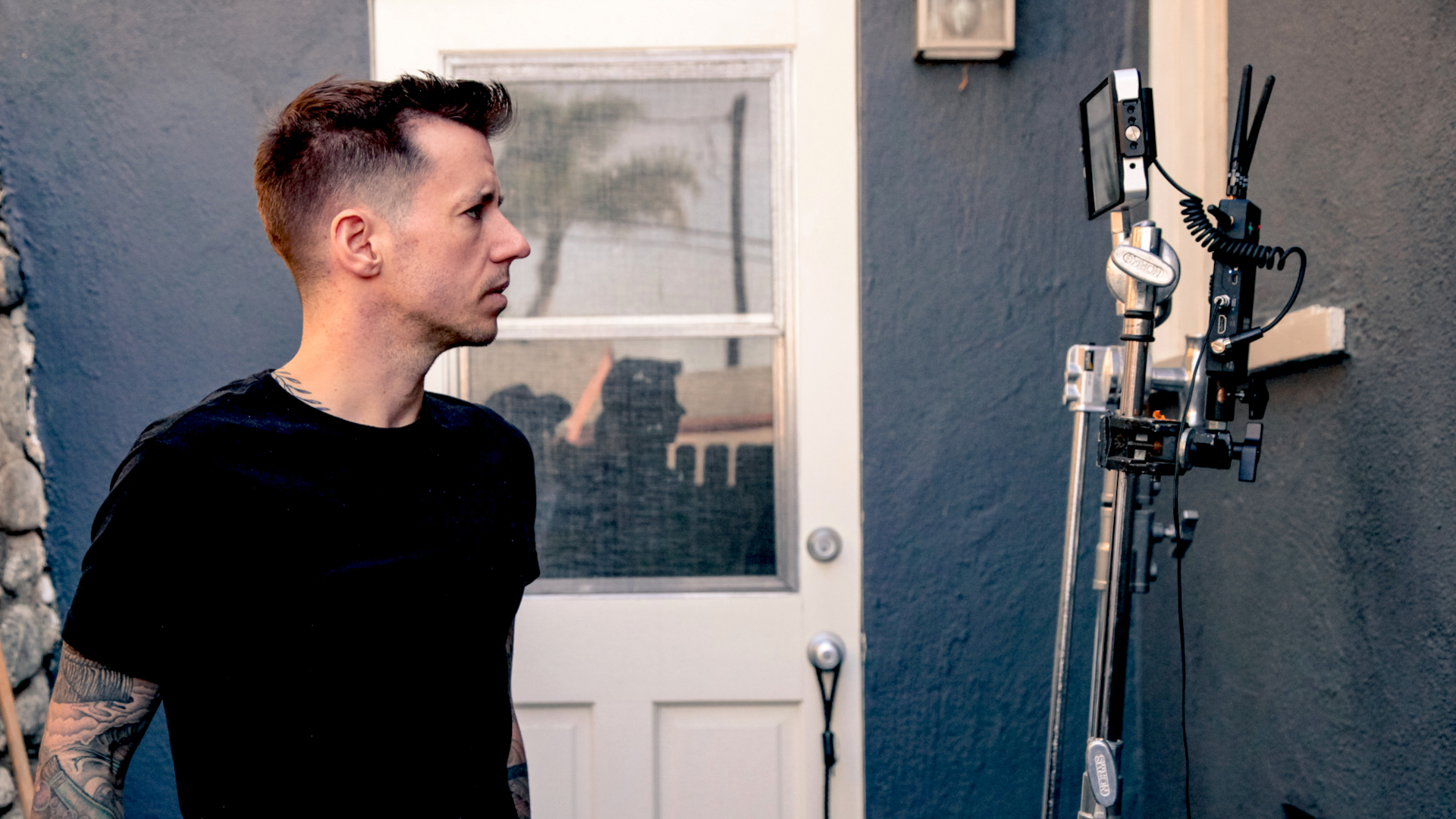
Featured image shows Chase Joynt on set, as photographed by Michelle Felix.