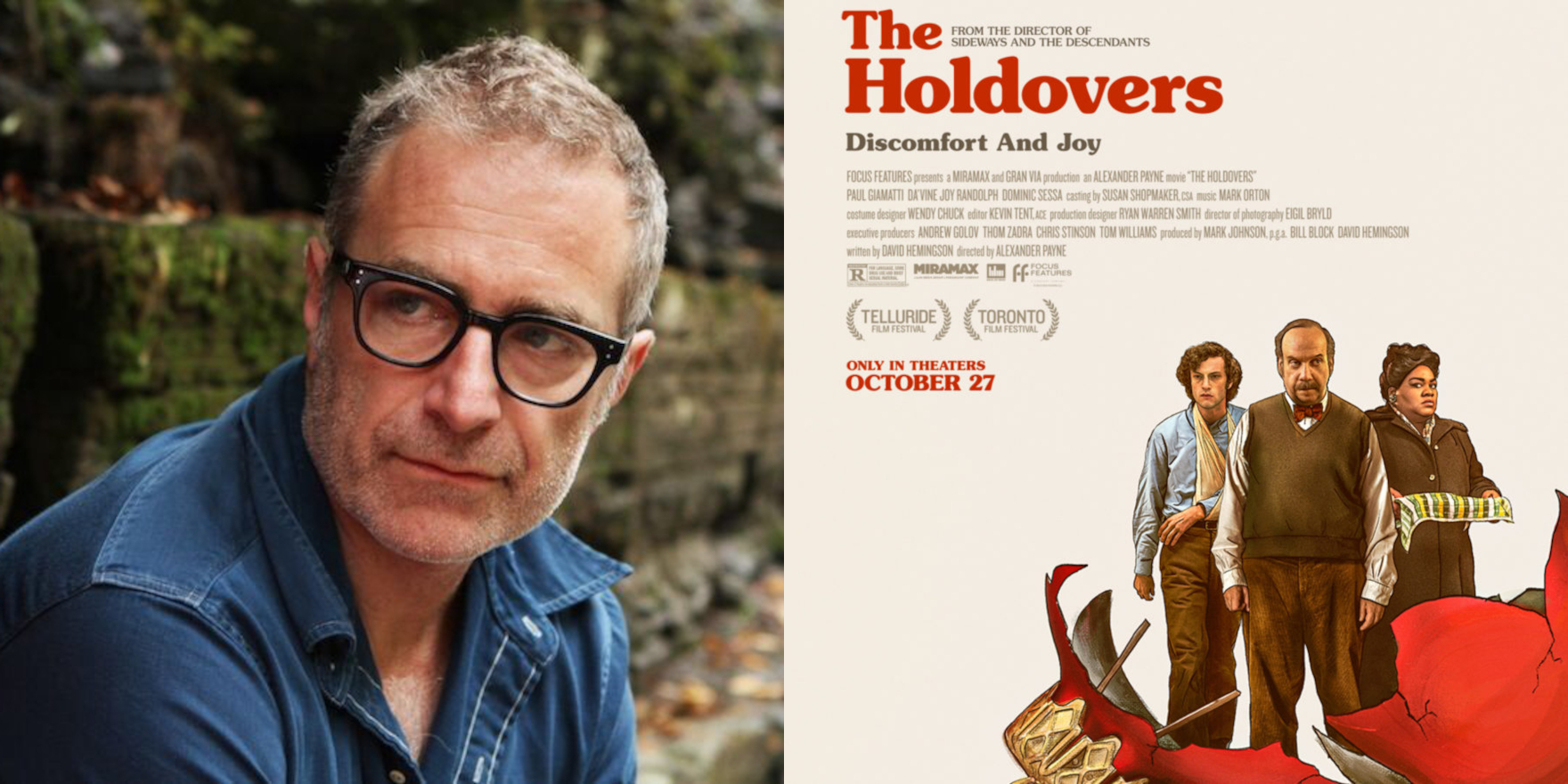
The Holdovers is a giant bag of cinematic magic tricks so deft you find yourself exhausted after two hours of laughing at what is actually a not very comic premise — the battle of altruism vs. selfishness, academia vs. avarice. Some magic you’ll find: It takes place in the ’70s (and actually looks like the ’70s), but it’s about the present. It’s set during a (yes, ahem, “national”) Christian holiday, but extols the virtues of agnosticism, stoicism, atheism — and, most importantly, community. It allows you to believe in magic as a metaphor for hope. Lastly, it’s an oversized present wrapped in Dead Poets Society paper and Good Will Hunting ribbon, but what’s inside is pure Samuel Beckett.
It’s Christmas break at a privileged boys prep school during the Vietnam war. Da’Vine Joy Randolph is Mary Lamb — yes, Mary Lamb — the school’s Black cafeteria manager who just lost her son to a war he couldn’t avoid for lack of a college deferment. Dominic Sessa is Angus, a privileged kid from a broken home with roots in mental illness, abandoned moments before the start of his Caribbean vacation. And Paul Giamatti (in a performance for the ages, so beyond Oscar-worthy, it’s laughable) plays Paul Hunham, a wall-eyed Ancient Civs professor who can’t stop quoting Aeneas, Euclid and Herodotus, a pompous and literally stinking outcast. All three are turned away for the holidays — there is no room at society’s inn — and Barton Preparatory School is their manger.
Yes, it’s metaphor. Yay! Remember metaphor?
Alexander Payne’s films all pull off the subtle magic trick of examining American class structure without being overtly class-conscious (Ken Loach, he isn’t). At one point in this utterly unpredictable road movie, the wall-eyed Paul Hunham is asked by his snotty ward Angus, “Which eye do I look at when talking to you?” — one eye being the lens of meritocracy, the other of privileged aristocracy. (More metaphor!? OMG!) It’s blue pill/red pill time. The kid thinks he has to choose, but Paul and Mary (and the audience) know we’re all doomed to a kind of wall-eyed existence, forced to process the idealistic lure of meritocracy from one eye while simultaneously seeing the unfair reality of a privileged aristocracy through the other. It’s cultural gaslighting, and while we are all victimized by it, Payne’s magic — and the great gifts of his screenwriter David Hemingson — enable us to laugh at it.
The Holdovers might not be for everyone (what film is, or has to be?), but any movie that delivers a tipsy Paul Giamatti quoting Democritus (“World is decay, Life is perception”) to a shitfaced Santa in a bowling alley gets the Laugh of the Year Award from me. Add that I’m crying minutes later when Paul and Mary ignite an improvised cherries jubilee for Angus on the hood of their car in a dark snowy parking lot and this film slides right into My Personal Lifetime Canon — countless viewings ahead. It’s this deft equipoise between gut-wrenching laughs and gut-wrenching disappointment in Humanity that makes this film so unique, so crucial, so timeless.
So, yes, Christmas is the birthday of some people’s desired savior, the magical child of God himself, an origin story reminding us of the innocence of children, the metaphor of birth as rebirth and rejuvenation, and to have hope for the future. But buried in that hope and its implicit optimism we carry (and deny) what we also know to be true: this savior preached love thy neighbor as yourself, the importance of honesty and charity, and denounced capitalism — and then we crucified him for it. The most idealistic among us will be repeatedly thwarted and disappointed, and yes, as Samuel Beckett reminds us, we can’t go on, but we must go on. Paul, Mary and Angus in The Holdovers learn this lesson over and over, yet they press on with dignity and kindness — even acceptance. When Paul and Angus eventually part and Paul accepts that inadvertently he’s done all he can for this kid in the time allowed, he is transformed. His dream of molding a young man has finally come to pass.
We know what we know, but we dare to hope anyway. Payne’s ability to deliver this existential lesson in period-perfect nostalgic gift-wrap is the film’s biggest piece of magic, and the big fluffy bow on top is its unrelenting hilarity — a divine comedy, indeed.