
One of the most valuable things film school ever taught me had nothing to do with cinema at all.
I spent years studying filmmaking. First as an undergraduate, then later in graduate school. Between the two, I accumulated enough classes on directing, cinematography, editing, screenwriting, producing and film theory to fill several lifetimes. I learned coverage, structure, visual language, the difference between a 35 mm and an 85 mm lens. The kind of things every filmmaker is expected to know.
And I'm grateful for all of it.
But if I'm being honest, none of those things are what led me to make the projects I'm most proud of.
The ideas came from life.
During one period in film school, I remember feeling completely overwhelmed. Not because of the work itself, but because I had become so consumed by filmmaking that I had almost stopped living. Every conversation was about film. Every assignment was about film. Every thought was about what came next.
So I started spending time at Venice Beach.
Not because I was researching anything. Not because I was trying to write. Mostly because it was nearby and going there forced me to leave my computer behind.
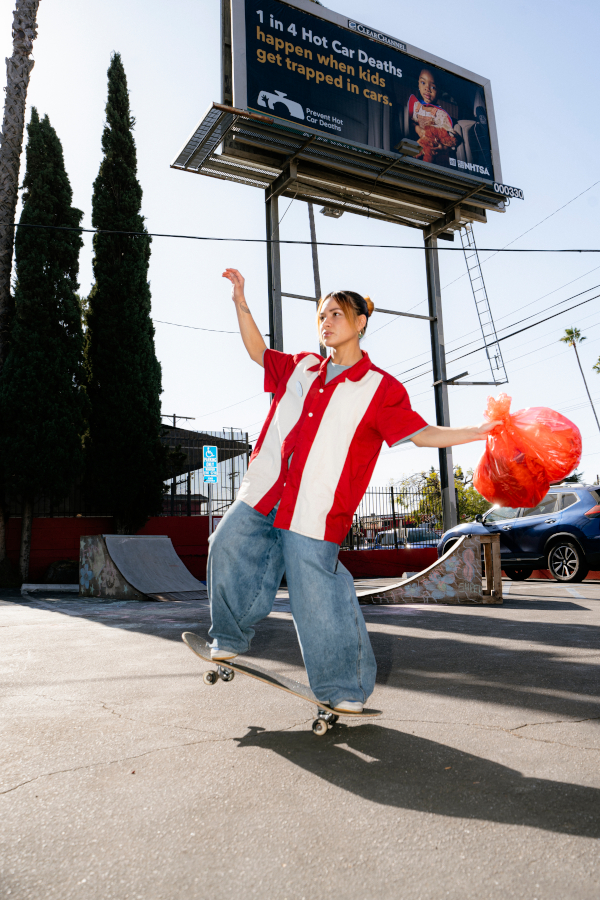
I would sit near the skatepark and watch people.
At some point, I realized something interesting: I was spending hours around a community I wasn't technically part of. I didn't skate. Most of the people there didn't know me. Yet I kept coming back.
What fascinated me wasn't skating itself. It was belonging.
Who gets to belong somewhere?
How do people build identity around communities?
What does it feel like to exist between worlds?
Those questions eventually became the foundation for I Don't Even Skate, a project rooted in immigration, identity and the strange experience of feeling connected to a culture while simultaneously existing outside of it.
The project would later receive recognition at several film festivals that I'm incredibly grateful for, but what interests me more is where the creative spark for I Don’t Even Skate came from. It didn't come from a classroom lecture about narrative structure. It came from sitting on a bench and paying attention.
The same thing happened with Glass Generation.
The film explores internet culture, public judgment and the performative nature of morality online. The idea didn't emerge because I was studying screenwriting techniques, but because I became obsessed with the way people were interacting with each other in real life. The way social media had transformed identity into performance. The way public opinion increasingly felt like entertainment.
Long before I had a script, I had questions.
And I think that's true of most filmmakers I admire.
Alfred Hitchcock wasn't simply obsessed with camera movement or suspense. Before he was a filmmaker, he was fascinated by fear itself. Films like Psycho and Rear Window weren't just technical exercises; they were explorations of voyeurism, obsession, guilt and the darker corners of human psychology.
David Lynch wasn't only interested in filmmaking, either. He started as a painter, and you can feel that influence throughout films like Blue Velvet and Mulholland Drive. What makes his work so memorable isn't the filmmaking technique itself, but his fascination with dreams, memory, intuition and the subconscious.
Stanley Kubrick had a similar relationship with the world. Before directing films, he worked as a photographer, documenting people, power structures and everyday life. Whether in A Clockwork Orange, The Shining or Full Metal Jacket, his films often feel less like stories and more like investigations into systems, psychology and human behavior.
And then there's Hayao Miyazaki.
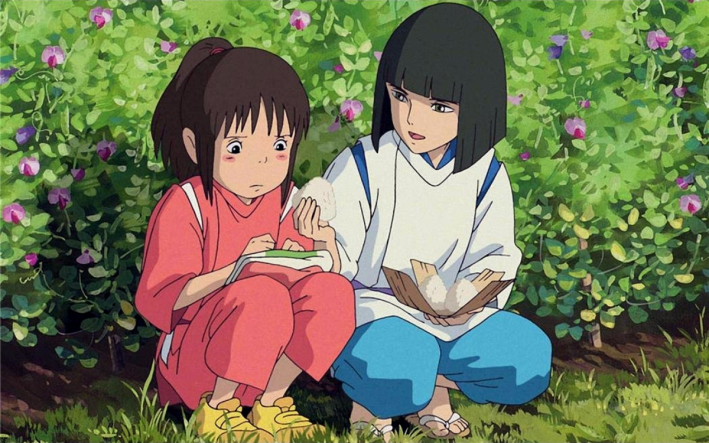
What fascinates me about Miyazaki is that he never went to film school at all. He studied political science and economics before eventually entering animation through an entry-level position at a studio. Yet somehow he went on to create some of the most emotionally resonant films ever made. When I watch Spirited Away, Princess Mononoke or My Neighbor Totoro, what stays with me isn't the technical mastery, though it's certainly there. It's the way his films reflect a lifelong fascination with nature, childhood, environmentalism, flight, memory and the relationship between humans and the worlds they inhabit. His work feels so personal because it was never built exclusively from studying cinema. It was built from studying life.
And I think that's what all of these filmmakers have in common. Whether they came from photography, painting, animation, literature, journalism, or no formal film education at all, their work was driven by something more profound than filmmaking itself.
Their films were expressions of deeper obsessions.
Cinema was simply the language they used to explore them.
That's something I wish we talked about more in film education.
We spend so much time teaching young filmmakers how to make films that sometimes we altogether forget to encourage them to develop interests outside of filmmaking.
Because great directors aren't just students of cinema. They're students of people. Students of culture. Students of contradiction. Students of life.
For me, one of my obsessions has always been time.
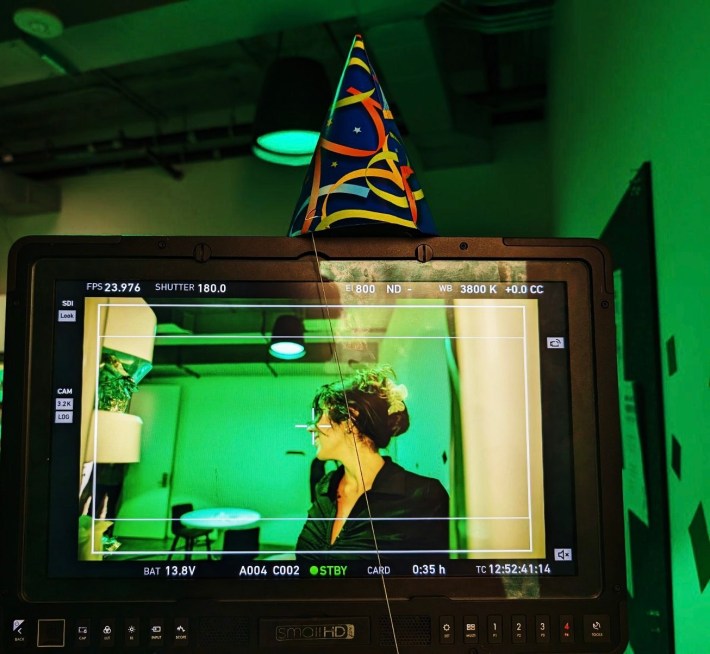
I've always been fascinated by the idea of cultural time capsules. Old photographs. Home videos. The way entire decades can be preserved through images. Maybe that's part of why I've always loved the 1990s, despite barely experiencing them myself. There's something fascinating about the way visual culture allows us to revisit worlds that no longer exist.
For years, this fascination was just a personal curiosity. I would spend hours looking through old photographs, studying archival imagery, collecting references, and thinking about how certain moments in history become frozen forever through visuals. Eventually, that obsession evolved into the creative lookbooks and visual worlds I began building for myself.
What started as a personal interest eventually became something bigger. Recently, I pitched one of these concepts to a music video director whose work I deeply admire, and what began as a conversation has slowly started turning into a real project. And that's exactly the point.
Nobody assigned me that idea. No professor gave me that prompt. No class required that research. It came from years of being genuinely fascinated by something. And that's often how the most meaningful work begins.
Ironically, the more time I've spent working professionally, the more I've thought about this.
Film school constantly tells students to get on set. Build credits. Gain experience. Meet people. And to be clear, that's important advice. Some of the greatest opportunities of my career came from doing exactly that.
Working as an assistant director, production coordinator, production manager, and across large-scale productions connected to artists like Kehlani, Wiz Khalifa, Wizkid, Kevin Hart, Ari Lennox and others, taught me lessons no classroom ever could. Being responsible for logistics, crews, schedules, communication and problem-solving under pressure made me a better professional almost overnight.
But I've also noticed something unexpected.
The bigger the productions become, the easier it is to accidentally spend all of your time helping other people bring their visions to life while neglecting your own.

You can spend 12 hours a day on set, every day, surrounded by filmmaking, and still find yourself creatively disconnected.
Not because the work isn't valuable. But because execution and curiosity are not the same thing.
One teaches you how to make things happen. The other teaches you what is worth making happen in the first place.
And I sometimes wonder if we don't talk enough about that in film education. We teach students how to work. We teach them how to network. We teach them how to pitch. We teach them how to survive the industry.
But we spend far less time encouraging them to develop obsessions, passions, interests and curiosities outside of it.
The things that eventually become the foundation of original work.
Because when I look back at the projects I'm most proud of, they didn't come from film school assignments. They came from sitting in a skate park thinking about belonging. They came from observing internet culture and becoming fascinated by performance and identity. They came from wondering how memories survive after people are gone.
They came from life.
Film school taught me how to make films.
Life taught me what I wanted to say.