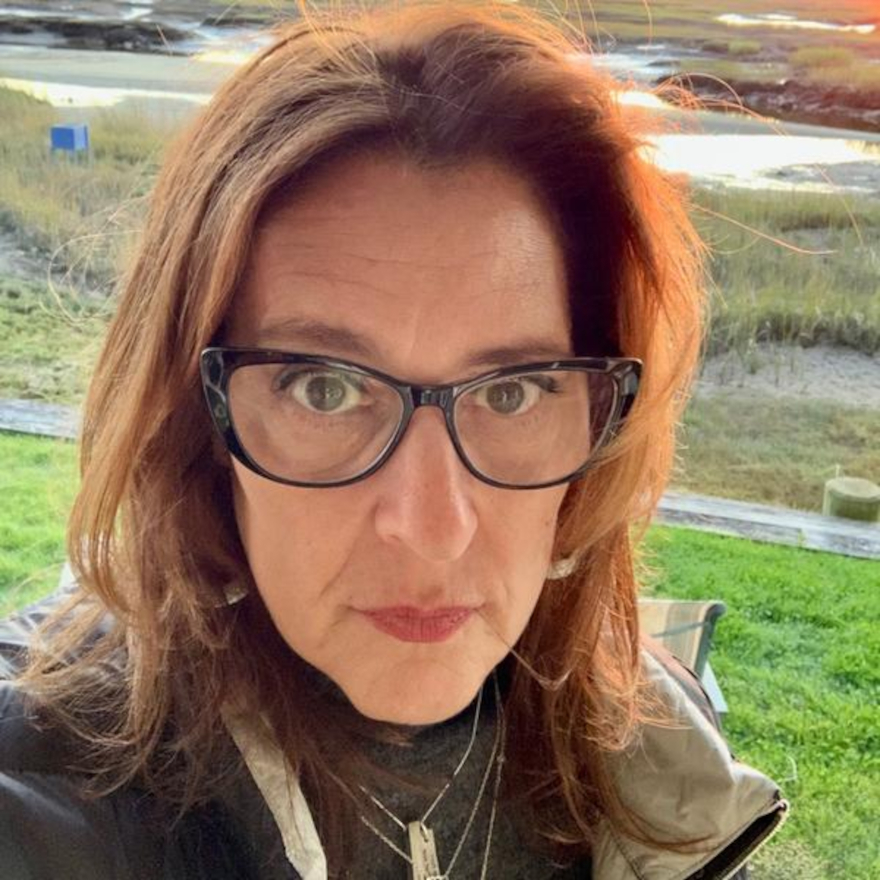
I’ve been making feature documentary films for over 30 years, and in nearly every film I have made, there’s a woman cracking an offhanded joke about the violence she has narrowly escaped. It took me a long time, five films in, to realize that I was focusing on this aspect of other women’s stories as a way to slowly peel back the layers of my own buried story. Escape was always subtext, until my most recent film.
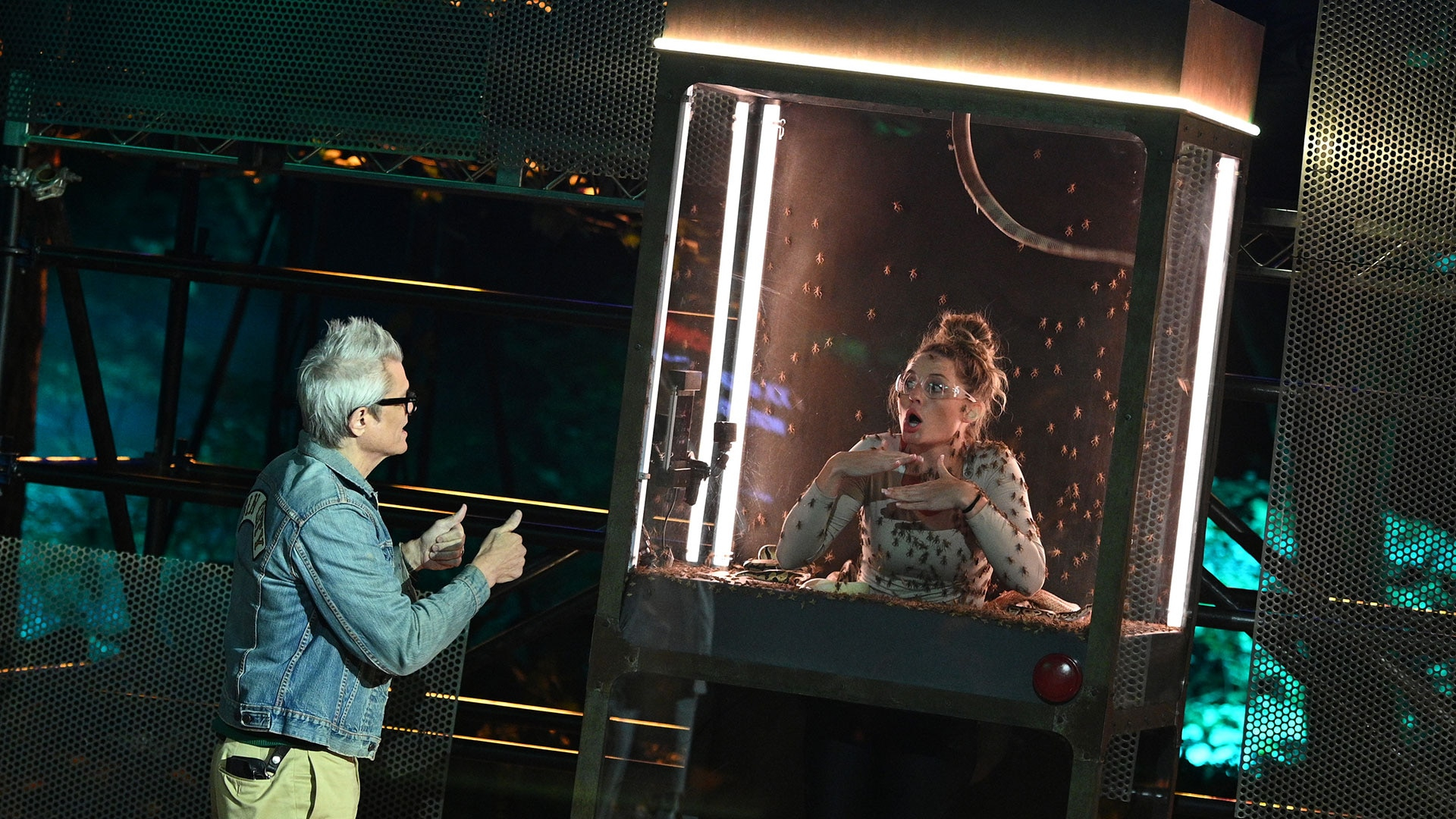
No One Asked You – my abortion comedy that follows comic co-creator of The Daily Show Lizz Winstead and her organization Abortion Access Front – is where I tackled the topic head on. Lizz and I were living somewhat parallel lives as teenagers. Both of us sought life-saving abortions to escape abusive relationships. For Lizz, it was from her Minneapolis high school hockey player boyfriend. For me, it was from John, the bassist in a popular Philly band, 10 years my senior. Lizz brought her experience into comedy and is funny as hell. For me, escape started my search for the light and the humor, the antidote to the darkness of my past, which eventually came to life in the intrepid, exuberant characters I chose to follow in my films:
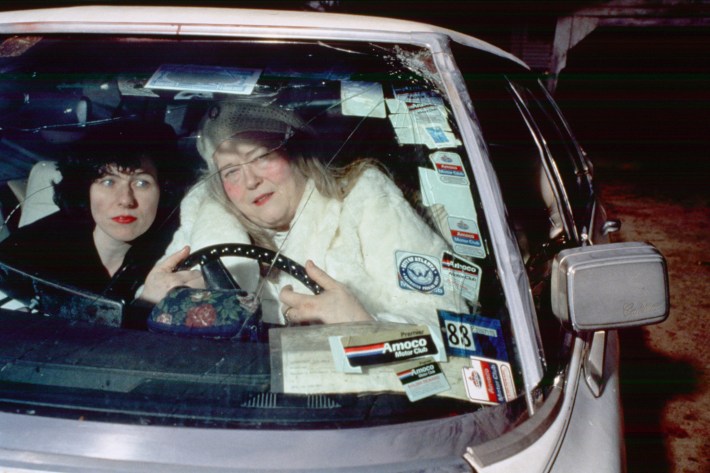
A performer coming to terms with generations of familial mental illness and sexual abuse in my film Alma. In Alma’s world, she recollects meeting her husband who kidnapped and drugged her in order to wed her. He wanted to disfigure my face. He did a pretty good job. He knocked one side higher than the other… He has took me for 35 years to the ugly parlor.
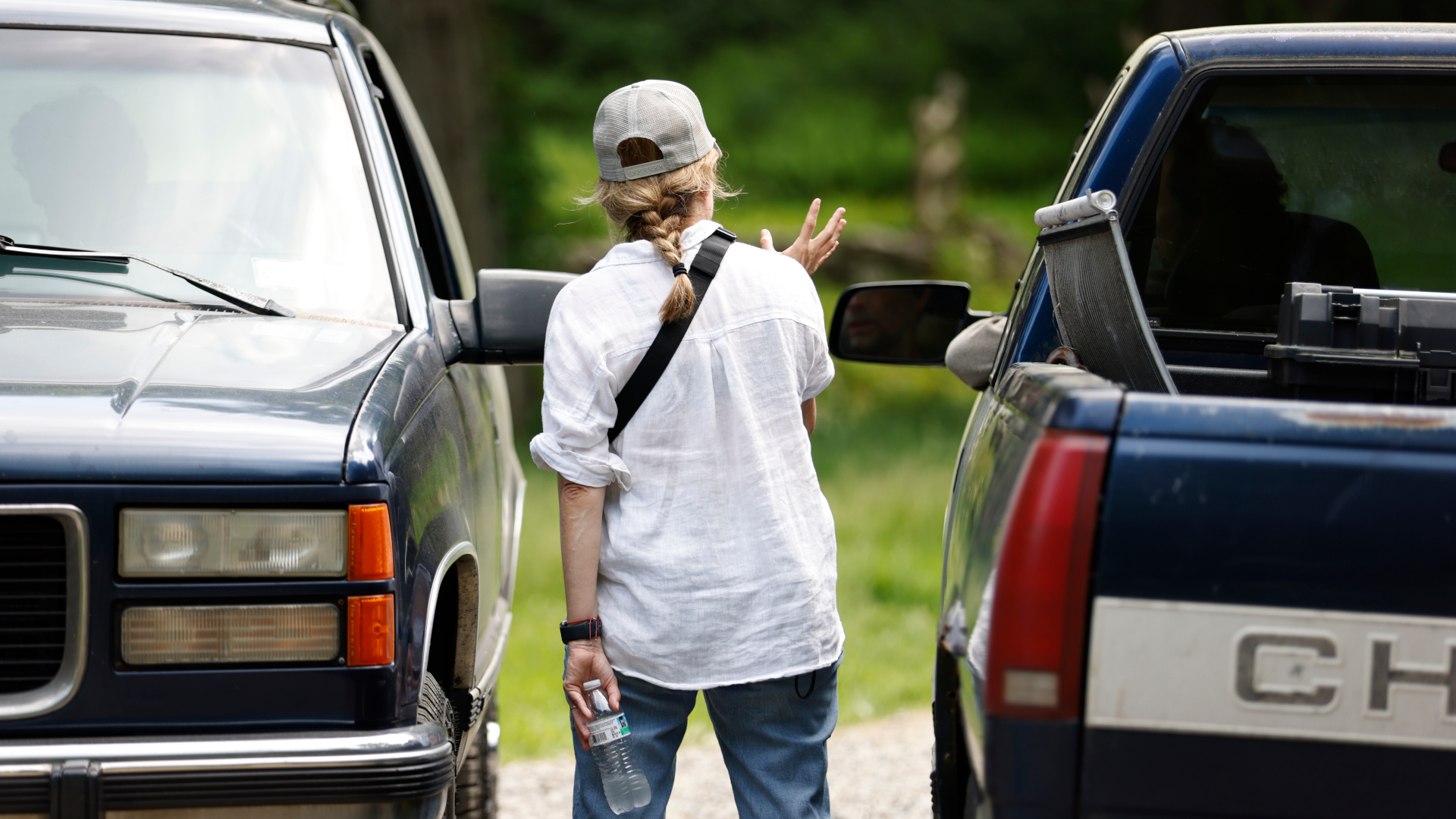
In Lipstick & Dynamite, the pioneers of women’s wrestling who learned how to use their bodies to fight and survive, escaping violent home lives, only for it to find them again outside of the ring. Violence was so familiar to Ida Mae Martinez, she married it. I have had a lot of injuries over the years… Not only from wrestling, but from my ex-husband. She laughs, as tears form.
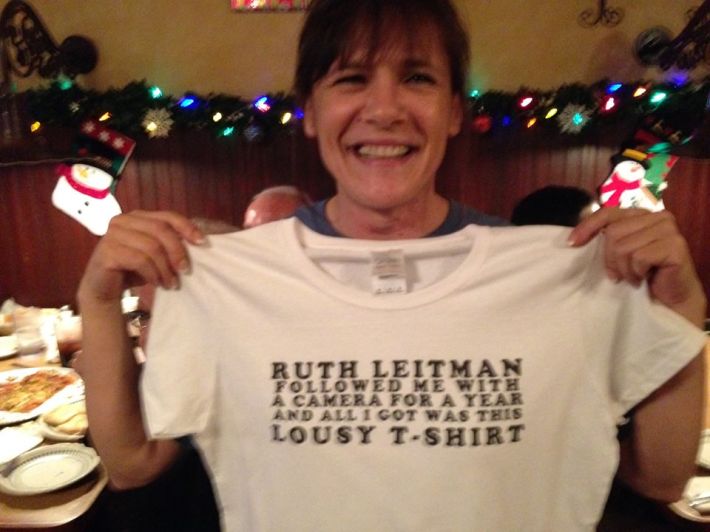
In the documentary series, Hard Earned, Emilia, a career waitress and recovered addict, was forced to give her daughter to her parents to raise. Emilia has gone to hell and back. Now an inspirational speaker, Emilia cracks a joke at her own expense to a group of high school students about hitting rock bottom: “I hated myself. I wanted to be anyone else but me. I wanted your ass, your personality, your boyfriend, anything to not be me.”
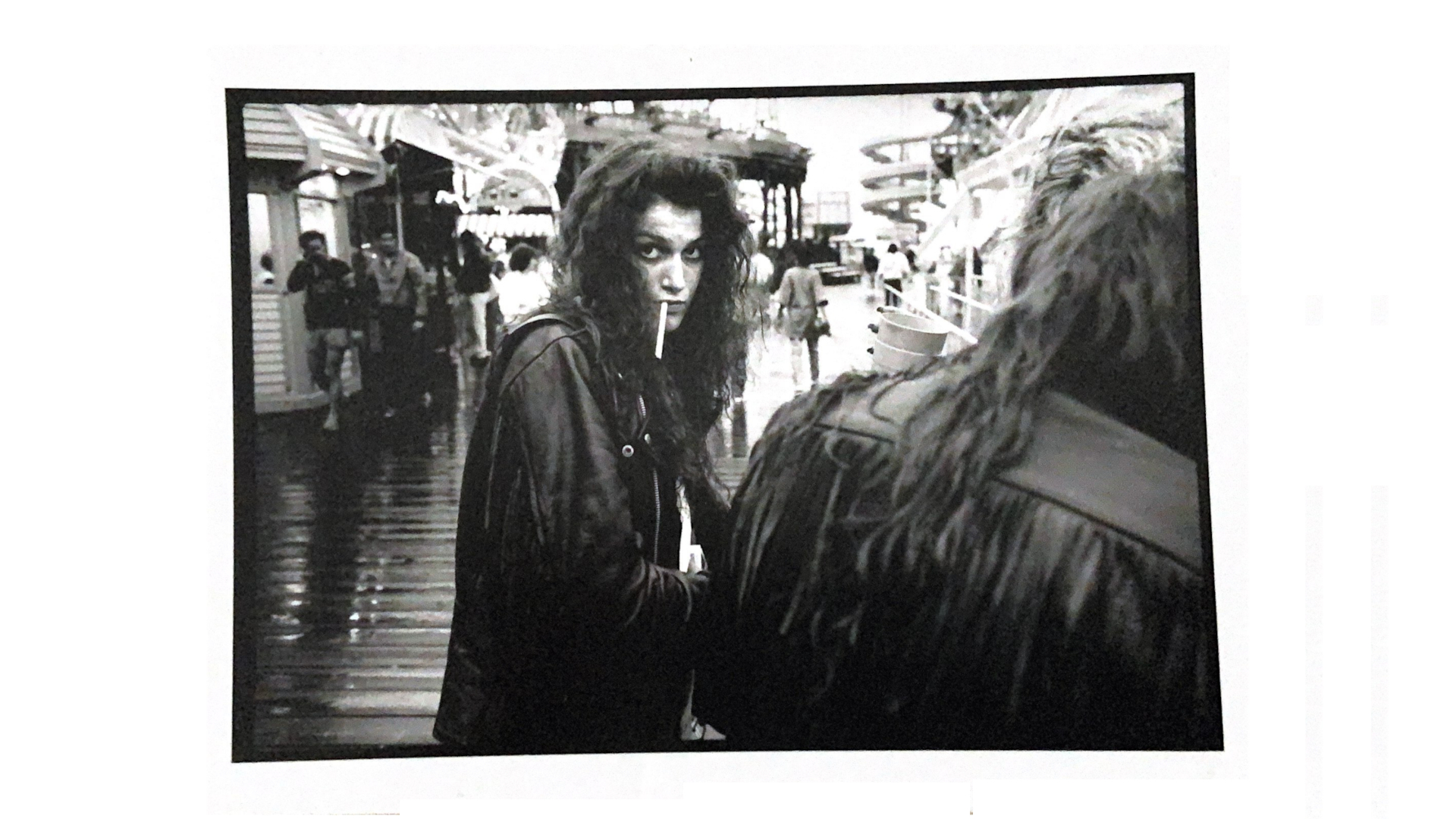
But it is the rough and resilient girls on the boardwalk in my first film, Wildwood, NJ (1994), who solidified my quest for the tragic humor of survivors. This was found in Bonnie, who evaded me and I chased down for a week to be in the film. Actually filming with her, getting to know her, was formative in the way I make films even now. In Wildwood, Bonnie, barely five feet tall, waxes poetic about her prowess as a street fighter.
People try to fight me, to see what I know, just to see me in action. I had three girls attempt to jump me one time, but it didn’t work! She laughs looking for a reaction from our all women crew.
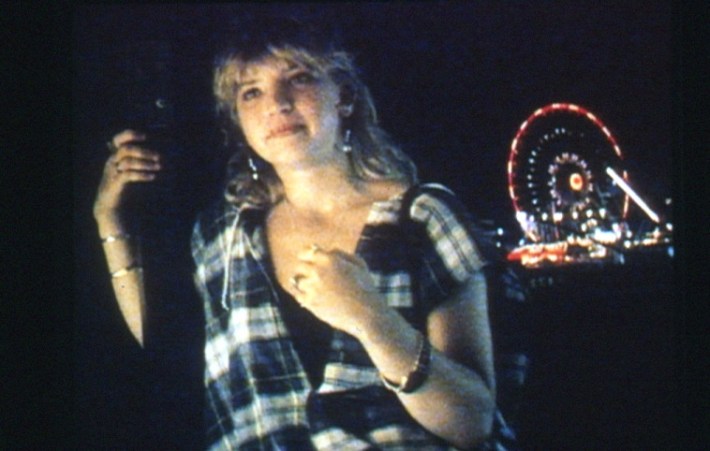
I was a young filmmaker back then and Bonnie ostensibly taught me about our personal relationship to the truth. We all write our own narrative. What do we want people to know about us? Why is this the thingshe wants me (and the audience) to know about her? True or not. She went on to tell us later that her fighting took someone’s life.
I still don’t know the truth, but nonetheless, it is in the film. And the non-truths that others have likely told me are also in other films. Lipstick & Dynamite follows six of the original women of wrestling. Their careers were built on commodifying violence and … lies. The liars in my films have taught me so much about what is latent in a character.
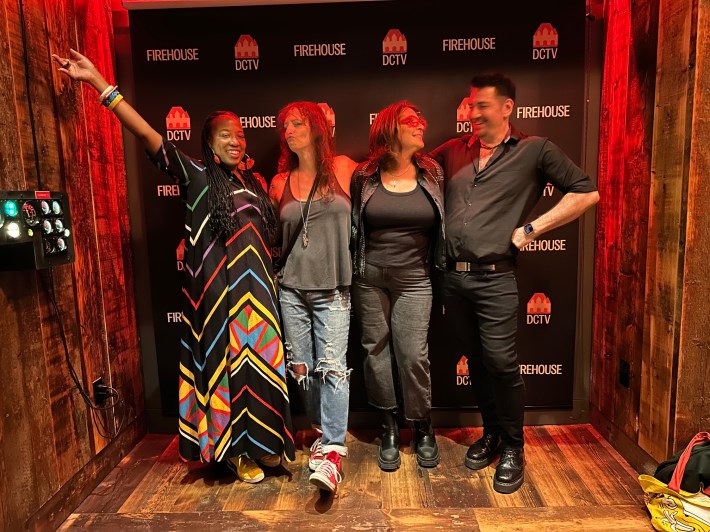
In October 2024, on the day my most recent film, No One Asked You, opened in New York, I was one of 200 survivors who came forward as a signatory on the full-page ad in the New York Times. Inspired by E. Jean Carroll and the Epstein survivors, we urged Americans to do everything possible to stop the abuser headed to the White House again.
Sitting with my laptop by the concession stand at DCTV’s Firehouse Cinema, I joined the mass Zoom call while my film screened in the theater to an audience 50 feet away. We were alive. All of us survivors, though bonding with the knowledge that many do not survive. Scrolling on the screen there were hundreds of us now out there, trying to do our best work, trying to live our best lives in the most authentic way possible for each of us, exhibiting the battle scars we now proudly wear as armor.
—-//—-
At 17, after a go-nowhere gap year, I put down the aspirational paintbrush and abandoned my dream of becoming a music producer. I couldn’t paint and the barrier to entry in the music business for women at the time was too great. Instead, I picked up a camera. Holding it up to my face, both a weapon and a piece of armor, was my way of attempting to regain what I lost. I have been doing this since I somehow fled that relationship.
In college, photographer and filmmaker Larry Clark (Kids), critiqued our work as a visiting artist. While looking over my portfolio of teen girls, girls alone on the fringe, Clark asked me if this or that girl in the image was me. My answer each time was “No.” But somewhere I knew that was untrue. Secretly, I wanted to amplify the voices of the young women in my photographs, those often never asked anything or at least never listened to: the girls who I argued were not me.
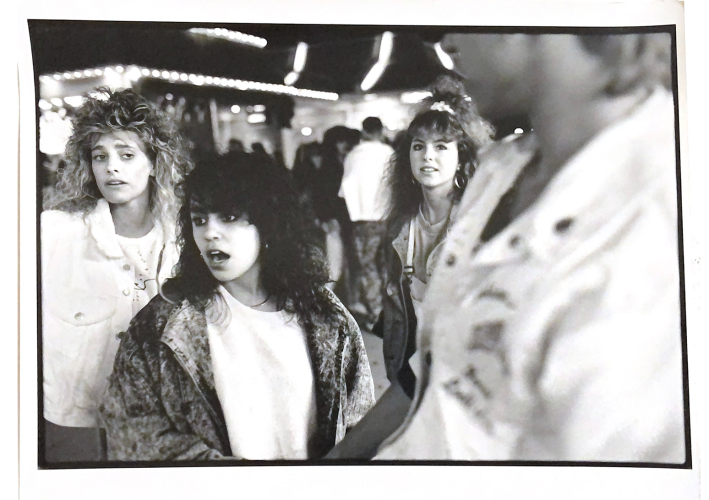
There is unimaginable shame attached to surviving an abusive relationship. Was it somehow my fault? How will I ever recover what I’ve lost? Decades later, what I have come to understand is: You can’t.
When I was a senior in high school on prom night, I pregamed at my best friend’s house in jeans and a T-shirt. I made my wardrobe the butt of the joke with my friends in my “I’m too cool to go to the prom” sort of way, my friends in gowns and their dates in tuxes. The truth was, I couldn’t go, not with my boyfriend, who, at 27, was too old to be at any high school prom. I waved goodbye from my Pinto as they piled into limos. I hightailed it back to my boyfriend’s apartment to get there before he returned from his band gig. When he finally got home at 4 a.m., it was my time to be “took to the ugly parlor,” a grim reminder that I was less than nothing, and another round of abuse that I would become all too familiar with over the next three years … If I ever seemed vague or cryptic about being a survivor, it is because over the years, my confessions were often met with invalidation or disbelief.
—-//—-
Wildwood, New Jersey was the place where my teen friends would go after the prom to lose their virginity under the boardwalk, if they hadn’t already. Going back to my would-be past with a camera, sound gear and an all-female crew was my first step to giving the girls I knew so well a megaphone.
I shot Wildwood, NJ with a crackerjack modified camera on Kodakchrome and Ektachrome Super 8 film, lit only by the boardwalk lights and streetlamps, because I desperately needed to capture the youth I wasn’t able to have. Perhaps something similar inspired Lana Del Rey to use 25 shots from Wildwood in her music video for “Diet Mountain Dew.” And though I was flattered by the appropriation, her juxtaposition of the young women in Wildwood with images of JonBenét Ramsey has haunted me. Of course, we know it is a dark and ominous world that young girls inhabit. So it only makes sense that Wildwood has had a storied second life, the intersection of innocence, danger and nostalgia for the pre-cellphone life of 1990s teen girls. Even so, it doesn’t make it feel any less magical now when new people discover the film. This year as Gen-Xers are posting who they were in the ’90s to socials, Wildwood was invited to screen at the Berlinale retrospective Lost in the 90s. That's no coincidence.
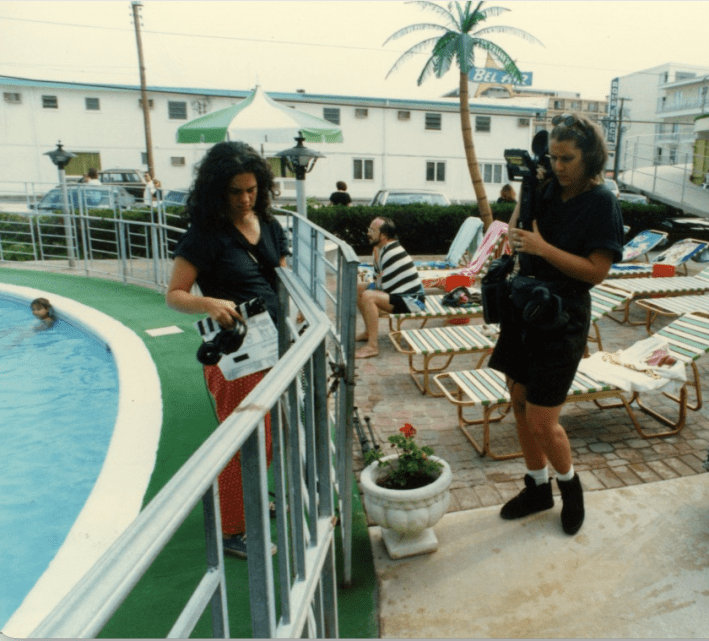
Wildwood has the wistful feel of a time gone by, a place and experience of a moment that we could have missed out on. It has the familiarity of coming back to a critical time in our lives we yearn to reconnect with or long to meet for the first time.
And it helped me learn that I am never that girl in my films, except I am always that girl in my films.
All images courtesy Ruth Leitman.