In 2017, it is time for everyone, ourselves included, to think differently, and to use different lenses to tell our stories.
I am a writer and director for film and when it comes to telling stories of any stripe, or reflecting the world in any creative manner, everything is funny to me. OK, scratch that. Clearly not everything in the world is funny – I’m actually kidding with that one. It needn’t even be said that there’s nothing remotely funny about the Nazis, for example, but it also must be said that The Producers is not a drama either. In the creation of any piece of work, every story or subject matter can be viewed through a comic lens, a dramatic lens, or any lens between – providing the angle of approach is correct.
I’m offering up this small idea because in my working life as a person trying to make comedy things, both big and small, I have frequently encountered a perception that comedy somehow is less than drama. Lower budgets for comedy than drama at TV stations. Reviews of comedies which frequently say things like, “It works extraordinarily well, but it’s just a comedy so ... three stars.” And a persisting sense that some films are “worth” more, in terms far beyond those of budget and box office.
What was the last comedy film to win Best Picture at the Oscars? Some people will say The Artist in 2011, although I might dispute the idea that that film is a genuine comedy. Before that it was Annie Hall in 1977. In the intervening years, dramas such as Argo and Crash have managed to win the big prize and I don’t have enough space to list the superb comedies that lost out or were never considered in those years and others because ... why? A seeming lack of virtue, I would humbly submit. So many great comedy films have been overlooked in the course of cinematic history ... a rough count I just made has that number at 2,814 – you know, I might round that down. Call it 2,810.
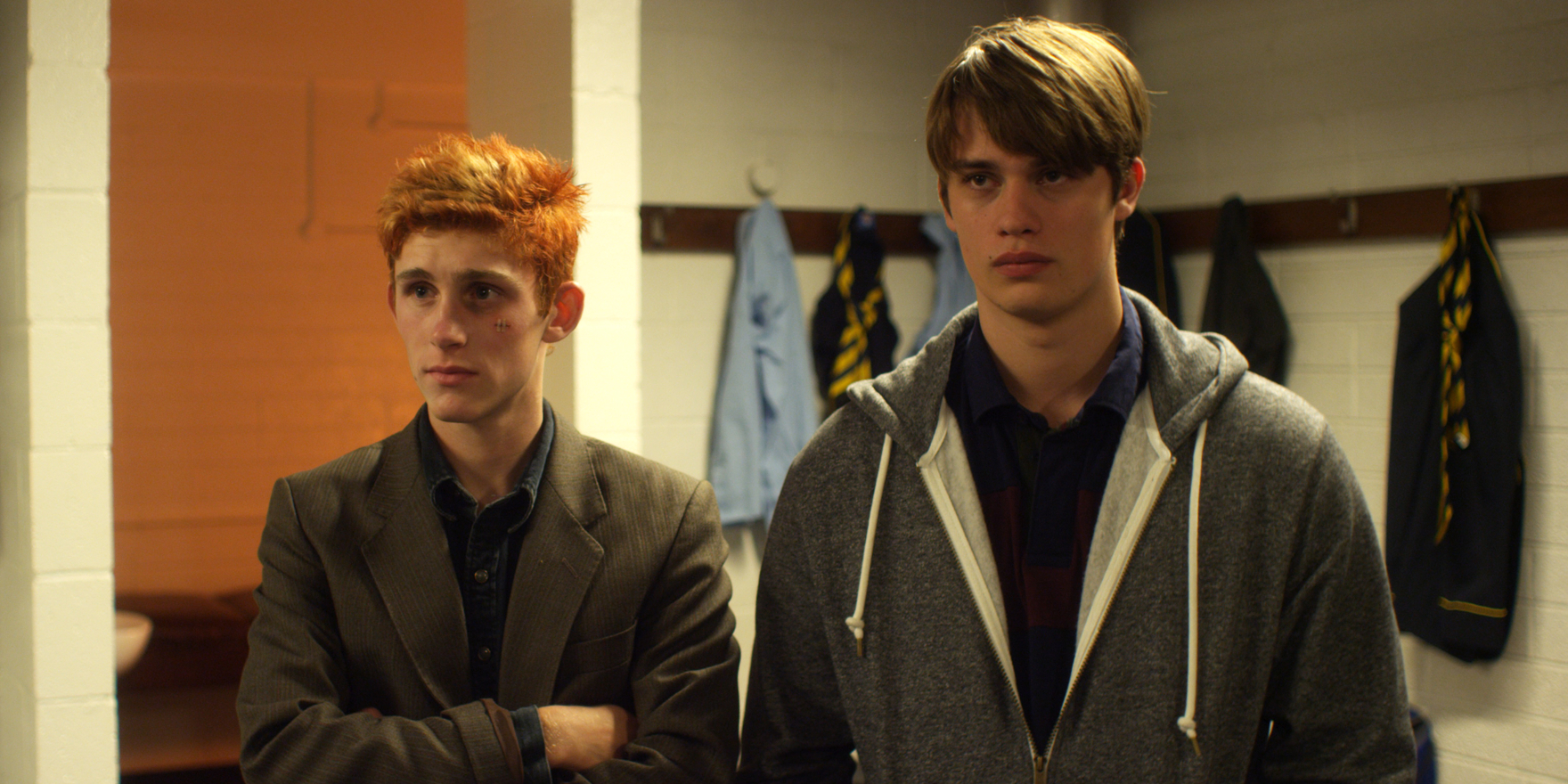
My new movie, Handsome Devil, tackles the story of two young boys coming to terms with their identity, dealing with bullying, and finding their authentic voices. I have lived a version of this myself, and have bottomless sympathy for the plight of young LGBT kids, so no story is more important to me or has more value. But I also have a deeply rooted mistrust of the idea that certain subjects “deserve” to be treated dramatically, as if drama is an elevated point of view. It is as if one is treating a subject more appropriately if you shoot a scene with street lights in the rain, from a moving car, set to a moody track by Boards of Canada than in a scene where you make people laugh, and feel, and empathize with others. Drama is a decision, and comedy is too. Neither is more real. Neither is less so, either.
When it came to writing and directing my film, despite the superficial similarities with Dead Poets Society, I was more interested in how this buddy comedy-drama would sit tonally near films like John Hughes’ work, or Election. It felt to me like a more interesting way to treat this subject, and there are a number of reasons for that beyond the fact that comedy-drama is the form in which I’m most comfortable.
The LGBT community is emerging from a period during which, with few exceptions, our narratives have been framed dramatically with desperately sad endings, owing to the bleakness of the LGBT experience. In the 1980s, our creative community was decimated by HIV and AIDS (think of how much art we lost!), but since then, although a lot remains to be done and to be fought for, huge advances have been made in social equality and it feels to me that our stories needn’t necessarily be rendered in dramatic, let alone tragic, terms. Not everything needs to be subverted in order to make a progressive argument, and in the case of Handsome Devil, what would a dramatic treatment with a negative outcome (comedies have happy endings, don’t they?) offer us here that hadn’t already been offered by the bleak, traumatic gay narratives of decades past?
For me, Handsome Devil is a comedy (or a comedy-drama) and is subversive precisely because of its adherence to comic tradition; happy ending and all. Our stories belong in the mainstream storytelling arena just as much as they do in the margins. Besides, the ending of this film represents an eminently achievable outcome for any young LGBT kid who holds the line and stays true to their own identity. Why not? In no way should we consider happy endings in our community as being out of reach or belonging in the realms of fantasy. We ought to reject the assumption that our stories need to be flagged as “mature” or rendered in dramatic form, or that our queerness necessitates an expression that is inherently marginal. In 2017, it is time for everyone, ourselves included, to think differently, and to use different lenses to tell our stories.
Remember, life has no meaning and we are wandering through a cruel and unthinking universe, colliding off each other in ways that are simultaneously funny and sad. So why not laugh at it all? It bothers me that the world is viewed as naturally a dramatic place, and I am not sorry to say that the world to me is at least as often funny as it is serious, and is frequently funny at the moments of its supposed greatest seriousness. Not that I suggest you summon it unbidden, but it must be said that nothing makes you feel more alive than having a laughing jag at a funeral. Or is it just me?