It is no secret that we live in difficult times. Freedom of speech is on life support, and institutions – both public and private – aren’t doing enough to keep it alive. The threats to democracy aren’t confined to the U.S. alone, yet in America the current administration has been dismembering the public sphere with the precision of an autopsy examiner, filtering out unwanted cultural inputs which pose a threat to its autocratic governing style (so-called “fake news”), and replacing them with one-sided Machiavellian messages. As a result, an entirely free debate isn’t possible anymore in today’s America, and in a desperate attempt to stay relevant (and keep their shareholders and advertisers happy), media have adjusted to this new status quo. This is extremely worrying, because the erosion of freedom of speech inevitably makes people less capable of discerning truth from lies, and making conscious and responsible decisions. In a sense, the American people aren’t free to “see” anymore.
When there is a loss of our freedom of speech, journalism is the primary victim. Journalists and reporters are being stripped of their historic role as major contributors to the national discourse, so the burden of resistance against intolerance, racism and bigotry (the main tropes of 21st-century autocrats) falls on other media. The problem is that T.V. and films mostly operate on a lower standard of moral and social responsibility, dramatizing an array of roles, values and beliefs that end up legitimizing the same issues we are fighting against, such as the propagation of immigrant stereotypes.
Since mainstream media are crippled, the role of documentary filmmaking in the fight for freedom is now more central than ever. Documentary filmmaking inherited one of the key features of journalism: the ability to unmask and make public the failures of our democracy. Arguably, documentaries are the most powerful media to deliver truth to the public and restore social and civic order. Their function is to engage audiences in a discourse concerning the world they inhabit, unapologetically and without filters. In that sense, documentary filmmaking is one of the last bastions of counterculture.
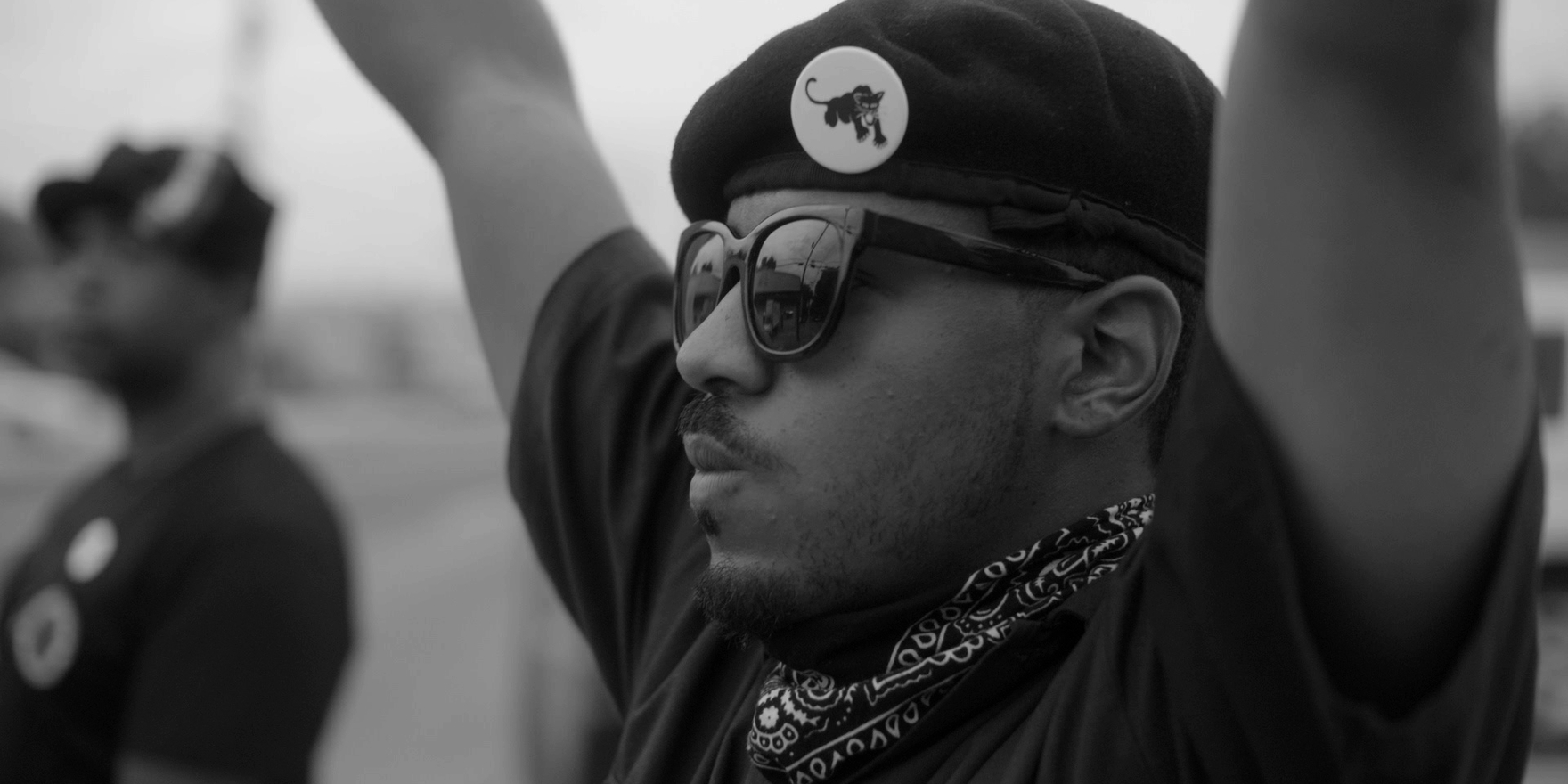
The value of documentary filmmaking as a truth-searching medium lies mainly in the fact that documentarians don’t aim to depict an absolute reality. Instead, they search for bits of it in personal, intimate spaces (a home, a community, etc.), observing and recording events that are unique to such spaces. Such ability to dig deep into the private sphere is what makes documentary filmmaking an inherently political medium. What You Gonna Do When the World’s on Fire?, my latest and most political film – a portrait of an African-American community in New Orleans in the summer of 2017, in the wake of a series of brutal killings of black men – was conceived with a bottom-up approach in mind. The broader issue of America’s unresolved racial divide is examined through the characters’ stories, words and actions.
Despite their idiosyncrasies, what all of the stories in What You Gonna Do When the World’s on Fire? have in common is that they evolve organically, spontaneously, based on the intrinsic cause-effect relation that links the stories’ own events. During the shoot, my intervention was limited to a minimum (there is no such thing as neutral participation). As an observer, my main job was to “hang out,” be present, and be a good listener, allowing the stories to take their own course of action. Then, during the editing phase, I stepped in and took control of the process. This is when those intimate, micro spaces that I painstakingly recorded come together to form a macro context – the film, in its final form.
The assembled documentary exposes bigger truths, and submits them to the public sphere for consumption: whispered words become political statements, mundane actions are deciphered as acts of rebellion, reaction, resignation, or allegiance. Thus, the film serves as a starting point for a broader sociopolitical discourse. And ultimately, in my opinion, the value of a documentary is measured by its political significance. And if a documentary fails to stir a political debate, it risks becoming an empty exercise in style. (The German philosopher and cultural critic Walter Benjamin best described the dangers of such vacuous artistic enterprises, once writing that “Mankind’s … self alienation has reached such a degree that it can experience its own destruction as an aesthetic pleasure of the first order.”). What we are doing is deeply, crucially important: documentary filmmakers must continue to wage this broader battle for freedom of speech, opinion and expression, or we will one day lose the right to speak at all.