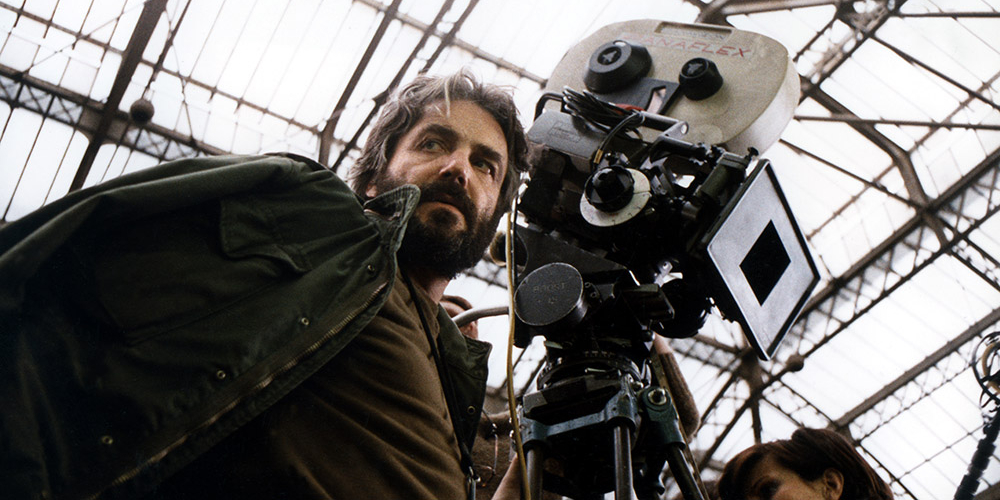
When I was a 21-year-old journalist, I met Andrzej Żuławski – the French-Polish writer-director of Possession, who died earlier this year – on the set of La Femme Publique. I subsequently shadowed the entire shoot of L'Amour Braque, writing several articles about the production for the newspaper I worked for. I then continued my relationship with Żuławski in a number of different capacities, taking the roles of director's personal assistant, assistant director and casting assistant (Maladie d'Amour), documentarian (Celle qui danse, a biopic of Joan of Arc) and co-screenwriter (L'Archer). If you haven't heard of any of these Żuławski films, it's because none of them came to fruition, some stopping after only a few days of shooting!
Nevertheless, the time I spent with Żuławski between 1985 and 1987 offered me a very deep training in the role of the writer-director, for he was not stingy with his advice. At the beginning of his career, Żuławski himself was the assistant to Andrzej Wajda, who had helped him become a filmmaker, so he too had had wisdom passed down to him by a master.
Over the time I knew him, Żuławski shared a lot of insights that served me while I was making my first film, and that I still find useful today. Below are 10 choice pieces of advice that seemed essential to me for anyone who wants to get into this business.
1. It is not with your head that you write your first screenplay, but with your “butt.” In other words: if you don’t sit down every morning in front of your computer screen, you will never write it. Do not be afraid of the days when nothing will come out and you will remain before your blank page. This is the moment when you have to let “those from below” work on your unconscious, as Stephen King calls it … They will soon return to your consciousness with golden ideas.
2. The day you start on your first screenplay, think that even Kubrick and Spielberg are dwarfs, otherwise their genius will crush you and you will not exceed 10 pages. Your love for cinema is both an encouragement and a reason you wouldn't write anything at all. It must be used to build your world and not to question it.
3. Once you've met him, never forget to make your producer laugh. Producers are often the most lonely and desperate people that one can meet in this business. More than the actors.
4. Whatever the skills and experience of the members of your crew, especially the cinematographer, never forget that it is you who pays them their wages. Do not fear conflict with them, if it is to take place. At the end of the day, to make a film is to be alone. Especially if the film does not work at the box office ... then you better assume it from your first day of shooting.
5. NEVER show your doubts to the crew. It will create a breach which will make some want to rush to give orders or suggest anything to you. On the other hand, remain open to all their proposals when the atmosphere of the shooting is serene.
6. Always start your shoot with a set piece in the screenplay (a dream scene or car chase, for example), which will leave time for the crew to become united before working with the actors. Otherwise, there's a good chance you'll have to reshoot this scene, or cut it during post-production, if you can ... Or regret it until the end of your days.
7. When it's going to shit on your set and nothing works ... film your actors! An extreme close-up of a great actor can save you a lot of money on editing. If you do not have the budget, rather than poorly filming the boxing match where a loser is being destroyed by his opponent, instead shoot his girlfriend's face as she's watching the massacre ...
8. If an actor is being difficult during rehearsals and you cannot fire him, shoot him from behind on the first day of production. It will calm him down. If he continues to cause problems, talk to him in private. If he goes on with his bad behavior, point out his faults in front of the crew, with no modesty.
9. Never ask your actors to act two contradictory ideas (like, "You want and hate it at the same time"), otherwise the result will be grotesque. Likewise, always ask them to act a feeling or an emotion, never an idea.
10. Make each film as if it were the last. That may be the case ...