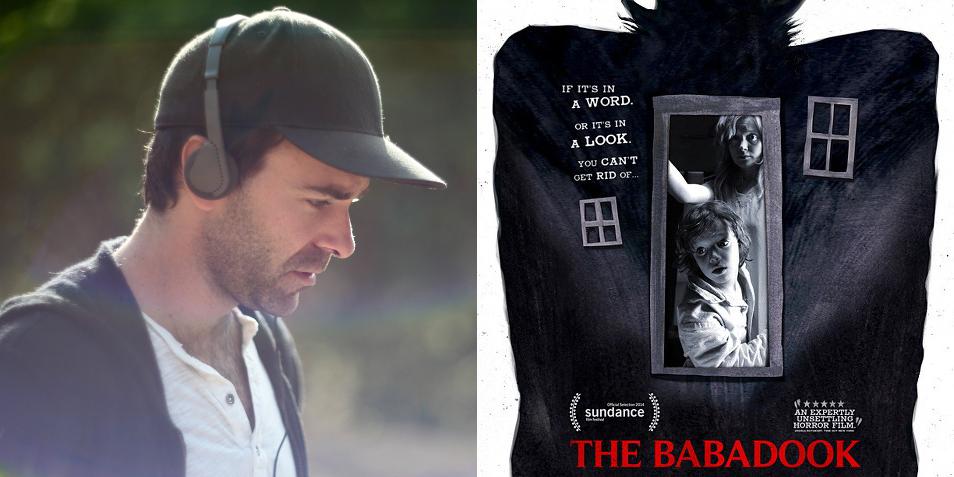
Earlier this year at the Sundance Film Festival, I attended the first midnight showing of a spooky horror film that programmer Trevor Groth had recommended to me: Jennifer Kent’s The Babadook. The theater was packed and the energy was palpable. It was cold and dark out — a recipe for a perfect midnight-movie experience.
This movie, quite frankly, scared the shit out of me. That this is Jennifer Kent’s feature-length directorial debut speaks volumes about her knack for horror. The Babadook showcases all the reasons why horror films are important, what they can accomplish and how they can rattle your bones without your permission. Every once in a while, a film like this comes along and revitalizes my love for the genre. Do these Aussies know something we don’t? In their work, Kent, James Wan and Leigh Whannell — all filmmakers I respect very much — tap into our psyche, bring fresh perspectives to the horror genre and create a sense of underlying dread that combusts at just the right time. I’m gearing up to direct my sophomore feature, What Josiah Saw, a psychological horror film which follows an estranged family in the middle of America’s rural farmland, and Kent’s film has only validated my goals for this next endeavor.
The Babadook focuses on widowed single mother Amelia (Essie Davis), who has a tough time raising her needy, behaviorally challenged seven-year-old son Samuel (Noah Wiseman). The first few minutes of the film establish Amelia’s bland, routine life. It is thoroughly depressing. Amelia goes through the motions of motherhood, but she and Samuel are clearly still dealing with the loss of her husband, who died driving her to the hospital as she went into labor. Amelia is alone and numb; Samuel is dependent on her love, day in and day out, and believes they need to protect each other from a monster that is coming for them.
It’s only at work that Amelia slightly comes alive. She has a connection with Robbie (Daniel Henshall), a male co-worker, but hardly explores these feelings with him. She accepts that this is her life and does her best to be an attentive mother. Up until this point, the eerie, simple score by Jed Kurzel is the only suggestion of the horror that is to come. The film begins to stretch its legs when Amelia reads her son a bedtime story and Samuel pulls an unfamiliar book from the bookshelf. No publisher, no author. Fantastically designed by Alexander Juhasz, this red book contains crude drawings of a Nosferatu-esque creature who hides in a closet and rants rhymes haunting enough to make the hairs stand up on the back of your neck: the Babadook.
After Amelia rips the book into shreds and throws it in the garbage, it reappears on her doorstep, and now features a haunting revision that foreshadows what is to come: disturbing images of Amelia choking her own dog and stabbing Samuel with a butcher knife. Even burning the book on a barbecue will not get rid of it.
The images in the book eventually begin to take shape in reality. This not the kind of horror film where heart-stopping scares are achieved through sound design; rather, they’re achieved through pure tone, gothic-esque production design by Alex Holmes and muted gray, moody, washed-out cinematography by Radek Ladczuk, all of it fusing together seamlessly. I was very impressed with how Jennifer Kent chose to showcase the Babadook creature when it finally became a reality, using a mixture of in-camera effects and stop-motion. I would’ve been disappointed had they chosen to bring the creature to life via VFX and modern CGI.
As the film progresses, we witness Amelia’s physical and emotional collapse. I applaud Essie Davis for her fearless, complex performance because it looked utterly exhausting — they clearly put her through the wringer. When I sensed that Amelia could potentially harm her child, the movie transformed itself into something truly horrific. The restraint used in building this tension shows Jennifer Kent’s inherent gifts as a director. Without giving away anything, there is a moment in The Babadook which is one of the most frightening I have witnessed in a horror film in a long time. Not since The Shining has something in a horror movie scared me as much.
I will not spoil the climax of the film, but suffice it to say that it delivered in a way that satisfied me beyond my expectations. One of The Babadook’s greatest strengths is that it takes the seemingly simple story of a mother, and then effectively puts us in her shoes as she copes not only with depression and the loss of a husband, but also with the revelation that darker feelings may reside deep down in all of us. Watching The Babadook, one learns what it’s like to experience a nervous breakdown.