
I’ve always been drawn to creating fiction films that are based on real life. It feels more grounded than something totally made up. For decades, I considered writing a film about my older sister, Maren Elisabeth, who has suffered from schizophrenia for more than 40 years. But I never started writing it, because I couldn’t ever find the right angle.
Maren Elisabeth was always a bright kid. She played the piano. If she was asked to write a three-page essay, she’d deliver 25 pages in elegant prose. Teachers adored her. She was gifted. And maybe a bit naive, too. But then again, everyone was a bit naive in the ’70s.
When she was 18, Maren Elisabeth went to work for a year in France – first on a farm, and then in a restaurant. When she came back home, something had happened to her. She started talking to people who were not there, and she was hearing voices. My parents, of course, got very scared. At that time, the only psychiatrist in the rural part of Denmark where we lived diagnosed her as schizophrenic.
After that, there were some very tough years. Maren Elisabeth swung between extremes. Sometimes she was high-functioning and even started studying to be an organist, but it was only a year before she fell back into the disease. It was a huge strain on the family. At around the age of 40, she started living in sheltered housing in an institution, where there were social workers to care for her.
At that time, my other sister, Kirsten, had recently married a man named Per. One time, Per and Maren Elisabeth were talking about the fact that she’d never been back to France. Per is a “Let’s stop talking about it and just do it” kind of guy, so he said, “Well, why don’t we just go back to Paris?” So, even though Kirsten hadn’t said yes to the trip, Maren Elisabeth went out and bought the bus tickets.
One summer, seven or eight years ago, I was kayaking with Jorn, an old friend from Denmark who has known my family since he and I were both six years old. As we were floating down a small river, we started talking about the trip Maren Elisabeth, Kirsten and Per took to France. And suddenly Jan said to me, “Why don’t you make a film about that?”
The minute he said it, I knew it was a good idea. I realized this was a unique chance to make a film about a mentally ill person that would not be depressing.
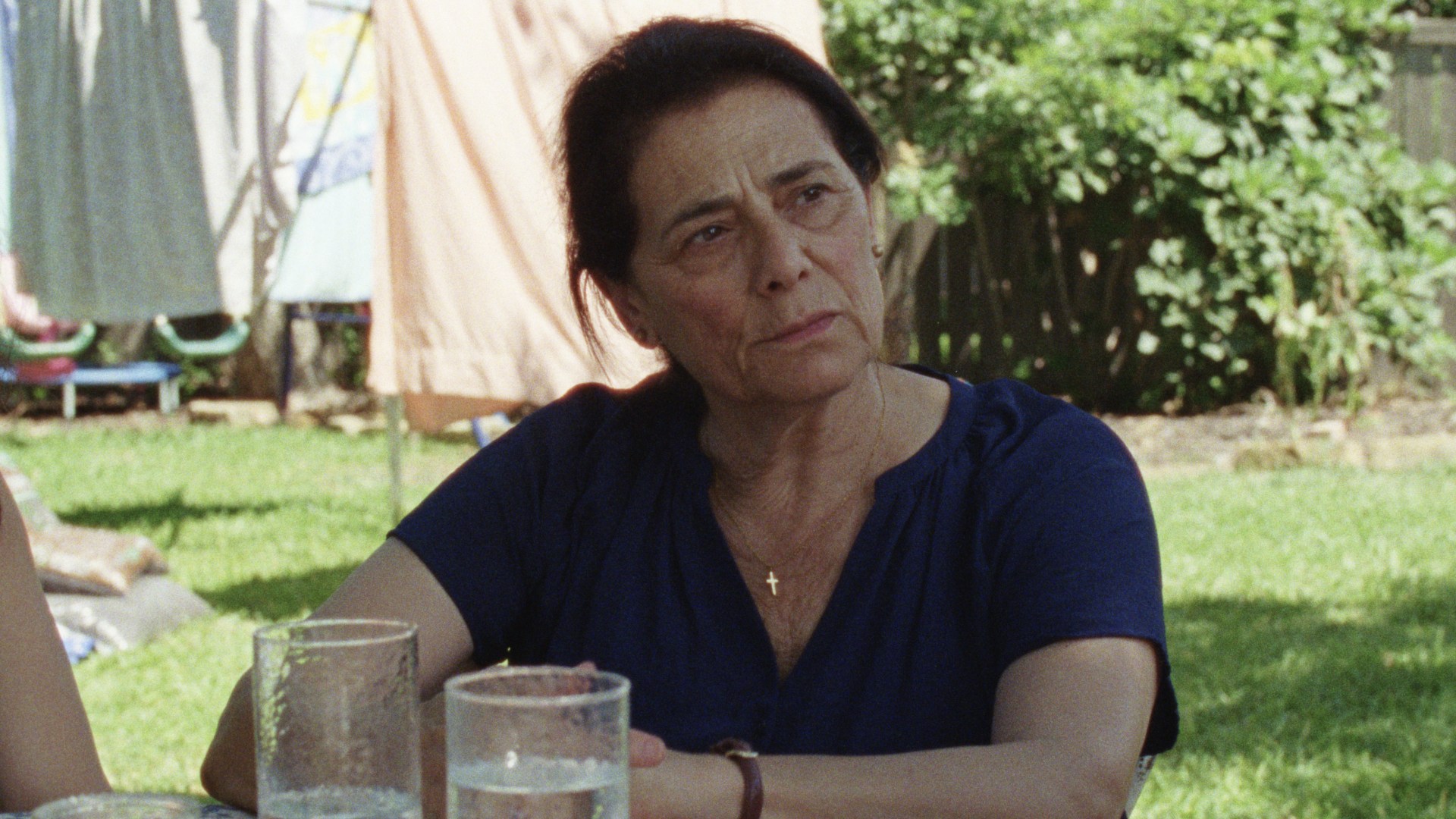
Everything that happens in Rose, the film I made about that trip, basically happened at one time or another in Maren Elisabeth’s life. As I was writing the film, the character of Inger, who is based on Maren Elisabeth, kept creating situations that were humorous in their absurdity. And that’s how Rose became what it is, a film that has a balance between the emotional and the comedic elements of life.
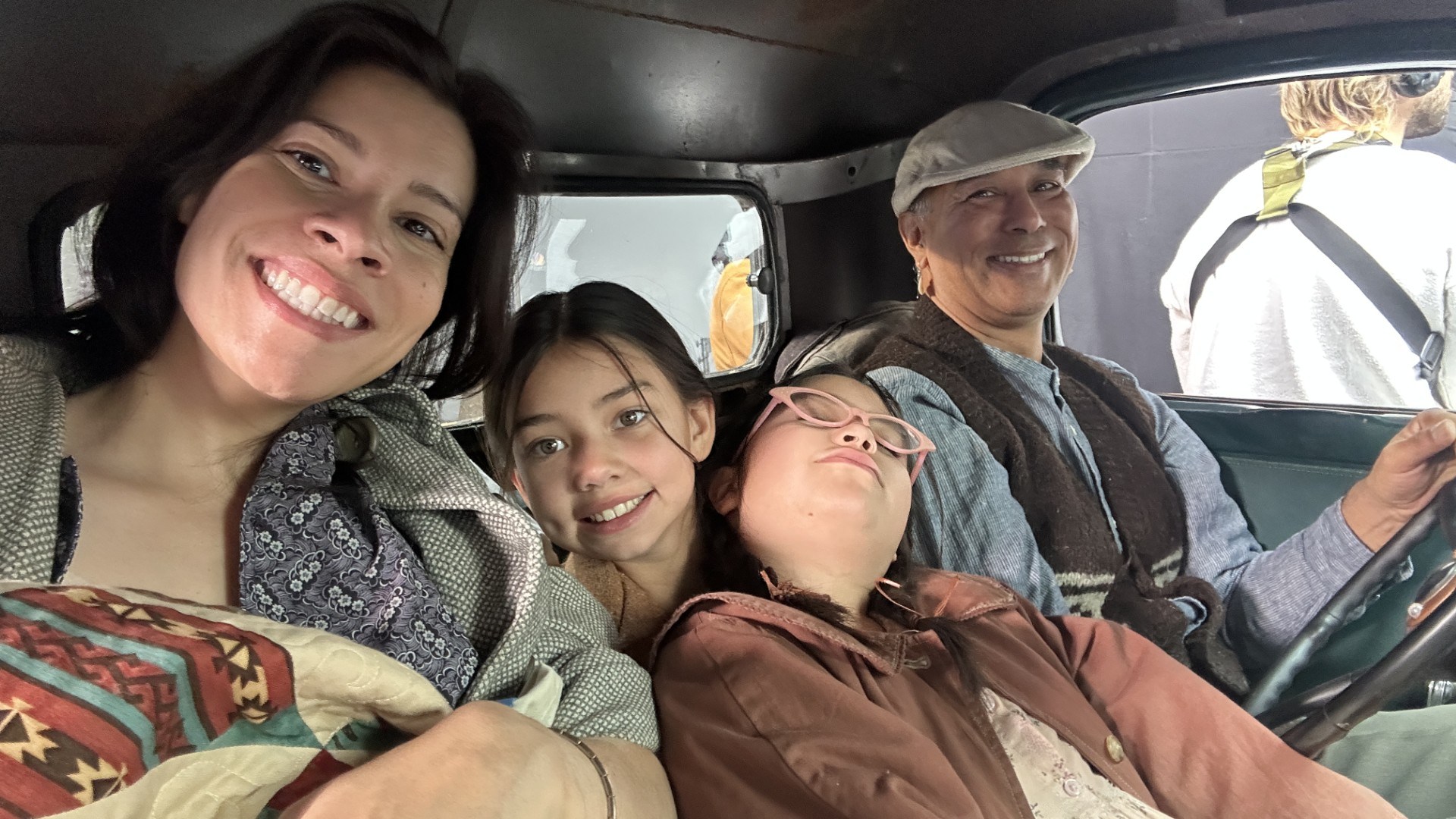
The film is centered on a cultural bus trip to France, with the group planning to visit Monet’s garden, Versailles, Napoleon’s gravesite, etc. But the other people on the bus have no clue at the start that they are going to be traveling with a schizophrenic woman who also has Tourette’s and speaks very frankly about everything, including sex.
What happened in real life, as it happens in the film, is that at first the other people on the bus thought, “Who is this woman? We’re going to be with her for eight days – this is going to be tough …” But as soon as they were in France, since none of the group spoke French, Maren Elisabeth – who spoke French fluently – suddenly became a big help for them.
This culminated when they arrived too late to be let into one of the museums. People were very dejected, but when everybody had already given up, Maren Elisabeth walked over to the guards and said, “Je suis une malade de psychiatrie,” which means, “I’m a psychiatric patient.” She started telling them her story, and they actually reopened the museum. She was the hero of the day.
The film took me five years to write and, as part of my research, I interviewed Maren Elisabeth extensively about the trip to Paris with Kirsten and Per. One of the side effects of Maren Elisabeth’s medication is that her memory is not great, but as I was writing the film, she started remembering more and more details of the trip. It was as if the film reconnected her with the past.
For me, the toughest thing about making Rose was worrying how Maren Elisabeth was going to react to it. The stress of production is always profound, but the pressure I felt shooting a film about my own family was immense. It was very important to me that I make a film Maren Elisabeth would be happy about. I also wanted the audience to laugh with Inger, not at her, and for the character to be inspired by Maren Elisabeth, rather than be exactly like her.
At one point during the editing process, I went to see Maren Elisabeth and showed her three short scenes from the film. She was quiet at first and didn’t really know what to say, but she seemed to be OK.
Later, though, Kirsten called me and told me Maren Elisabeth had had a meltdown. That she was angry and felt betrayed. She felt depicted as a sex addict, because Inger talks openly about sex, and she was upset Inger talked about suicide all the time. She even said she would not rule out committing suicide after seeing the film.
I realized then that Maren Elisabeth did not remember the script, so for me to show her three scenes out of context was a big mistake. It hurt my heart. What scared me the most was that even Kirsten, my rock, was shaken up by what had happened.
I remember standing out in the street in Copenhagen, thinking that making Rose was probably the stupidest thing I’d ever done. I thought to myself, “What the hell were you thinking? Why did you do this? Could you live with yourself if Maren Elisabeth actually killed herself?!”
A couple months later, when the film was nearly finished, I drove all the way to the north of Denmark to show it to Kirsten, Per and Maren Elisabeth. I’ve never been so nervous for a screening in my life, and I’ve made some pretty crazy films. We watched it on the television in Kirsten’s living room, and I turned my neck so many times, trying to gauge Maren Elizabeth’s reaction, I actually had to go to a chiropractor afterwards. But in the middle of the screening, Maren Elisabeth suddenly said, “It’s a very good film.”
Then, something remarkable happened. The scenes in French hadn’t been translated yet, so Kirsten and Per didn’t understand what was being said in them. It had been 25 years since the trip to Paris and 40 years since she had worked in France, but Maren Elisabeth started translating the film out loud for them.
When the film was over, everyone looked at Maren Elisabeth. She told us she felt bad for Inger and all she had to go through. It was the first time I had heard her differentiate herself from her on-screen alter ego. Then she started talking about the film, and suddenly, it was like she had never been sick. Seeing somebody who has been unwell for 40 years suddenly be so clear … it was a magical moment. I can truly say it’s the closest I’ve ever come in my life to a religious experience.
Featured image, showing Niels Arden Oplev with Sofie Gråbøl on the set of Rose, is by Roger Do Minh.