I've never seen creative collaboration portrayed with such insight since the great Mike Leigh's <i>Topsy Turvy</i>.
Over the first half of January, Talkhouse Film is running the “What We Missed” series, comprising pieces on notable movies from 2015 which were not previously covered. — N.D.
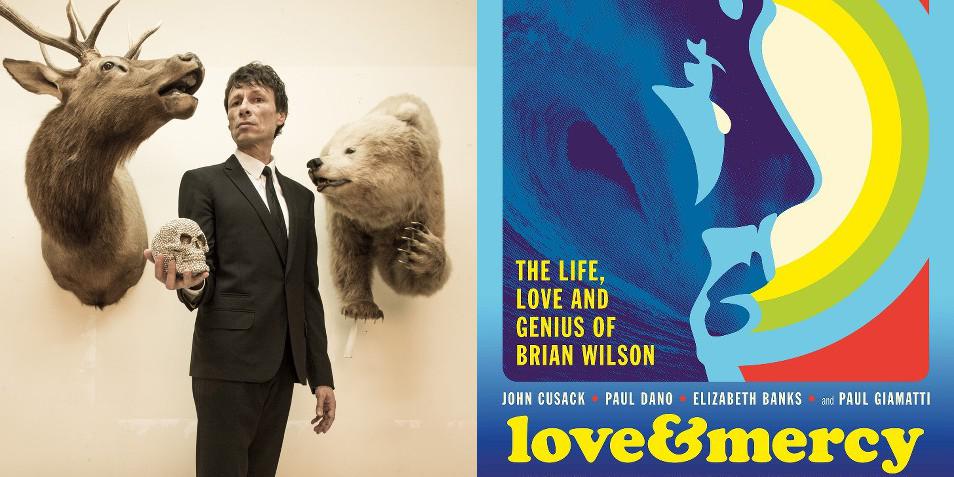
I'd like to propose a new category for the Oscars. It's called the "Degree of Difficulty" award. As with Olympic diving competitions, it recognizes that an elegant swan dive like Steven Spielberg's Bridge of Spies doesn't require the gravity-suspending innovation of, say, a three-and-a-half reverse somersault like Pete Docter's Inside Out. My "D of D" nominees for 2015 would include everything from big-budget endurance tests like The Revenant to micro-budget wonders like Tangerine. But the Academy Award for Most Difficult Achievement in a Motion Picture would go to director Bill Pohlad's Love & Mercy, a complex and deeply felt tribute to the genius of Brian Wilson made even more remarkable by the fact that nothing about this venture looked promising on paper.
I came to Love & Mercy with the skepticism I bring to all music biopics — I seldom believe them. This goes double if your movie shows the heroic musician in a recording session — as a recording artist and music producer, I've lived that world for three decades, and while the life of a studio rat has a certain nerdish charm, it's hard to inject it with believable drama unless you've got Phil Spector in the control room with a revolver. The best of the genre — Straight Outta Compton, Walk the Line, Coal Miner's Daughter — tend toward relationship dramas in which the actual music-making often takes a backseat. This is understandable, since the average moviegoer doesn't attach existential stakes to how loud to mix the tambourine.
So how does Bill Pohlad, a film financier who hasn't directed a movie since the virtually unseen Old Explorers a quarter century ago, create a new gold standard for music biopics?
He starts by directly inserting us into the mind of our troubled musical prodigy: the young Brian Wilson (portrayed by Paul Dano in a career-best performance) sits at a piano in the dark, lights a cigarette, and waits for inspiration to strike while wondering aloud where it comes from. It's not a matter of finding an idea — it's deciding which one, as the subsequent aural montage of melodic fragments, electronic sounds and echoing words (stunningly assembled by score composer and Nine Inch Nails collaborator Atticus Ross) coalesce into the chill-inducing intro of "California Girls." From there, the opening credits take us on a nostalgic montage of the Beach Boys' early '60s heyday, reminding us why we love them. It's all sand, surf and stuffed bikinis, but director Pohlad concludes it with a telling moment at the end of a TV performance: Brian, in a very-un-rock-star-like move, puts down his bass guitar and self-consciously tucks in his shirt tail in full view of his still-screaming fans. Brian, it would appear, "just wasn't made for these times."
The expert screenplay by Oren Moverman and Michael A. Lerner shifts ahead two decades to John Cusack's droopy-eyed portrayal of the now middle-aged Wilson and his unlikely romance with Cadillac salesperson Melinda Ledbetter (played by the always interesting Elizabeth Banks). While Wilson's later years make for a more conventional (if necessary) relationship drama, the twist here is that the psychotherapist committed to delivering Wilson from his demons has actually turned into a demonic force himself. Paul Giamatti plays Dr. Eugene Landy as steely-eyed and cocksure — an even more controlling version of Wilson's bitter stage-dad father — who greets any questioning of his methods as a professional indignity.
But it's the music that fuels Pohlad's Brian Wilson obsession, and it's an early scene that utterly sold me: Wilson, in the studio to produce what will become the Beach Boys' triumphant Pet Sounds album, is handing out sheet music to the Los Angeles session players known as the Wrecking Crew. They go to work, eventually recording the track for "Wouldn't It Be Nice." As the session progresses, Dano's face portrays the perplexed wonder of a manchild whose gift is also his curse, making it increasingly difficult for him to communicate his inner music to the outside world. Yet against all odds, the music starts to take shape, and it's a wondrous thing to watch. The bemusement of a group of seasoned studio veterans working with a rock & roll kid turns into begrudging respect and eventual astonishment as all present realize they are creating something utterly unique. Yes, Brian Wilson hears voices — a constant symphony of inspired chaos — but as he stands in the control room, his vision finally realized, the satisfaction registered in his face is a revelation — a cathartic release for him and us confirming that whatever torture this genius may be enduring, it's worth it.
It's those moments of transcendence that turn music-making from a job into a joy, and I've never seen creative collaboration portrayed with such insight since the great Mike Leigh's Topsy Turvy showed us how Gilbert and Sullivan reinvented opera. With Love & Mercy, Pohlad and his expert collaborators have crafted a love letter to the miracle of creation — "Good Vibrations" will never sound the same.
Late in the movie, an increasingly erratic Brian Wilson is frolicking in his swimming pool. As his frustrated bandmates attempt an intervention-style meeting to get Brian to write a "normal album," Brian keeps beckoning them to join him in the deep end of the pool. Pohlad, who's previously produced 12 Years a Slave and The Tree of Life, is clearly drawn to artists attempting dives with a high degree of difficulty. With Love & Mercy he joins Terrence Malick, Steve McQueen and Brian Wilson in the deep end.