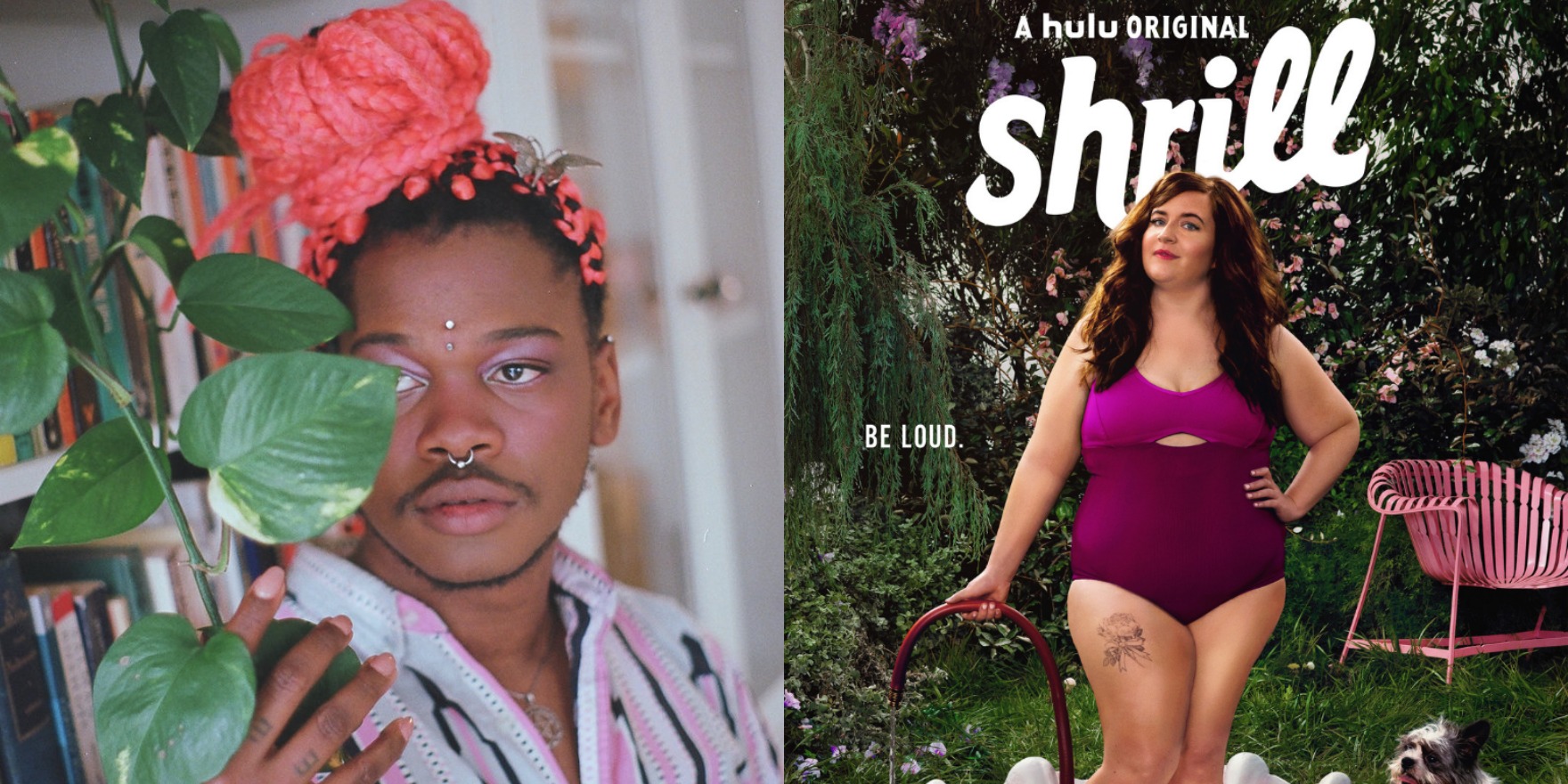
Ratchet TV is a column in which our resident TV expert Shamir Bailey guides us on what’s worth watching. In this installment, he gives us the rundown on Hulu's Shrill — even in a post-Lizzo society, could we ever transcend our image-conscious reality? Let's turn it over to Shamir!
—Annie Fell, Associate Editor, Talkhouse
In the pilot episode of the new Hulu original series Shrill, a personal trainer grabs the protagonist Annie’s wrist as she’s picking up her morning coffee, and, in a pseudo-concerned way, assures her that “You have a small person inside of you who’s dying to get out.” To many of us who have not experienced this type of micro aggression, this may seem like a hyperbolic situation; there's even a hint of satire as this situation plays out through the episode. But anyone who has experienced this type of body shaming knows situations like this all too well. Annie, portrayed by SNL star Aidy Bryant, awkwardly stands there, nearly helpless in the iron-tight grasp of the coffee-shop-bulletin-board trainer.You think their moment is intimate and isolated, until after the ordeal she’s confronted by the barista and another customer. You think while watching this scene you're gonna get the kind of cinematic-yet-very-unrealistic positive relief that screams “BUT THERE ARE GOOD PEOPLE IN THE WORLD TOO!” But Shrill stays true to life and rounds out the moment with her defenders comparing her to Rosie O'Donnell. This was when I decided to stan Shrill.
It’s rare you find a show that’s both funny and educational, and extremely realistic. The show focuses on writer Annie navigating the world as a plus-size woman. Her life is put through the wringer after she publishes a successful piece for the alt weekly she works for in Portland. One might think such an accomplishment would better someone's existence, but anyone who’s part of a marginalized group knows more eyes mean more problems. Her editor Gabe (John Cameron Mitchell) — already a white, gay demon from hell — swaps praise for more social and work pressure, chastising her anytime she can’t follow through. While work and personal life become a challenge, Annie's load is lightened by the companionship of her best friend and roommate Fran, portrayed by British actress Lolly Adefope, and their chemistry is undeniable. Fran is a hairdresser and makeup artist who is far softer inside than the hard exterior she puts up. Seemingly coming off as a player, she later learns throughout the series to deal with her own issues with commitment.
Annie’s relationship with her parents has its own challenges. Annie’s dad Bill (Daniel Stern) has cancer, and is under the care of her mother Vera (Julia Sweeney). An article she wrote titled “Hello, I'm Fat” — detailing her experiences with fatphobia in all aspects of her life — doesn't sit well with her image-conscious mother. Annie tries to shine a light on her mother’s overbearing nature and questions how much of her efforts towards maintaining a strict healthy lifestyle is superficial. Vera later has an epiphany, understanding that her need to fix everything manifested itself into an unhealthy obsession.
The real beauty of the show is the nuance in its writing. The show could have easily veered into woke media porn, the kind that production companies throw money at in hopes of earning the liberal dollar without actually hiring any marginalized people, but Shrill’s authenticity cuts through the politics and goes straight to the lived experiences that can only be told by those who have lived it. The scene in which Annie finds out she weighs too much for the morning after pill to be effective feels both heavy and surprisingly heartwarming. You laugh at the tough predicament, but then you can't help but scoff at the ugly reality that only skinny women are afforded this type of birth control.
The realness factor is pushed even further with the on-again/off-again nature of Annie’s relationship with Ryan (Luka Jones). As the viewer, you can't help but cringe at the insanely apparent fact that Annie is completely out of his league — I find myself mouthing “Oh, no, baby, what is you doin’?” every time she makes an excuse for him. But the beauty of it all is that they eventually both come of age in their own frazzled way.
Loving yourself isn't easy. We all have little things about our bodies, and even our personalities, that we would like to change. Shrill is a comedy about empowerment: Being the best you can possibly be despite everyone around you telling you you're not trying hard enough just because of your appearance and body type. Although we live in a post-Lizzo world, there is still so much self-love and societal change we all still have to work on. Shrill opened my eyes to experiences that I’ve never had, and allowed me to be empathetic as a marginalized minority myself. A lot of queer people I know know what it's like to sneak out the back door — including Annie’s boss Gabe, I’m sure. But empathy is hard to come by in this fast paced image conscious world. Luckily, Shrill is there to drag you through those moments, and then snap you back with a new perspective and a forehead kiss.