“Alexei Navalny’s death is murder. The blood is on Putin’s hands. He (Navalny) has been tortured and tormented for three years.”
What is extraordinary about this statement is not its truth. Nobody apart from the Kremlin denies that. Instead, what matters is the identity and location of the person saying it.
He is Dmitry Muratov: Nobel Laureate, and editor of Novaya Gazeta, until recently Russia’s only independent newspaper. That was, until the Kremlin forced its closure.
Muratov lives in Moscow. He made his statement within minutes of learning about Navalny’s death. He knew all too clearly the risk he was running in calling Putin out quite so directly.
Since Dima founded Novaya, six of his journalists have been killed after their reports offended the government. Most famously Anna Politkovskaya, gunned down in the stairwell of her apartment block after her reporting exposed the Chechen War for the bloody, brutal conflict it was.
Dima is the subject of my film The Price of Truth. I have known him for 20 years and am proud to call him a friend.
We met in the chaos of the early 2000s, when I was making a documentary series for the BBC about the oligarchs, the powerful, capricious and utterly untrustworthy billionaires who then ruled Russia. Dima stood out as somebody who refused their bribes, and always told the truth about what was really going on.
So, when he won the Nobel Prize, I immediately proposed a film, seeing that he and Putin would be on an inexorable crash course: Dima standing for freedom, Putin for the polar opposite. Dima immediately accepted my proposal, but on one telling condition: “Don’t put our lives at risk.”
So started the most rewarding, nerve-wracking and important film I have made. I might have guessed right where he and Vladimir Vladimirovich were headed. What I completely failed to foresee was that Putin was about to invade Ukraine.
The first time we filmed, Dima was in a snowy Riga, Latvia, right after the invasion. Dima was on the jury of a documentary film festival, and had sent a message saying he could talk freely there.
Most of the time, he was his usual ebullient self, greeting us by grabbing a brandy bottle off a passing drinks trolley so we could toast “Svoboda” (freedom). But on other occasions, he was uncharacteristically withdrawn and terse.
Eventually, he blurted out the truth: he was negotiating with the Latvian government to get as many of his staff as possible out of an increasingly dangerous Moscow. He had seen the President yesterday. Today it was the Foreign Minister.
But these negotiations were secret. So secret he made me swear not to tell anyone, and lost his temper with Yelena, my longstanding Russian producer and his friend: “I love you, but I don’t trust you. Everyone knows your promises.”
Actually, my concern was not these negotiations. It was him. I could not see how it was safe for him to go back to Moscow. Not least because the President of Ukraine, Volodomyr Zelensky, had just singled him out as somebody who told the truth, not something the Kremlin would welcome.
Like everyone around him, for three days I argued it was insanity to return, that he had just had a target painted on his back. But he was determined. He had an editorial team in Moscow and he needed to be there to protect them.
The morning of his departure was one of the worst moments in our decades-long relationship. Just as he was about to leave, a minibus screeched up. A party of journalists tumbled out, having escaped from Moscow overnight. Their driver was Pulitzer Prize winner Roman Anin, who looked on ruefully as Dima climbed into his airport taxi. “I wouldn’t go …” he told me. “Nobody survives Russian prison. He knows all of that, and despite that, he goes back.”
Once back in Moscow, Dima was not keeping quiet. Sure, he was getting as many of his team out as he could. But he was also desperate to do something, to mark his opposition to the war. With that in mind, we had to find a way of filming him and his team in Moscow. Filming in such a way that not only were they kept safe, but also our team, too.
The risk was that everybody would get put in jail, because our filming would be seen as proof that they, and we, were “foreign agents” – in Stalinist terms, enemies of the state. Jail terms for that were up to 15 years, an eternity in the brutal conditions that mark Russian prisons.
Eventually, we cracked how to do it. You will have to excuse me not sharing the details. But suffice it to say, it is a tribute to the bravery of all involved that we did. Our first shoot was in many ways the most significant.
Dima had decided he was going to auction his Nobel medal, and give the proceeds to Ukrainian refugees. Two weeks later, he was on a train home to Samara to see his mother, whose birthday he had missed. The door of his compartment swung open. And without any warning, a guy threw a tin of red paint all over him.
Only it was not just paint, it was paint laced with acetone. Dima suffered extensive damage to his eyes, damage that still persists. Back in Moscow, his team traced the attackers, two former soldiers who were arrested and then immediately released by the police. Dima commented wryly, “The message is clear: Shut up. And keep your newspaper quiet.”
Since then, the last thing he has done is keep quiet. The auction went ahead, and raised an astounding $103 million for Ukrainian refugees (and cost me two very good bottles of Scotch, but that is another story). Novaya Gazeta Europe is up and running in Riga and reports daily on the truth of what is happening inside and outside Russia, to the Kremlin’s fury. Dima himself has publicly opposed Putin at every turn.
And as far as is possible, we have been with him every difficult and dangerous step of the way. It has been a privilege. After all, if documentaries are not there to tell the truth, then what on earth is the point of them?
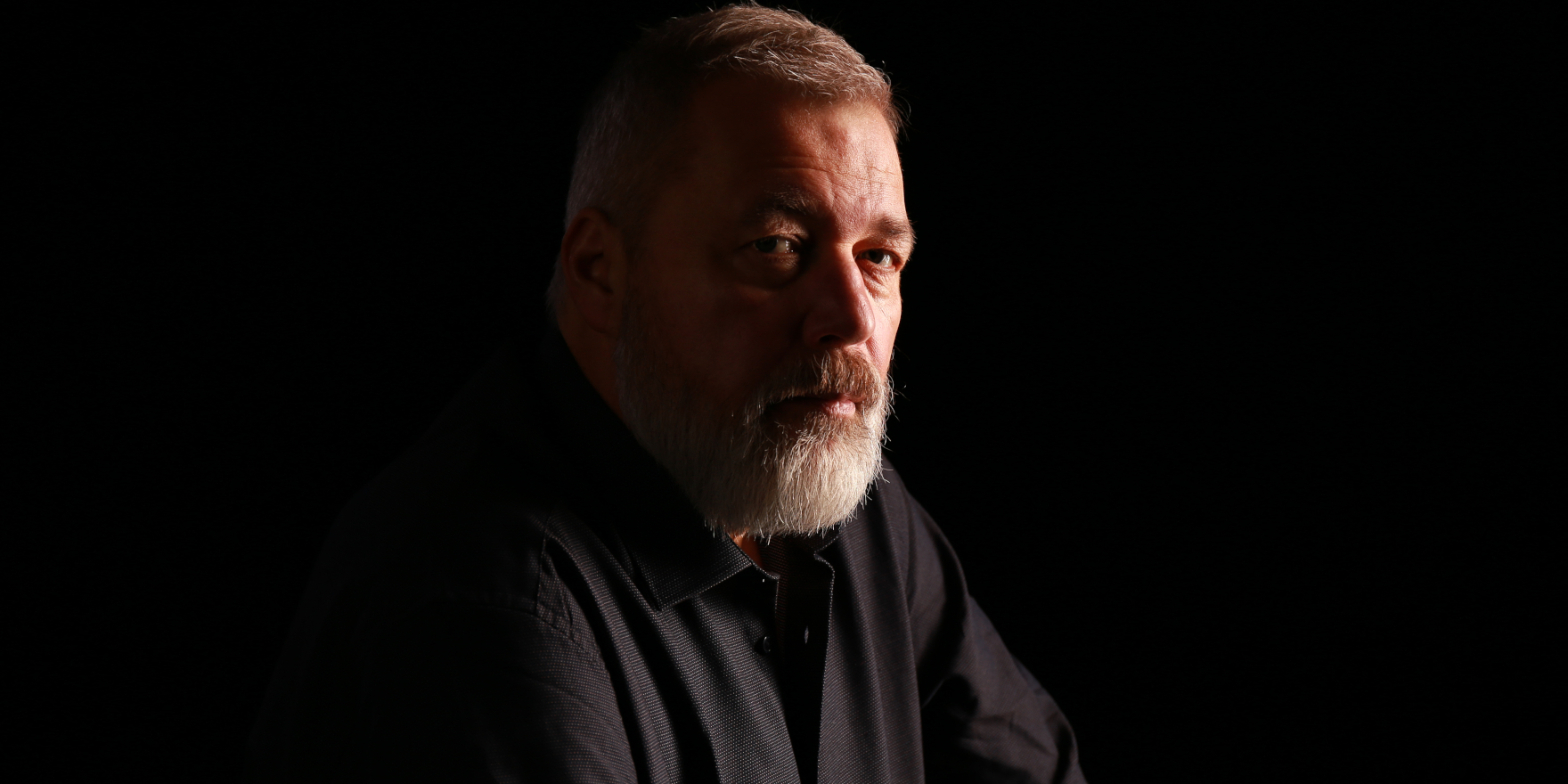
Featured image of Dmitry Muratov by Yuri Barak, courtesy Oxford Films.