A few years ago at some music festival somewhere — backstage in that requisite section where press mingles with bored musicians — I overheard two music critics in conversation. One, who was working for a record store catalogue, boasted about having written a gargantuan number of reviews that month. This piqued my interest, and, having nothing better to do (see above), I sidled over. I had to know, how did he even have time to listen to all those records? He replied, "Honestly, sometimes you can just tell within the first few seconds." Yikes. What a prick.
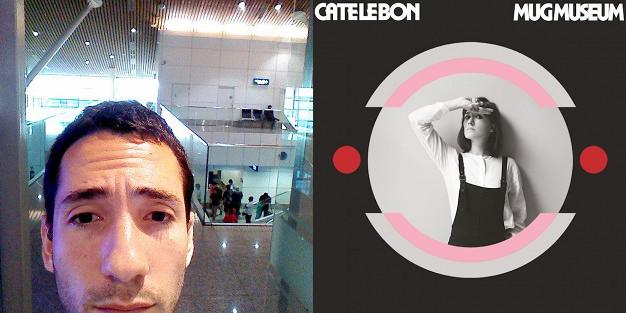
It's rare — positive or negative — that I agree with a Suuns review. The responsibility of a critic, to do right by the subject, weighed heavily on me as I prepared to write this piece. I wanted to give Mug Museum the best possible chance. For better or for worse (maybe even out of spite) I listened to this album a lot. I listened without a critical thought in my head, until I had no choice but to love it. When I loved it simply for its familiarity, I felt I could start writing in good conscience.
Good music takes time to metabolize. Miles Smiles used to give me headaches. I knew that I liked it, or wanted to like it — but it was simply too much to take in at once. In time, my mind slackened; I could see broader structures. And this is good — as a musician, you're striving for an optimal complexity, something that can keep unpacking itself in your brain for years.
After about a week, I caught myself thinking that Mug Museum has a charming understatement to it, a casual disposition not only in Le Bon's Welsh delivery, but in the chamber-like feeling of the ensemble. As with John Lennon's Plastic Ono Band, each instrument establishes its own personality — here, it's the bass, the drums, the guitar and tinny counterpoint guitar, the occasional descant organ or (I'm guessing) Juno synth line — and they all sit more or less the same in the mix throughout. The production is sparse; often just enough to bolster your interest for a second verse, and a third. That's refreshing, as it underscores an ensemble recording of good musicians, and you don't hear that too often these days.
At this point I felt a kind of resolve that was suspiciously self-congratulatory. Like the album was some kind of puzzle I had just solved. Maybe a week later, I thought, "But this is not entirely true." Because the album's subtlety can be at times underwhelming. While brilliance occasionally rears its head (the bridge of "I Can't Help You," with its broad, Stereolab-y polyrhythms comes to mind), the climaxes often fall short. The album's centerpiece, "I Think I Knew," a slow crescendoing duet with Perfume Genius, is almost fantastic. But just when you need that little extra something to push you over into side B, it doesn't quite deliver. Rather than intimate, the spartan cast of musicians feels exposed and ordinary. When the album continues with "Wild," despite the quality of the composition, it starts to feel homogeneous. Mug Museum's back end pares back even further, and rather than find myself drawn in by the intimacy, I get a little bored.
The challenge Le Bon has undertaken (i.e., simple production) is a tricky one. Because an album is not a live performance. It's not ephemeral like a performance is, it's really a different language. So there's a responsibility to translate, to ensure that even though the exact same waves come at you again and again, that each listen is a discovery. The idea being that a recording, like a poem, can achieve its own complexity, its own life, so that even the author can come to it for answers. I don't quite find that here.
It's weird to be listening and constructing — I was so happy to have a take on the album that when I listened further, I was actually upset when it didn't conform to my idea of it.
I can see how critics get carried away.
I even wanted to say that the "album's tenacious restraint collapses like an over-extended bridge," because it's such a nice simile. But it's not true. The truth is, I like this album. I've had the songs stuck in my head for weeks and I sing along to it. The lyrics are often exceedingly musical ("There is a feeling, my love, buried in my brow..."). But when I read the one-sheet saying this is "an artist at the height of her powers," I wince. Because it's not.