Is the hero of your movie a cop? If so, put that script away and write another movie.
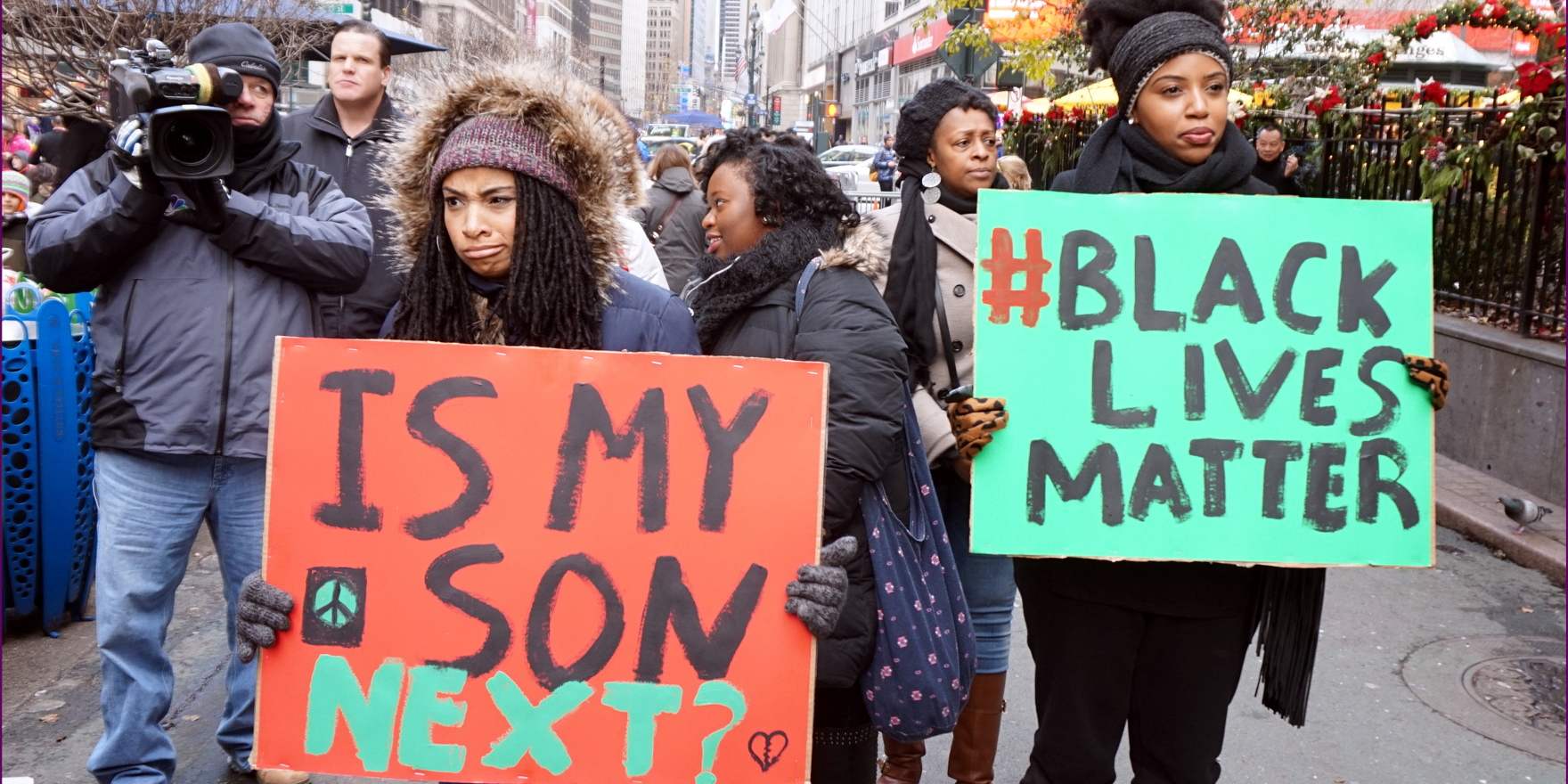
At last month's BET Awards, actor Jesse Williams received the Humanitarian Award in recognition of his steadfast support for the Black Lives Matter movement. In his powerful speech, he accepted the honor on behalf of everyone mobilizing against injustice, Black women who nurture their communities, and the victims of state violence. “We know that police somehow manage to deescalate, disarm and not kill White people everyday,” he said. “So what’s going to happen is we are going to have equal rights and justice in our own country or we will restructure their function and ours.” The speech went viral, drawing praise from many, but also prompted a petition for Williams to be fired from the ABC television series Grey’s Anatomy (which he's been a regular on since 2009), for his “racist, hate speech against law enforcement and white people.”
As a filmmaker who tells stories about the underrepresented, Williams’ powerful public stance inspired me to explore how filmmaking can support the movement for Black lives. A recent Pew Research poll reveals that 66 percent of all Americans view discrimination as an individual, rather than an institutional problem. Viewing the world through this lens, it is easy to interpret a call for justice as a cry of hostility, or perceive Black Lives Matter as a zero-sum game. Many Americans haven’t had the educational, cultural, or lived experience to understand that racism is a system of institutional power and privilege. As creators working in a medium which typically lack a nuanced explorations of racial issues, we can play a key role in expanding consciousness.
Popular culture perpetuates biases that reinforce systematic injustice and inequality, relying on unsophisticated narratives and myths about society. These myths make for easy, satisfyingly simplistic drama: heroic cops protect us from a horde of violent criminals, alongside dedicated prosecutors focused on putting deviants behind bars; comfortable middle-class millennials debate their latest life crisis in recently gentrified neighborhoods; the state defends us from a nefarious other, utilizing the deadly skills of highly-trained operatives.
We’re prepared to call out the silliest extremes of cultural mythmaking: the ancient Egypt where everyone is European; the non-White characters that are portrayed by White actors; or achingly bad multicultural dramas where we’re all shown to be just a little racist. We vent our ire on social media, but these racially insensitive films continue to be produced in either blatant or subtle forms. Yes, we can and should challenge yellowface and blackface, but we can do far more.
Films that provide an antidote to dominant myths struggle to find support, not merely within the studio system but also from independent financiers and production companies. We’re unsure how to monetize stories that lack easy answers, that don’t play on an audience's primal (implicit) emotions, or explore real-world complications over escapist storytelling.
Part of the problem is that filmmakers of color have to validate the existence of their stories in the eyes of a White audience. In order to be heard, these filmmakers increase the level of gravitas. It is within the framework of explicit oppression that the most lauded Black films of this decade have emerged – Fruitvale Station, 12 Years a Slave, Selma, and the forthcoming Birth of a Nation. None of these films were easy to finance or produce, but mainstream audiences often only seem open to challenging stories about Black lives when they’re historicized, when suffering is portrayed in stark brutality. It’s difficult for audiences to discredit slavery as a primary injustice without coming off as racially insensitive.
Because the mainstream perception is that for a Black film to be important, it has to be hard-hitting, other fantastic independent films where Black characters face a broad range of conflicts and experiences – from the works of Charles Burnett and Darnell Martin to recent examples like Beyond the Lights and An Oversimplification of Her Beauty – get lost in the shuffle.
While movements for equality push back against Hollywood with campaigns such as #OscarsSoWhite, they focus primarily on representation, increasing the diversity of women and people of color within the industry, in front of and behind the camera, and in key decision-making roles. But settling on representation as an end-goal will not change the simplistic narratives about race, power, and society that are being written and produced within the industry.
As artists, we have been lazy, relying on old tropes. But we have the imagination to conceive new stories and new perceptions of race and power. I believe that we all have a responsibility to do so, regardless of our racial or cultural backgrounds.
In his speech, Jesse Williams addressed those who sit on the sidelines critiquing the movement for Black lives: “The burden of the brutalized is not to comfort the bystander … If you have a critique for the resistance, for our resistance, then you better have an established record of critique of our oppression. … If you have no interest in equal rights for Black people then do not make suggestions to those who do. Sit down.”
No artist should be sitting down. If we do not assert the value of Black lives in our work, we cannot expect anyone else to do so. Even in stories that do not, on the surface, grapple with oppression, we can undo the myths perpetuated by more than a century of anti-Black racism in motion pictures.
Below I offer some starting questions to guide us toward a cinema that values Black lives:
- Does your story reflect an aspect of a just world that you wish we were living in, or does it reflect your fears of the contemporary world?
- Does your non-Black protagonist have a significant relationship with a Black character that is neither stereotypical nor colorblind?
- Is your non-Black protagonist a jazz, blues, or rap musician? Do they love Black culture more than they love Black lives? If so, fix it.
- Is the hero of your movie a cop? If so, put that script away and write another movie.
- Can you envision a Black experience that is as diverse and as beautiful as any other?
- Are you prepared, in this time of 24/7/365 call-out culture, to be challenged for your mistakes, missteps and ignorance, whether lovingly or angrily, and view these challenges as an opportunity for growth? (If not, why are you a filmmaker? Constructive criticism is a fundamental component of craft.)
We filmmakers make believe for a living, construct imagined realities, and craft stories that allow audiences to feel empathy. With these incredible powers at our fingertips, we can surely imagine a better world than the one of good cops vs. bad criminals, simplistic solutions to complex problems, and where the humanity of Black bodies is only commensurate to the suffering inflicted upon them.
Challenging anti-Black racism and other forms of oppression can be pursued while also telling powerful stories about any subject, in any genre. If we build a collective volume of nuanced stories, I am confident that audiences will embrace them. We must step up and be the cinematic movement for Black lives. We have nothing to lose from the attempt but unjust myths that no longer serve any of us.