
I’m 35,000 feet in the air inside an 110-foot-long aluminum box. I have no idea what combination of mechanics and physics makes this possible. Around my waist is a flimsy seatbelt made out of polyester. There’s a plastic cup of water on a tray table in front of me about to spill into my lap. My stomach churns. I’m scared.
I take a deep breath and count to 10.
“Do you want to hold my hand?”
The person next to me offers up a manicured hand. I look at her gratefully. We hold hands for the remaining half hour of the flight. I squeeze extra tight on the bumpy descent.
When the plane lands, I thank my seatmate as we awkwardly disentangle our hands. I feel mildly euphoric in the arrivals terminal at LAX, like I just cheated death. I also think, I’m never gonna fly again.
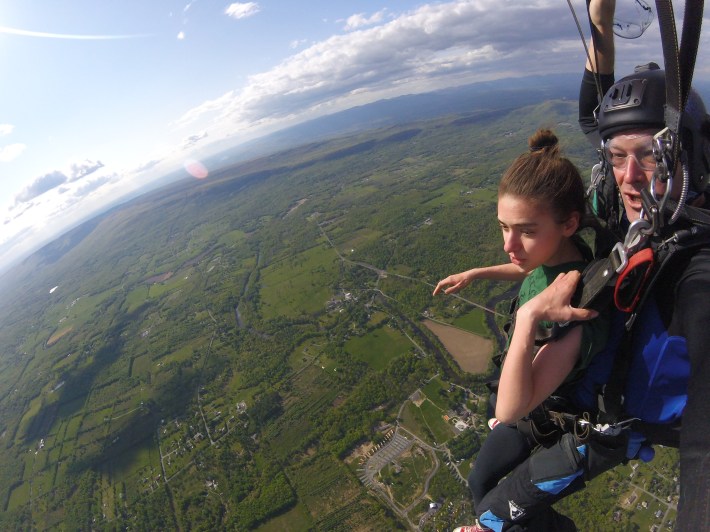
A fear of plane travel is statistically irrational. According to the International Air Transport Association, the all-accident rate for plane travel is once per 759,646 flights. In 2025, there were eight fatal aviation accidents. Flying is so safe that “even one accident among the nearly 40 million flights operated annually moves the global data.” By comparison, according to the World Health Organization, approximately 1.9 million people die annually as a result of road traffic crashes.
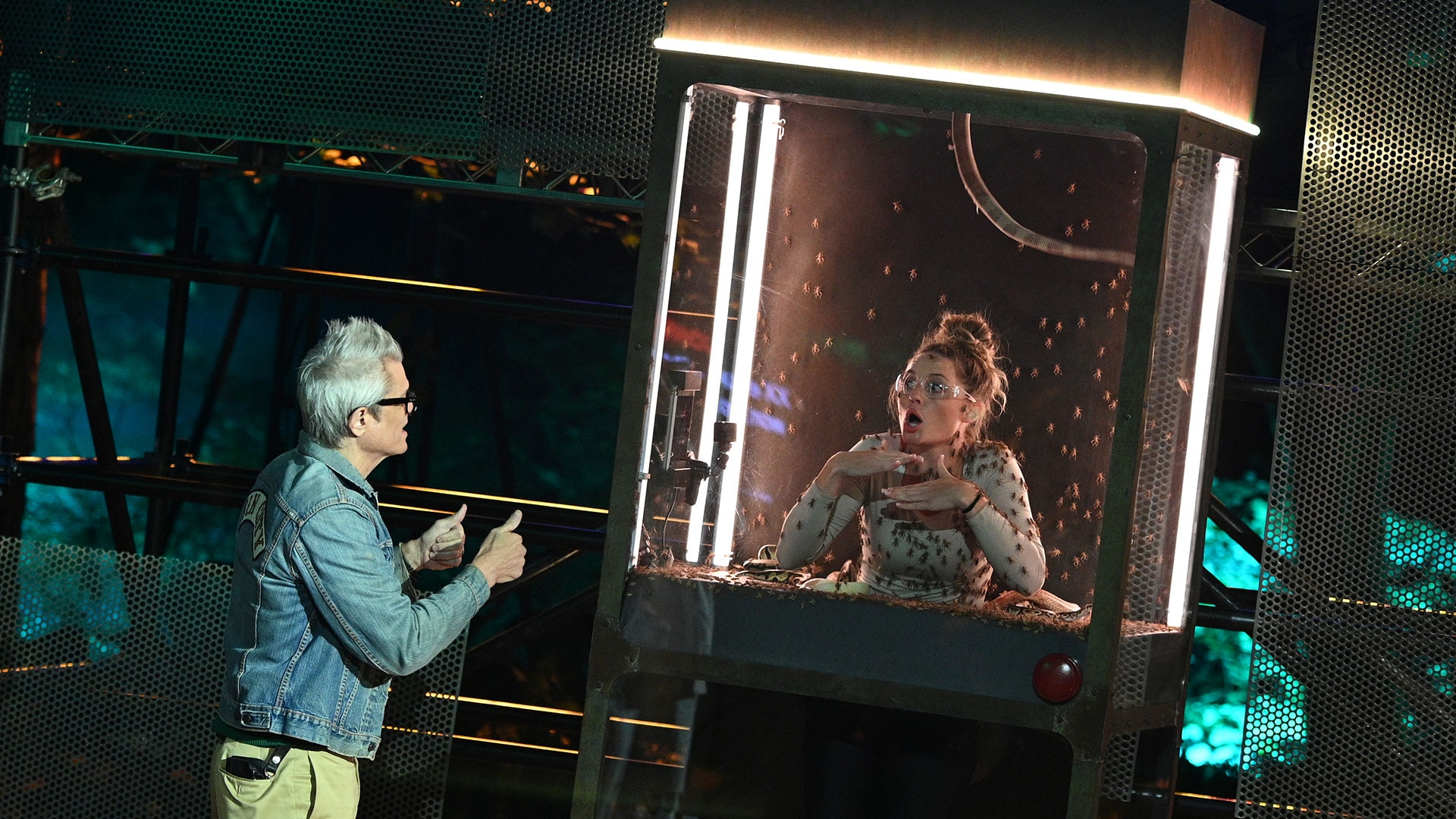
Even though I fly pretty often, I’m scared every time. On another recent flight (taken after I vowed never again), I downloaded the Fear Factor reboot on Hulu to distract myself. Hosted by Johnny Knoxville, the 10-episode season recycles classic Fear Factor challenges (eat bugs, get electrocuted, walk on mousetraps!), with an added layer of Big Brother. Subtitled House of Fear, the reboot has more bickering, making out and pettiness than ever before.
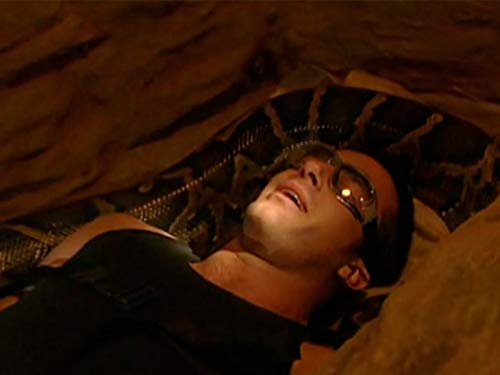
First aired on NBC in 2001, Fear Factor was adapted from the original Dutch series Now or Neverland. Its host was a pre-podcast Joe Rogan, who at the time seemed like your average meathead, rather than the controversial blah-blah-blah he is now. After an extended hiatus, NBC revived the series with Rogan in 2011, then cancelled it shortly thereafter, when execs deemed a donkey semen challenge a bridge too far. Later, MTV licensed the brand with Ludacris as its host, guiding “celebrities” such as Tyga, Snooki and Chanel West Coast through challenges.
Fear Factor: House of Fear debuts amid a broader cultural reckoning with the morally dubious nature of many early-aughts reality TV shows. The Fear Factor reboot promised a nostalgic return to an old format, although one could reasonably expect modern updates and alterations. I eagerly anticipated a revision to its most glaring issue. The major change I wanted to see? No more live animals.
Instead, House of Fear repeats the old pattern, doing nothing to problematize the unnecessary use of animals, both dead and alive. There’s not even a disclaimer or any public information about the sourcing and handling of the animals seen onscreen.
The tension inherent to Fear Factor: House of Fear between “entertainment” and “blatant animal abuse” is personified by the show’s first openly vegan contestant, Jayleen. She claims to be on the show to bring “awareness” to animal rights, and plans to donate a portion of the $200,000 prize money to an animal rights group, if she wins.
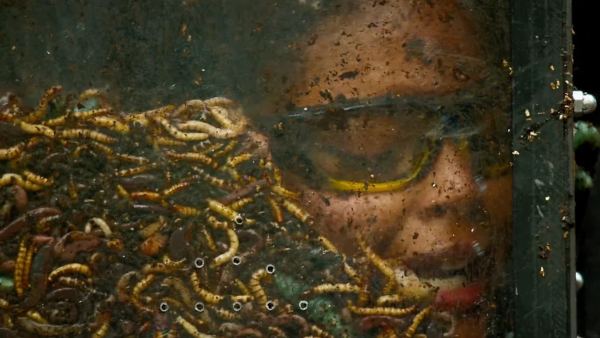
Jayleen makes it pretty far into the competition without having to face a challenge that would end her 16 years of veganism. But in Episode 6, “Pain Auction,” Jayleen must eat heaping helpings of both “scorpion pickle pie” and “evil pie,” which is made of pig’s blood and chopped-up bits of pig snout.
“I’m really having a hard time … eating something that was once alive,” she says, as half a dozen contestants gag and try not to vomit. Ultimately, Jayleen completes the challenge and is lauded for pushing through.
“I’m happy that I’m safe. I’m sad that this had to happen to put me here. Vegans are strong,” she says.
Jayleen’s comments after the challenge perform the rhetorical double movement of absolving herself of any autonomy – this had to happen – and giving herself praise – vegans are strong – at the very moment when she can no longer objectively lay claim to veganism. At this moment of rupture, she presents herself as a participant devoid of volition, thereby excusing herself from a moral reckoning, all the while doubling down on her vegan identification.
Back at the house, Jayleen says she is proud she made it through the challenge, proving that if people thought she “had a weakness” by being vegan, they were wrong.
“If people didn’t see you as a threat before, they do now,” another contestant reassures her.
It’s safe to say that the animals on Fear Factor definitely saw Jayleen as a threat. And while the pie challenge didn’t consist of live animals, the makers of House of Fear do demonstrate a blatant disregard for animal life and a reckless incorporation of animals into the fabric of the show.
When Jayleen makes it into the semi-finals, she must escape from a tank filled with live alligator gars.
“If this fucking fish bites me, I’m going to be pissed off,” Jayleen says.
Alligator gars are not considered dangerous to humans, as they are fish with a generally docile temperament and sluggish demeanor. That being said, at 10 feet long with sharp teeth, they do look pretty scary.
No alligator gar bites Jayleen, but the gars were probably pretty pissed off at being trapped in close quarters with a flailing human.
One of the most grating aspects unique to the House of Fear reboot is its conscious attempt to gloss the show into something more elevated than extremity for the sake of extremity. One challenge is presented as a way to conquer the fear of “big animals and shoulder dislocations” … by getting dragged by a horse.
“A horse can kick at 0.3 seconds, and a human reaction is 1.6 seconds, so good luck,” says Johnny Knoxville. Even if that dubiously proffered stat is accurate, horses are not predators and present no danger when unprovoked.
One of the contestants, Lance, was bucked off a horse as a child. Of course, by “random selection,” Lance is called first to compete in the challenge, which he calls “total PTSD.” Another contestant also expresses reservations, citing a past accident unrelated to horses.
“I’ve been afraid of breaking more of my body. I’m here on Fear Factor to get over that.”
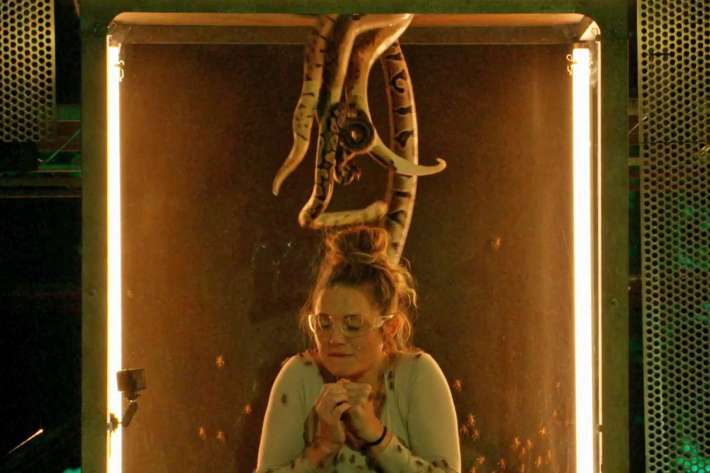
In another scene, Knoxville reminds a contestant that she’s here to conquer a fear of bugs “for yourself and your kids.”
In yet another episode, contestants are dunked at ever-increasing intervals into the freezing cold open ocean while harnessed to a massive steel rack. Why? To test their fear of “open water, drowning and freezing temperatures.”
The repetitive emphasis on pseudo-therapeutic logic does not hold up under scrutiny, and should be abandoned altogether.
Contestant: “It’s straight-up torture, it’s water boarding,”
Knoxville: “Try not to panic, but if you do, look towards the camera.”
The truth comes out.
“[These snakes] just love to be tickled,” Knoxville roars. Contestants crawl through a terrarium stuffed with six live boa constrictors and a massive iguana, carrying dead rats in their mouths. The boa constrictors barely move when the contestants wiggle through the terrariums – in fact, the boa constrictors themselves were at risk for injury. Production pipes in post-audio of hissing sounds while the snakes just sit there. At one point, an iguana jumps out of the way as a 200-pound man hurtles towards it.
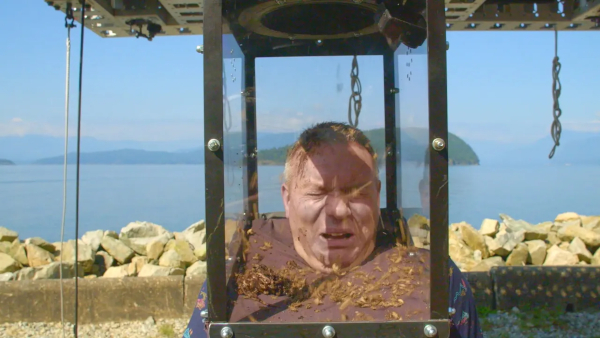
Later, contestants get locked in a glass case with various live animals thrown onto them. Animals drop about three feet and land on their heads or upside-down. Birds flail around wildly. Rats probably break a few bones. Crested geckos have the worst day of their lives. Entertainment.
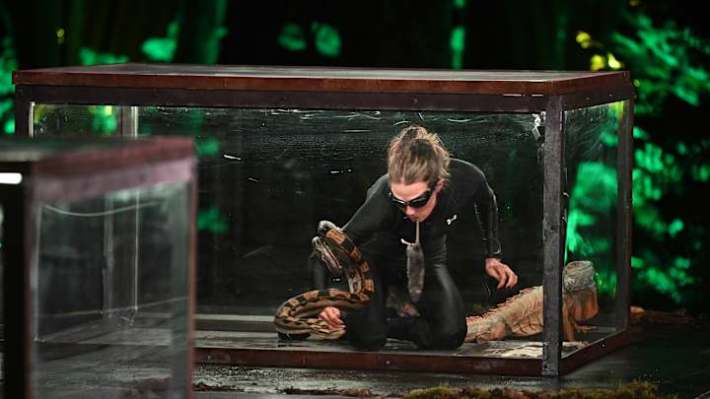
In episode after episode, animals are treated as props. When I asked someone I know who was on set during filming about where the animals came from, they said, “I don’t know. I imagine butchers?” They also told me that their wranglers are “an outside hire.”
How about a Fear Factor reboot, this time narrated by David Attenborough, about the show from the perspective of the animals? Fear Factor, only without a producer around to reassure you that filming can stop any time you want it to. Because if you’re one of the rodents, reptiles, bugs or birds, it can’t.
As to the whole line of reasoning that goes, “C’mon, bugs are barely sentient, why write a whole article about how sad it is that a bunch of crickets get thrown around on a good show?”...
Research indicates that insects such as bees have a wide range of emotive experiences, and form “long-term memories about the conditions under which they were hurt.”
Even if you’re not into the science-backed arguments, what about the sociological ones? What does it mean for society when mishandling animals comprises a primary form of entertainment?
PETA issued a formal complaint against Fear Factor: House of Fear, which is like the United Nations issuing … well, anything. House of Fear was shot in Vancouver, so the district of legal jurisdiction is British Columbia. But, more importantly, the social jurisdiction is in the court of public opinion. You and me! The viewers! The audience!
I think back to the airplane. The camaraderie of the handhold. To feel fear and be reminded that it’s OK to be scared. Something about fear can put a person at the bleeding edge of their own humanity. In that vulnerable state, it’s reassuring when another person – in my case, a benevolent stranger – offers a helping hand. In my case, a literal one. Instead of taking fear to its extreme to see what can be “conquered,” there’s also an opportunity to get more connected with one another. The other people on the plane. The neighbors, the animals, the plants and the minerals. It’s woo-woo, but whatever. Shows like Fear Factor are predicated on social divisiveness; it’s no wonder a thoughtless approach informs its treatment of live animals. Fear Factor is “reality” in name only. Our shared reality doesn’t have to reflect what’s onscreen. It can be better, more humane.