For me, there is nothing scarier than being alone.
I say this as a person who is generally self-sufficient, independent, and who actually enjoys “alone time” greatly. But being truly alone – isolated without the option of human connection – is terrifying, and can manifest in many ways.
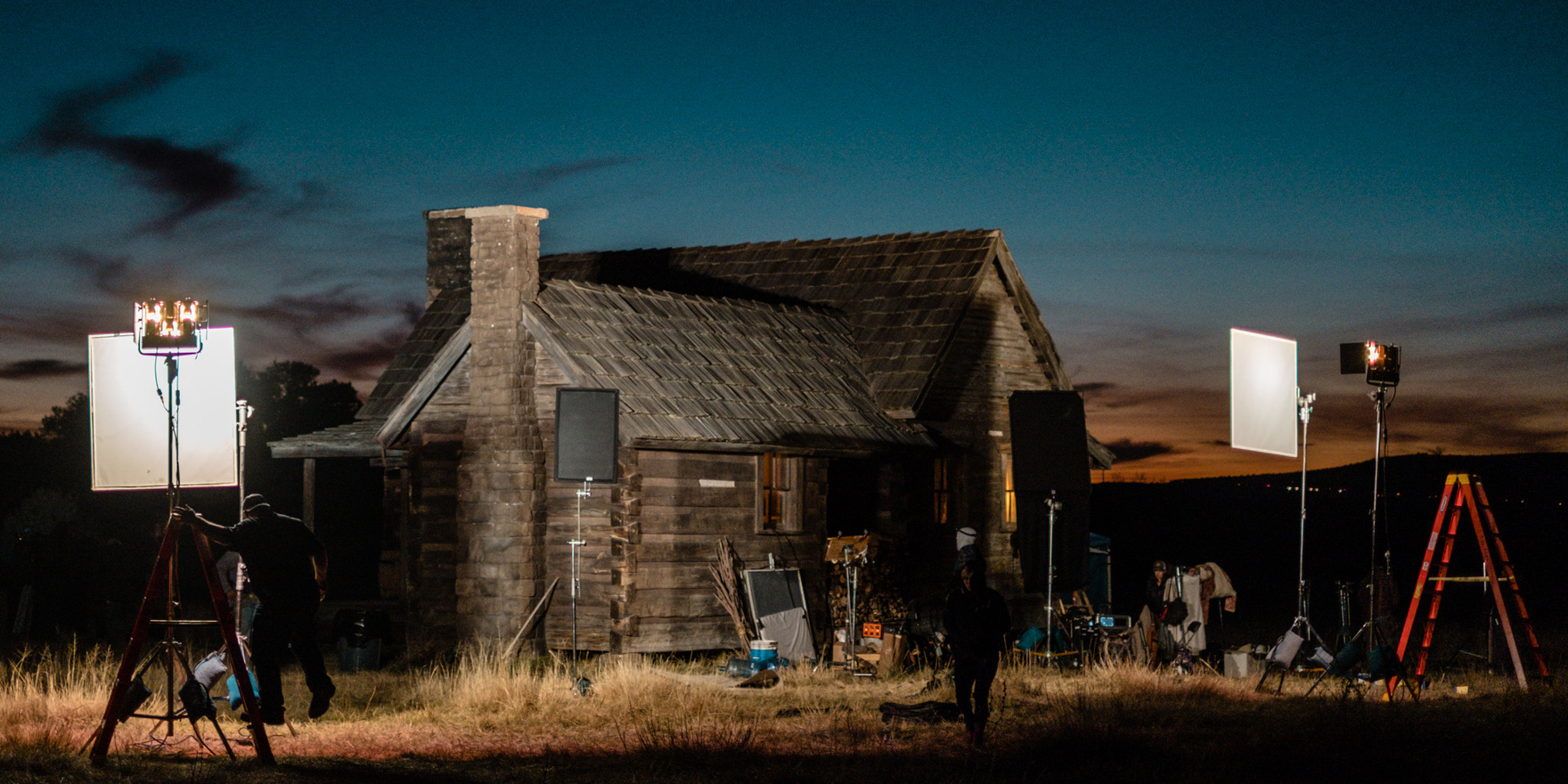
My first narrative feature, The Wind, is a horror Western penned by Teresa Sutherland which explores this theme of isolation through the perspective of a frontierswoman in the late 1800s. While on her own for long stretches of time on a homestead, she attempts to ward off her inner demons – along with some outer ones! The premise alone made me ill at ease.
In the aftermath of making this film, however, I began to reflect on this theme of isolation with greater curiosity, because it dawned on me that The Wind was, in fact, the second horror film I had made. The first was a documentary called Election Day: Lens Across America, which I co-directed with Henry Jacobson. Now, to be clear, no one would officially classify this as a horror film (even though Blumhouse produced it!), but bear with me for a minute.
The very fabric of our country was tested during the 2016 election, and the day after – regardless of which political camp you’re in – we were all left wondering: what just happened? Our country was more divided than ever. After being plugged into a 24-hour news cycle for many months, it was clear that people were not hearing each other, and large sections of the country were isolated from one another. Not good for a democracy. But what we were trying to understand in the film was how people were feeling on that day. What would a portrait of our citizens’ psyche look like? Across the board, the takeaway was that people felt underserved and left behind, in both red and blue states, and the media was feeding that ever-growing sense of discontent and polarization. The new normal was to shout over one another, rather than listen.
In the aftermath of the election, my own personal sense of isolation was at an all-time high. What country did I live in anyway, and how were we ever going to collectively move forward in a successful way? These questions felt big and political, but they also felt human and emotional. Making Election Day was a way of processing my own deep sense of disconnection, and an attempt to understand how and why we got here. We were a country operating in our own bubbles.
Cut to the weekend of the inauguration, which also happened to be the first weekend of the 2017 Sundance Film Festival. A producer who I had previously worked with on another documentary, Fair Chase, had a script called The Wind. He asked if I wanted to give it a read. I did.
After working on Election Day and being completely overwhelmed by media coverage of our perilous present moment, it was refreshing to dive into a story set in a time that predated that hysteria, and tapped into another form: one woman’s psyche as she battles to survive an inhospitable land. This exploration was intimate and personal, and despite being a period piece, felt highly relatable today. This film was set against a backdrop of physical isolation – being alone on the prairie – but also symbolic isolation, as our protagonist grapples with self-doubt, suspicion and jealousy (emotions that all feed into an internal sense of being alone).
As I sit in Los Angeles writing this, unusually strong northern winds are knocking down power lines. Things feel unsettled. Trump is in office, our next election cycle is already starting to gear up, and The Wind just hit theaters. Life feels somewhat surreal these days, and I think these two films – one unscripted and one fiction – ultimately tap into our collective moment of uncertainty.
Isolation comes in so many different forms, whether it is born of external factors or internal. Either way, it is the makings of nightmares, and horror films let us both indulge in those dark spaces – sometimes with great delight – and attempt to understand them. The need for meaningful human connection is basic and fundamental, and when we lose that, our internal compass goes out the window. It is in those moments that we have the opportunity to explore the absurd, the bleak, the mad. And it is for this reason that, as a filmmaker, I will be interested in exploring isolation for a long while. That said, it might be good to balance it out with a musical or a comedy one of these days!